

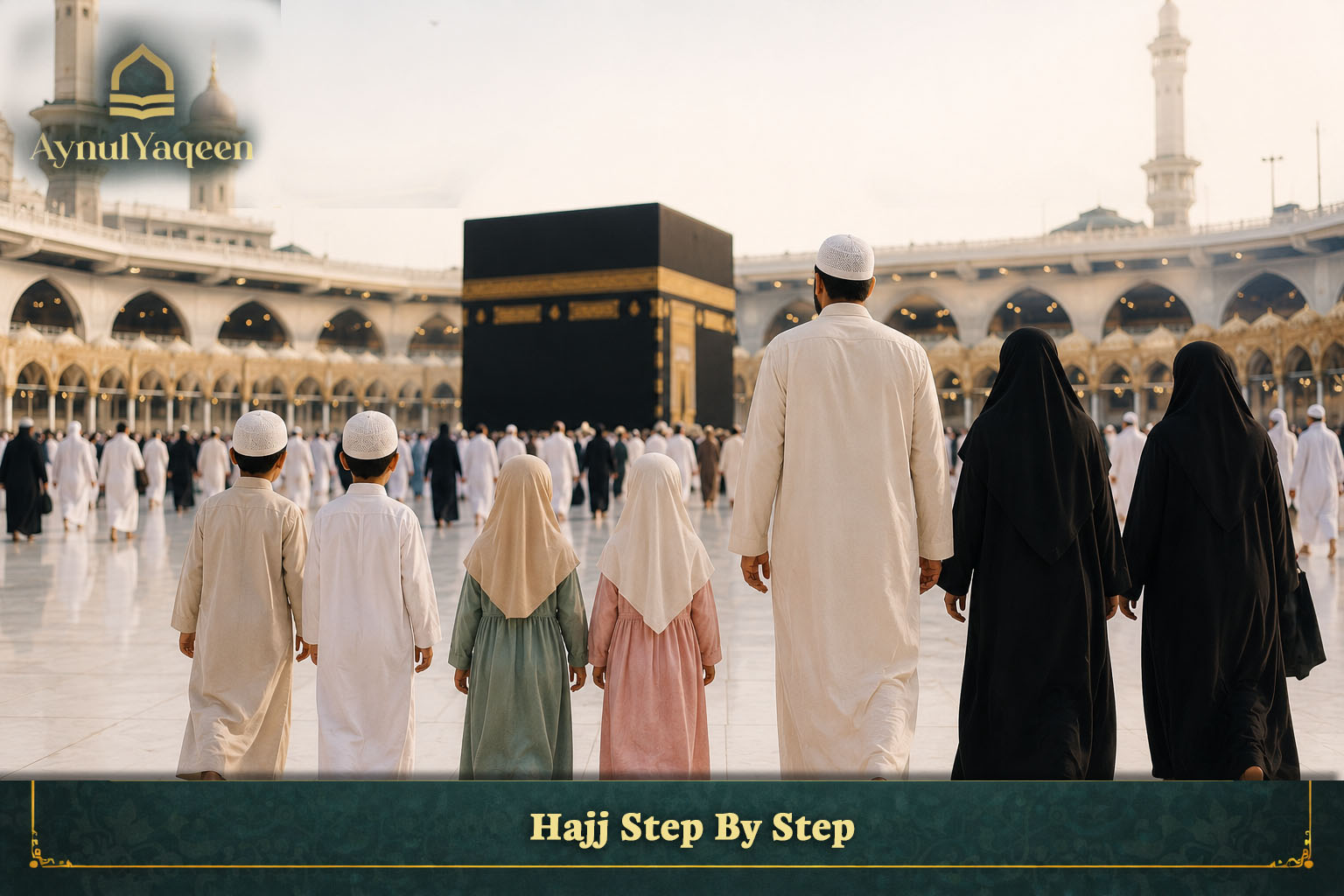
Hajj step by step is a complete guide to help Muslims perform Hajj with clarity and sincerity. Hajj is one of the five pillars of Islam and an obligation for every able Muslim. It is a deeply spiritual journey that purifies sins and strengthens faith.
Every year, millions gather in Makkah following the example of Prophet Ibrahim (AS) and Prophet Muhammad ﷺ. Understanding each step ensures correct performance without mistakes.
Proper preparation is essential, and many pilgrims benefit from guidance provided by Aynulyaqeen Quran academy, which helps them understand the rituals clearly and perform Hajj with confidence and devotion.
The Spiritual Importance of Hajj
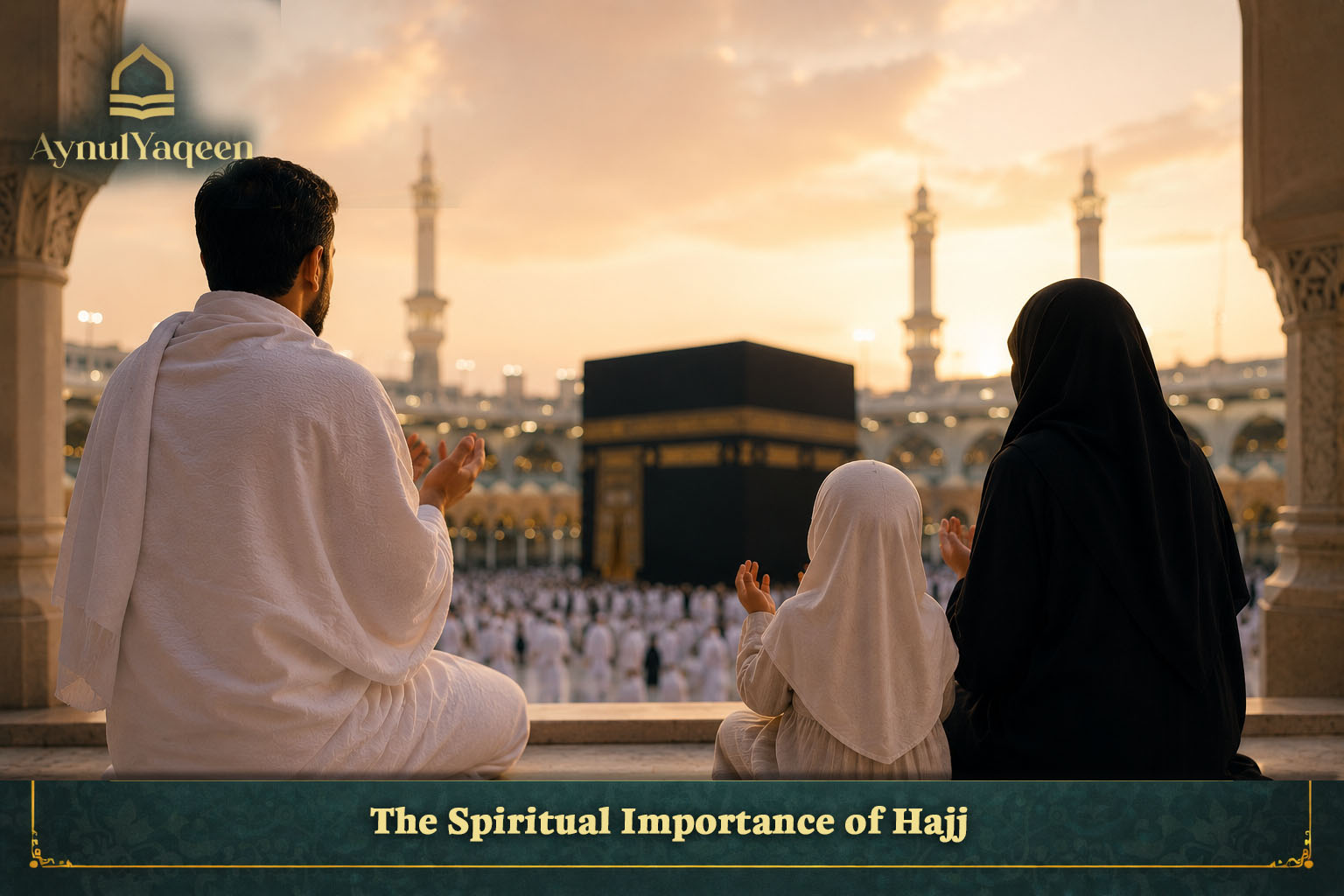
Hajj is not an ordinary journey. It is a once-in-a-lifetime opportunity for many Muslims, where they leave behind worldly life and focus entirely on worship and repentance. It symbolizes unity, humility, and submission to Allah.
Pilgrims wear simple clothing, stand together regardless of nationality or status, and perform the same rituals at the same time. This removes all social barriers and reminds Muslims that all humans are equal before their Creator.
A properly guided pilgrimage is essential. Many pilgrims today seek structured learning before traveling, and institutions like Aynulyaqeen Quran academy help learners understand the rituals in detail before departure.
Online Quran Academy
An Online Quran Academy provides students with the opportunity to learn the Quran, Islamic studies, and essential religious knowledge from the comfort of their homes.
It is designed to make learning flexible, accessible, and suitable for all ages, especially for those with busy schedules or limited access to local teachers. Through structured lessons and qualified instructors, students can improve their recitation, understanding, and connection with the Quran.
One of the trusted platforms in this field is Aynulyaqeen Quran academy, which offers guided learning programs that help students build strong foundations in Quran reading, Tajweed, and Islamic education in a simple and effective way.

Types of Hajj
Before performing Hajj, it is important to understand that there are three types of pilgrimage, each with different rules and structures.
1. Tamattu Hajj
This is the most common form among pilgrims. It includes performing Umrah first, exiting Ihram, and then re-entering it for Hajj.
- Umrah is performed first
- A sacrifice is required
- Break between Umrah and Hajj is allowed
2. Qiran Hajj
In this type, Umrah and Hajj are combined without exiting Ihram.
- No break between rituals
- Sacrifice is mandatory
- Requires longer patience in Ihram
3. Ifrad Hajj
This type focuses only on Hajj without Umrah.
- No sacrifice required
- Simplest form of Hajj
- Suitable for residents of Makkah or nearby regions
Among these, Tamattu is often preferred due to ease and flexibility, and it was practiced by many companions of the Prophet ﷺ.
Read also: learn islam online in usa
Preparation Before Hajj
Proper preparation ensures a smooth and spiritually focused pilgrimage. Before traveling, pilgrims should:
- Decide the type of Hajj they will perform
- Arrange travel, accommodation, and permits
- Learn essential duas and rituals
- Physically prepare for long walking distances
- Seek forgiveness from others
Many pilgrims also benefit from structured learning programs offered by Aynulyaqeen online quran academy in USA, which help them understand the sequence of rituals before departure.
Read also: aqidah classes for beginners
Miqat and Entering Ihram
Miqat refers to the designated boundaries where pilgrims must enter the state of Ihram before entering Makkah. There are five major Miqat points depending on the direction of travel.
At Miqat, pilgrims perform purification, wear Ihram clothing, and make the intention for Hajj.
Ihram Clothing Rules
- Men wear two white unstitched cloths
- Women wear modest clothing without specific restrictions
- No perfume or scented products allowed
- No cutting hair or nails after entering Ihram
The simplicity of Ihram removes all distinctions between rich and poor, creating unity among Muslims.
Step-by-Step Rituals of Hajj
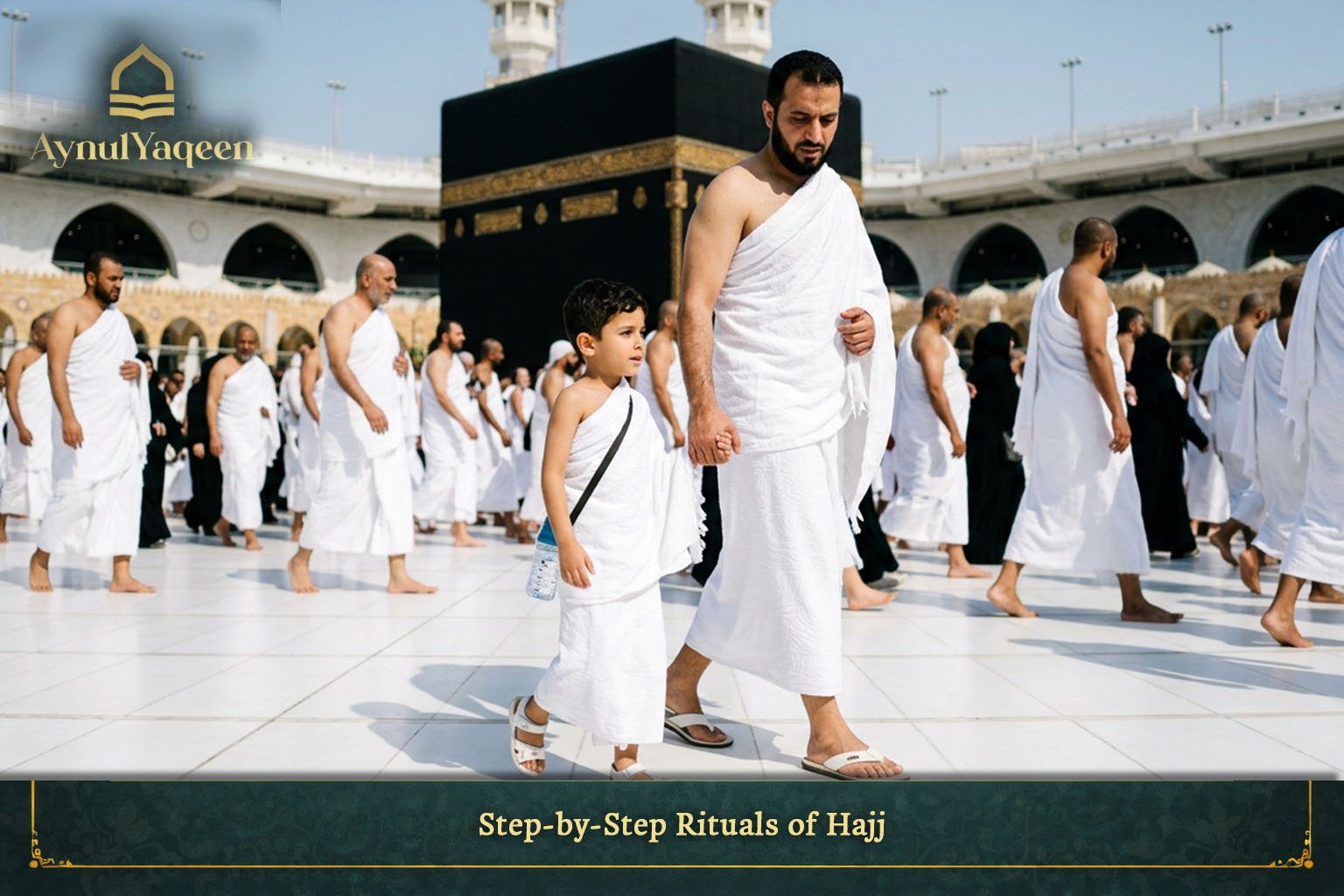
The keyword Hajj step by step is used to provide a clear, structured, and easy-to-follow explanation of the pilgrimage, helping readers understand each ritual in the correct sequence for a complete and accurate performance of Hajj.
Step 1: Making Intention (Niyyah)
The pilgrimage begins with a sincere intention in the heart. The intention must be purely for Allah, not for showing off or worldly recognition.
Step 2: Entering Ihram
After making intention, pilgrims enter Ihram at Miqat. From this moment, several restrictions apply, including avoiding arguments, cutting hair, or using perfumes.
Pilgrims begin reciting the Talbiya:
“Labbayk Allahumma Labbayk…”
This marks the official beginning of the pilgrimage journey.
Many students prepare for this stage through training provided by Aynulyaqeen online quran academy for kids, ensuring they understand each rule clearly.
Step 3: Arrival in Makkah and Tawaf
Upon reaching Makkah, pilgrims perform Tawaf around the Kaaba seven times in an anti-clockwise direction.
- Start from the Black Stone
- Circle the Kaaba seven times
- Pray at Maqam Ibrahim
- Drink Zamzam water
This ritual represents the unity of believers worshipping one Allah.
Step 4: Sa’i Between Safa and Marwah
Sa’i involves walking between the hills of Safa and Marwah seven times.
It commemorates the struggle of Hajar (AS) searching for water for her son Ismail (AS). This act teaches patience, trust in Allah, and perseverance.
Step 5: Travel to Mina
On the 8th of Dhul Hijjah, pilgrims travel to Mina.
- Perform five daily prayers
- Spend the night in worship
- Prepare for the next day in Arafah
This stage builds spiritual discipline and focus.
Step 6: Day of Arafah
Arafah is the most important day of Hajj.
- Pilgrims gather at the plains of Arafah
- Offer combined Dhuhr and Asr prayers
- Make continuous dua and repentance
The Prophet ﷺ said that Allah frees more people from Hellfire on this day than any other.
Step 7: Muzdalifah Night
After sunset, pilgrims travel to Muzdalifah.
- Perform Maghrib and Isha together
- Collect pebbles for the next ritual
- Spend the night in worship
This simple environment strengthens humility and patience.
Step 8: Stoning the Jamarat
Pilgrims return to Mina and perform Ramy (stoning of the devil).
- Throw seven pebbles at Jamarat al-Aqabah
- Say “Allahu Akbar” with each throw
- Symbolizes rejection of evil
This act reflects the story of Prophet Ibrahim (AS) resisting Shaytan.
Step 9: Sacrifice (Nahr)
The Sacrifice (Nahr) is an important ritual in Hajj where pilgrims offer a sacrificial animal as an act of gratitude, obedience, and devotion to Allah.
It symbolizes complete submission to Allah’s command and reflects the story of Prophet Ibrahim (AS), who showed unwavering faith and willingness to sacrifice his son for the sake of Allah.
This act reminds Muslims of the value of trust, patience, and sincerity in worship. The sacrifice is performed after the stoning of Jamarat al-Aqabah and is a moment of deep spiritual reflection. It also emphasizes sharing blessings with those in need through distribution of meat.
Step 10: Shaving or Trimming Hair
After sacrifice, pilgrims shave or trim their hair.
- Men usually shave completely
- Women trim a small portion
This marks partial release from Ihram.
Step 11: Tawaf al-Ifadah
Pilgrims return to Makkah for another Tawaf.
- Seven rounds around Kaaba
- Two rakah prayer
- Sa’i if not performed earlier
This is a central pillar of Hajj.
Step 12: Final Days in Mina
Pilgrims spend additional days in Mina:
- Continue stoning the Jamarat
- Maintain worship and remembrance
- Complete final rituals
Step 13: Farewell Tawaf
Before leaving Makkah, pilgrims perform Tawaf al-Wida, known as the Farewell Tawaf. This is the final ritual of Hajj and represents the emotional and spiritual conclusion of the sacred journey.
Pilgrims circle the Kaaba seven times with a heart full of gratitude, repentance, and hope that their Hajj has been accepted by Allah. It is a moment of reflection, where the believer realizes the completion of one of the greatest acts of worship in Islam.
After this Tawaf, pilgrims prepare to return home, carrying renewed faith and discipline, and hoping to maintain the spiritual purity gained during Hajj.
Common Mistakes During Hajj
Many pilgrims unintentionally make mistakes such as:
- Speaking loudly during Tawaf
- Assigning specific duas for each round
- Leaving Arafah before sunset
- Taking selfies during rituals
- Misunderstanding the purpose of Jamarat
- Overcrowding unnecessary rituals
Awareness of these mistakes ensures a more meaningful and accepted Hajj.
Spiritual Lessons from Hajj
Hajj teaches deep life lessons:
- Patience during hardship
- Equality among all humans
- Trust in Allah’s plan
- Detachment from material life
- Strengthening of faith
These lessons continue long after the pilgrimage ends.
Read also: Hijrah of Prophet Muhammad
Role of Islamic Learning Before Hajj
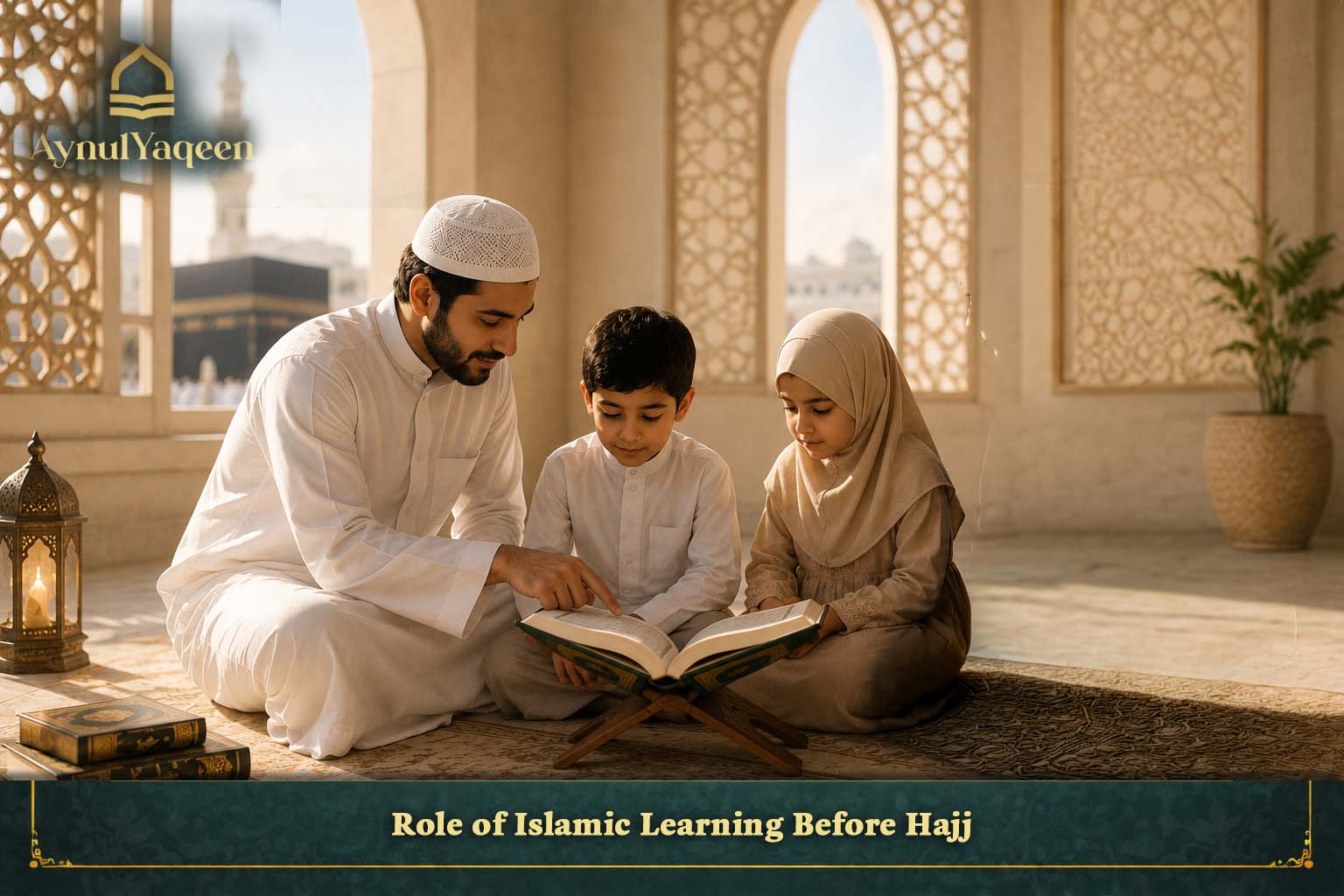
Proper preparation is essential for a successful pilgrimage. Many learners rely on structured Islamic education to understand the rituals of Hajj before traveling.
This learning ensures that pilgrims perform each step with clarity and avoid common mistakes during the journey. Institutions such as Aynulyaqeen Quran academy provide essential guidance that helps pilgrims prepare spiritually and practically.
This guidance reduces errors, strengthens confidence, and supports a more meaningful Hajj experience. It also allows pilgrims to focus on worship rather than confusion or uncertainty. Proper learning before departure helps ensure a smooth, organized, and spiritually fulfilling pilgrimage journey overall for pilgrims.
Frequently Asked Questions (FAQs)
help answer the most common queries readers may have about Hajj in a simple and clear way, making the information easier to understand and apply.
1. What is the best time to prepare for Hajj?
Preparation should begin months before travel, focusing on learning rituals, physical readiness, and spiritual purification.
2. Can women perform Hajj without a Mahram?
Most scholars require a Mahram for travel, though conditions may vary depending on safety and regulations.
3. What is the most important day of Hajj?
The Day of Arafah is considered the most important day, where Allah’s mercy and forgiveness are greatly bestowed.
In conclusion Hajj step by step is a complete spiritual journey that helps Muslims perform Hajj with clarity and sincerity. It is one of the five pillars of Islam and a deeply transformative act of worship that purifies sins and strengthens faith.
When performed correctly with patience and devotion, it brings the believer closer to Allah. Proper preparation and learning are essential, and guidance from Aynulyaqeen Quran academy helps pilgrims understand each step clearly, ensuring a more confident and meaningful Hajj experience accepted by Allah. Teaching younger learners? Our guide on Quran for children can help.
If you’re interested, check out our article on an online Quran class for kids.
You may also find our guide to a Quran tutor for beginners helpful.
Families in the US can also find flexible Quran classes in the USA scheduled around local time zones.
