

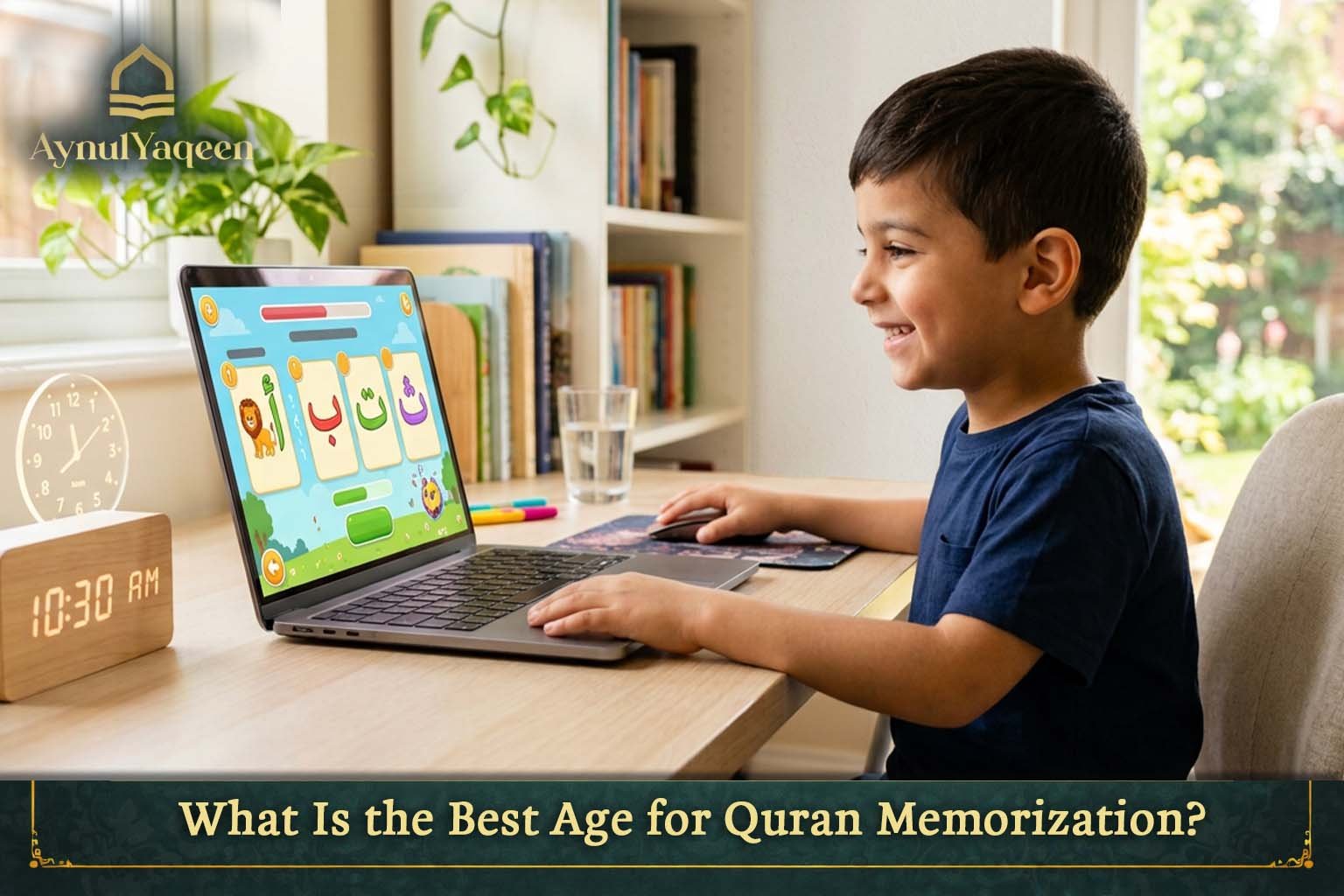
What is the best age for Quran memorization is a question many parents and adult learners ask when they want to begin Hifz but are unsure whether they are starting too early or too late. In reality, there is no single age that guarantees success for every learner. A child, teenager, and adult may all memorize the Quran successfully, but each stage requires a different pace, learning method, and revision plan.
For many families, childhood can provide a helpful environment for Quran memorization because children often have fewer responsibilities and can become familiar with Arabic sounds through repeated listening. However, starting later does not mean that the opportunity has passed. Adults can also develop strong memorization habits when they follow a realistic schedule and receive consistent guidance.
Therefore, understanding what the best age for Quran memorization is requires looking beyond a specific number. Attention span, Arabic reading ability, motivation, family support, revision habits, and the quality of teaching can all influence the learning experience.
For families working with Aynulyaqeen Quran Academy, the goal should not simply be to start Hifz as early as possible. Instead, learners can follow an age-appropriate plan that considers their current ability and gradually builds accurate recitation, memorization, and revision habits.
What Is the Best Age to Start Memorizing the Quran?
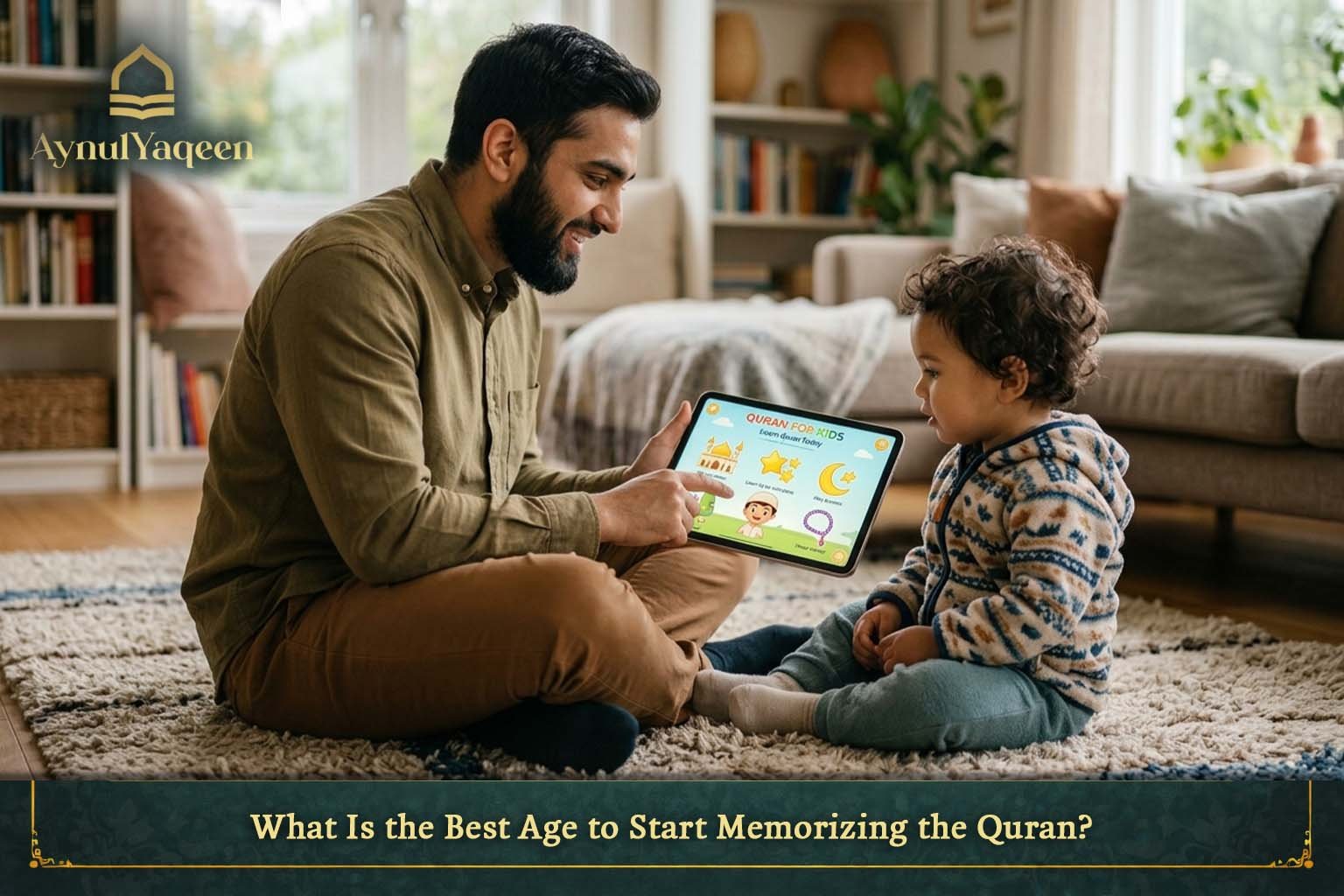
For many children, the period between approximately five and ten years old can be a practical stage for beginning structured Quran memorization. At this age, many children can follow instructions, repeat passages consistently, and develop regular study routines.
However, this does not mean that every five-year-old should immediately begin an intensive Hifz program. Some children may benefit from listening and short-surah practice first, while others may already have enough reading ability and concentration to begin more structured lessons.
Consequently, what is the best age for Quran memorization depends partly on readiness rather than age alone. Before starting a formal program, parents can consider whether the child can:
- Recognize and read Arabic letters and Quranic words.
- Sit and concentrate for a short lesson.
- Repeat an ayah several times without becoming overwhelmed.
- Follow simple instructions from a teacher.
- Review previously memorized passages regularly.
- Show at least some interest in Quran learning.
A child who meets these basic conditions may be ready to begin gradually. On the other hand, if a child struggles with attention or becomes highly frustrated during lessons, preparation may be more beneficial than increasing the memorization workload.
Learn Online with Aynulyaqeen Quran Academy
Choosing the right online Quran academy can make a significant difference in your learning journey. Aynulyaqeen Quran Academy provides structured Quran courses for beginners and advanced learners, focusing on accurate Quran reading, Tajweed, memorisation, and Islamic studies.
With qualified teachers, flexible class schedules, and personalised one-on-one lessons, students of all ages can learn at their own pace while building confidence in reciting and understanding the Holy Quran from anywhere in the world.

Why Is This Age Often Considered Suitable for Quran Memorization?
Young children can become comfortable with repeated sounds and phrases through regular exposure. Moreover, they often learn through repetition without viewing it as an unusual part of the learning process.
That can make short, consistent Hifz sessions easier to introduce into their daily routine. Nevertheless, parents should avoid turning memorization into a source of pressure.
The answer to what is the best age for Quran memorization should therefore include the emotional side of learning. A child who associates the Quran with encouragement and meaningful family routines may develop a more positive relationship with memorization than a child who experiences constant pressure to achieve a specific daily target.
What Is the Best Age for Quran Memorization for Young Children?
When parents ask what the best age for Quran memorization for a young child, it is useful to separate early exposure from formal memorization.
Children can hear Quran recitation from a very young age. Listening to short surahs during calm daily routines can help them become familiar with pronunciation and rhythm. However, listening should not automatically be treated as formal Hifz.
Around four or five, some children may begin remembering short passages naturally. By five or six, others may be ready for short structured sessions. Still, there is considerable variation between children.
For example, one child may comfortably memorize several short ayahs, while another may need several days to become confident with the same amount. Neither situation necessarily indicates a problem.
At Aynulyaqeen Quran Academy, an age-sensitive approach can help learners progress without forcing every child into the same timetable. The focus should remain on accurate recitation, gradual memorization, and regular revision.
How Can Parents Prepare Children Before Formal Hifz?
Before asking what is the best age for Quran memorization, parents can ask a more practical question: how can the child become ready? Several simple habits can help:
- Play clear Quran recitation at suitable times.
- Encourage the child to repeat short surahs.
- Read Quran together as a family.
- Use Salah as an opportunity to reinforce familiar surahs.
- Praise effort rather than comparing the child with other students.
- Keep early practice short and consistent.
- Correct mistakes gently rather than interrupting every few seconds.
This preparation can make the transition into structured Hifz smoother. Furthermore, it allows parents to observe whether the child enjoys repetition and can maintain attention during Quran activities.
What Is the Best Age for Quran Memorization Based on Learning Readiness?
Age is only one part of the equation. In practice, learning readiness can be more useful when deciding whether a child should start formal Hifz.
A child who is seven but cannot yet read Quranic text independently may need foundational Quran reading lessons first. Meanwhile, another child who is five and already reads confidently may be ready for carefully selected short surahs.
This is why the best age for Quran memorization cannot be answered responsibly with a single number for every family. Parents should consider several readiness indicators:
- Reading ability: The learner should gradually become comfortable recognizing Quranic words.
- Pronunciation: Basic pronunciation should be developed before memorization becomes intensive.
- Attention: The child needs enough concentration to complete a short session.
- Consistency: Regular practice matters more than occasional long lessons.
- Emotional readiness: The child should not feel that Quran memorization is simply a punishment or academic competition.
- Revision ability: Memorized material must be reviewed rather than continuously replaced with new content.
When these factors are considered together, parents can make a more practical decision about starting Hifz.
What Is the Best Age for Quran Memorization for Teenagers?
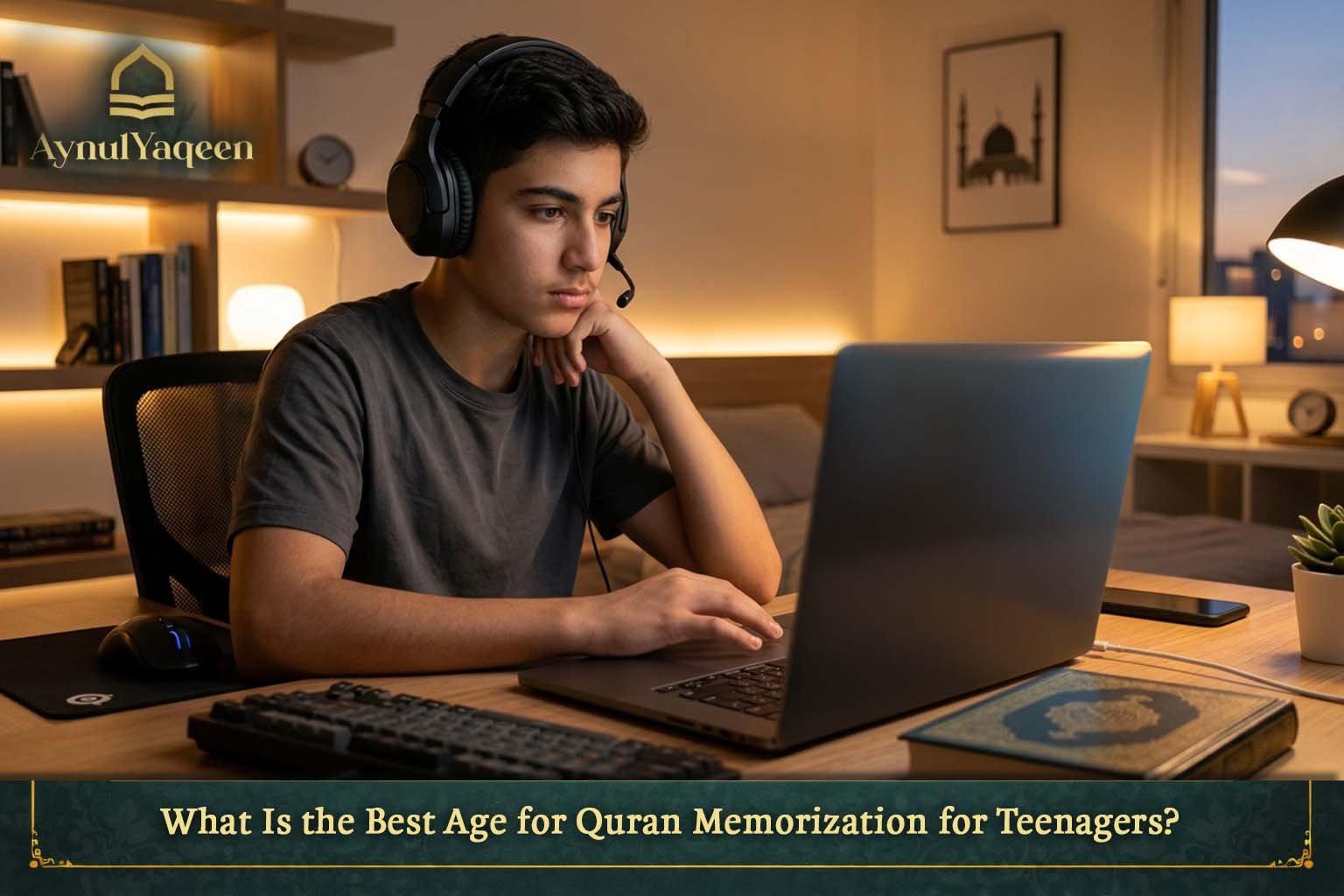
Teenagers are sometimes overlooked when families discuss what is the best age for Quran memorization. However, adolescence can still be a productive period for Hifz.
Teenagers often have stronger reading abilities and can understand the meaning and context of what they memorize. At the same time, schoolwork, exams, social activities, and changing schedules may make consistency more challenging.
Therefore, teenagers may benefit from a structured plan that clearly separates new memorization from revision. For instance, a teenager could establish:
- A fixed daily memorization period.
- A separate revision period.
- Weekly review of older portions.
- Regular recitation to a qualified teacher.
- A realistic monthly target.
- Occasional lighter days when academic demands are high.
The objective is not to maximize the number of ayahs memorized in one session. Instead, the learner should build material that can remain secure over time.
What Is the Best Age for Quran Memorization If a Teenager Starts Late?
There is no need for a teenager who starts Hifz at thirteen, fourteen, fifteen, or later to assume that the opportunity has disappeared.
In fact, greater maturity can help the learner understand why revision matters. A teenager can also participate actively in planning the memorization schedule rather than depending entirely on parents.
When considering the best age for Quran memorization, families should therefore avoid treating childhood as the only meaningful starting point.
A teenager who begins with a manageable target and maintains it consistently may progress more effectively than a younger child who memorizes large amounts without sufficient revision.
What Is the Best Age for Quran Memorization for Adults?
Many adults ask what is the best age for Quran memorization because they believe Hifz becomes unrealistic after childhood. That assumption can discourage people unnecessarily.
Adults can memorize the Quran at different stages of life. However, their learning environment may differ considerably from that of children. An adult may have:
- Full-time employment.
- Family responsibilities.
- Household commitments.
- Less uninterrupted study time.
- Established pronunciation habits.
- Previous experiences with Quran reading.
- Different levels of Arabic knowledge.
Consequently, adult Hifz often requires careful scheduling rather than simply increasing the amount of material.
At Aynulyaqeen Quran Academy, adult learners can benefit from a plan that takes their existing responsibilities into account. Instead of comparing an adult’s pace with a child’s pace, the focus should be on sustainable progress.
Is There an Age When It Becomes Too Late?
When people ask what is the best age for Quran memorization, they sometimes actually mean, “Am I too old to start?”
There is no general age cutoff that prevents someone from learning and memorizing the Quran. An older learner may need more repetition or a slower pace, but that does not make memorization impossible.
In fact, adults often bring useful strengths to the process. They may understand the value of discipline, recognize the importance of long-term goals, and consciously choose to protect time for Quran study.
The key is to create realistic expectations. Someone with only twenty minutes available each day should build a plan around twenty minutes rather than attempting a schedule designed for a full-time student.
What Is the Best Age for Quran Memorization and How Does Revision Change With Age?
Revision is one of the most important parts of Hifz regardless of age. However, the amount and structure of revision may change according to the learner.
Younger children may need frequent repetition because they are still developing their study habits. Teenagers may benefit from combining repetition with understanding the meaning of the passages. Adults may need more deliberate scheduling because their available study time is often limited.
Therefore, what is the best age for Quran memorization should never be separated from the question of how memorized material will be maintained. A practical revision system may include:
- Reviewing yesterday’s lesson before starting new material.
- Revisiting older passages several times each week.
- Reciting memorized portions to a teacher.
- Using Salah to reinforce familiar surahs.
- Setting aside a weekly session primarily for revision.
- Reducing new material temporarily when older portions become weak.
This approach prevents the common mistake of measuring Hifz progress only by the amount of new material completed.
What Is the Best Age for Quran Memorization Without Creating Pressure?
Parents naturally want their children to benefit from Quran memorization. However, excessive pressure can make the experience difficult.
When thinking about what is the best age for Quran memorization, parents should also consider whether the learning environment supports healthy motivation. Children generally respond better when adults:
- Celebrate steady improvement.
- Avoid comparing siblings.
- Do not use other children’s progress as a benchmark.
- Give breaks when concentration drops.
- Make revision part of normal life.
- Correct mistakes without humiliation.
- Recognize effort as well as achievement.
A child does not need to memorize a fixed number of pages every day to have a successful relationship with the Quran.
Instead, the family can focus on creating a routine that is calm, predictable, and sustainable.
What Is the Best Age for Quran Memorization According to Different Stages?
There is no universal schedule, but the following framework can help families understand the differences between age groups:
| Age | Possible Focus | Practical Approach |
|---|---|---|
| 3–4 | Listening and familiarity | Short surahs, repetition, Quran exposure |
| 5–7 | Early structured memorization | Short sessions and frequent review |
| 8–12 | More organized Hifz | Regular new lessons and revision |
| 13–17 | Structured independent learning | Memorization combined with understanding |
| 18+ | Flexible adult Hifz | Sustainable schedule and planned revision |
This table should be viewed as a starting framework rather than a strict rule. Individual readiness can shift the appropriate starting point considerably.
For that reason, what is the best age for Quran memorization is better answered through an assessment of the learner than through age alone.
What Is the Best Age for Quran Memorization When Arabic Is Not the Child’s First Language?
Families who live in non-Arabic-speaking environments may have an additional concern. A child may know how to speak another language but still need support with Arabic pronunciation and Quranic reading.
In this situation, parents should not assume that memorization alone will solve pronunciation difficulties.
Instead, Quran reading, correct articulation, and Tajweed should develop alongside Hifz. A teacher can identify pronunciation issues early and help the learner correct them before they become established habits.
This consideration is especially important when evaluating what is the best age for Quran memorization for children growing up outside Arabic-speaking communities.
The child may need more preparation before formal memorization, but that does not mean the process needs to be delayed indefinitely.
With structured instruction, listening practice, and consistent correction, learners can gradually become more confident with Quranic Arabic.
What Is the Best Age for Quran Memorization With a Qualified Teacher?
A teacher can make a significant difference regardless of the learner’s age. With proper guidance, students can learn how to memorize the noble quran easily while developing habits that support accurate and consistent practice.
For young students, the teacher can adjust the amount of new material according to attention and understanding. For teenagers, the teacher can help balance memorization and revision. Adults may benefit from a teacher who can identify pronunciation problems and adapt the schedule around work and family commitments.
Therefore, what is the best age for Quran memorization should also include the question of whether the learner has appropriate guidance. A structured Quran program can provide:
- Regular recitation checks.
- Correction of pronunciation.
- A clear memorization target.
- Planned revision.
- Progress monitoring.
- Personalized pacing.
- Accountability without unnecessary pressure.
Aynulyaqeen Quran Academy can be incorporated into this process by providing learners with structured Quran education that considers their individual stage rather than assuming every student learns in the same way.
What Is the Best Age for Quran Memorization If Parents Want Their Child to Become a Hafiz?
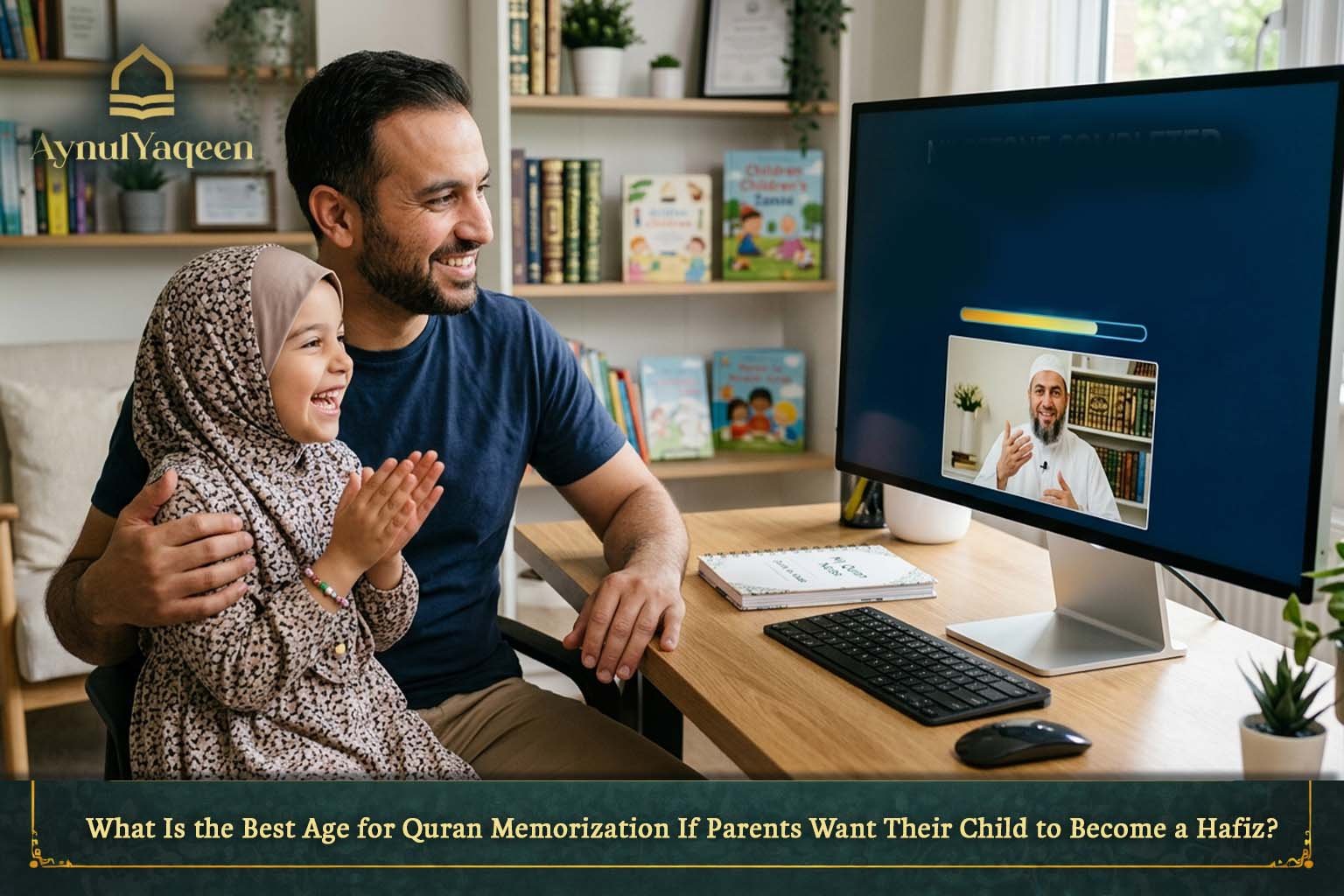
Parents who hope their child will eventually complete the Quran may naturally search for what is the best age for Quran memorization. Starting earlier can provide more years for gradual learning, but starting early should not mean rushing. Parents can also explore the easiest way to memorize the quran for kids when creating an age-appropriate routine. A sustainable Hifz journey may involve several stages:
- Stage 1: Quran reading
The child develops familiarity with Arabic letters, words, and basic pronunciation. - Stage 2: Short surahs
The learner begins with manageable passages and becomes comfortable with repetition. - Stage 3: Structured memorization
New material is introduced according to the child’s ability. - Stage 4: Regular revision
Older portions become a permanent part of the weekly routine. - Stage 5: Increasing independence
The learner gradually takes greater responsibility for preparation and review.
This progression can be more valuable than focusing exclusively on the starting age.
How Can Aynulyaqeen Quran Academy Support Different Ages?
Choosing what the best age for Quran memorization is only the first step. The next question is whether the learning program matches the student’s needs.
Aynulyaqeen Quran Academy can be presented as an option for families and individuals looking for structured Quran learning. The academy’s role in an Hifz journey should be connected naturally to the learner’s goals rather than presented as a universal solution. Students can also benefit from practical Tips for quran memorization that support their regular study routine.
For children, the learning process can emphasize short sessions, encouragement, accurate recitation, and repetition.
For teenagers, the approach can combine memorization with greater independence and understanding. For adults, flexibility and realistic scheduling can become especially important.
Ultimately, the value of an online Quran program depends on how well the teaching approach fits the student’s needs. Families should consider factors such as teacher communication, lesson structure, revision practices, scheduling, and the learner’s comfort with online instruction.
What Is the Best Age for Quran Memorization: A Practical Decision Guide
If you are still unsure what is the best age for Quran memorization, use the following questions before starting a formal program.
For parents of young children
- Can my child concentrate for a short period?
- Can the child recognize basic Quranic text?
- Does the child respond positively to repetition?
- Can our family maintain a routine?
- Is the child becoming frustrated during lessons?
If most answers are positive, a gradual Hifz program may be appropriate.
For teenagers
Consider whether the student can manage a fixed schedule alongside school. Furthermore, make sure the student understands that revision is as important as new memorization.
For adults
Start with the time that is genuinely available. A modest daily routine that continues for months is usually more useful than an ambitious schedule that becomes impossible after a few weeks. Understanding How long does it take to memorize the Quran can also help adults set realistic expectations.
In every case, what is the best age for Quran memorization should lead to an individualized plan rather than a rigid age-based decision.
What Matters More Than Age in Quran Memorization?
Although what is the best age for Quran memorization is an important question, progress also depends on consistency, accurate recitation, effective revision, realistic goals, qualified guidance, and supportive family involvement. For children, understanding the Quran in an age-appropriate way can also support their connection with what they memorize, especially through resources about interpretation of the quran for kids.
- Consistency: Regular Quran practice helps learners strengthen their memory over time. Even a short daily session can be more effective than occasional long sessions because steady repetition supports lasting memorization.
- Accurate Recitation: Correct pronunciation should come before increasing the amount of memorized material. Regular recitation with a qualified teacher helps students identify mistakes early and develop stronger Quran reading habits.
- Revision: Memorizing new verses is only one part of Hifz. Regular revision helps protect previously memorized passages from being forgotten and keeps older portions strong as new material is added.
- Realistic Goals: A manageable memorization target allows learners to progress without unnecessary pressure. Setting goals according to age, ability, schedule, and available study time can make the Hifz journey more sustainable.
- Supportive Teaching: A supportive teacher provides correction, encouragement, and clear feedback throughout the learning process. This guidance can help students understand their mistakes and adjust their memorization methods when necessary.
- Family Support: For children, family support can make regular Quran learning easier. Parents can protect study time, encourage practice, and celebrate progress without comparing the child with other learners.
These factors explain why two learners of the same age can progress at very different rates.
Key Factors to Consider Before Starting Quran Memorization
So, what is the best age for Quran memorization? For many children, around five to ten can be a practical period for structured memorization, especially when the child has developed sufficient reading and attention skills. However, this range should not be treated as a universal rule.
Younger children can begin with listening, repetition, and short surahs. Teenagers can still make meaningful progress with a structured plan. Adults can begin Hifz later in life and adapt the process to their available time and learning needs.
Most importantly, the question should not be limited to age. The quality of instruction, consistency, revision, pronunciation, motivation, and realistic pacing all contribute to a successful memorization journey.
If your family is considering Hifz, Aynulyaqeen Quran Academy can be considered as part of the process of finding an organized learning environment suited to the student’s age and current ability.
The most useful starting point is therefore not asking whether a particular age is perfect. Instead, ask whether the learner is ready, whether the routine is sustainable, and whether the teaching method provides enough correction and revision to support long-term retention.
Frequently Asked Questions About What Is the Best Age for Quran Memorization
Many parents and learners ask what the best age for Quran memorization and whether children should begin early or wait until they are more prepared. The answer can depend on readiness, routine, learning ability, and the support available at home.
What Is the Best Age for Quran Memorization for a Child Who Does Not Understand Arabic?
A child can memorize Quranic verses without fully understanding their Arabic meaning. However, what is the best age for Quran memorization may also depend on the child’s ability to listen, repeat, and follow basic instructions. Learning simple meanings alongside memorization can help the child connect with the verses and develop a deeper relationship with what they are reciting.
Should Parents Wake a Child Early Specifically for Quran Memorization?
Not necessarily. When considering the best age for Quran memorization, parents should also consider the child’s sleep, school schedule, energy level, and ability to concentrate. Although some learners focus well in the morning, the most suitable time is one that allows the child to remain rested, focused, and consistent.
How Should Parents Respond When a Child Refuses to Memorize Quran?
Parents can first identify the reason for resistance. When deciding on the best age for Quran memorization, it is important to recognize that readiness is not only about age. The issue may be tiredness, lesson length, difficulty level, frustration, or an unsuitable teaching style.
Reducing the workload temporarily and discussing the problem with the teacher can help identify a more suitable approach. This is especially important when parents are unsure whether what is the best age for Quran memorization should be based on chronological age or the child’s individual readiness.
Does Starting Earlier Always Make Quran Memorization Easier?
Starting early can give a child more time to build a gradual memorization routine, but age alone does not determine success. Parents asking what the best age for Quran memorization is should consider consistency, accurate recitation, revision, motivation, and the child’s ability to participate comfortably in lessons.
For this reason, what is the best age for Quran memorization is better understood as a question of readiness rather than a fixed age that applies to every learner.
Can someone memorize the Quran while having a full-time job?
Yes. Working adults can organize Hifz around their existing responsibilities by setting a manageable daily target and protecting a consistent study period. Progress may be gradual, but a sustainable routine can make long-term memorization possible.
In conclusion, what is the best age for Quran memorization cannot be reduced to one number that applies to every learner. Childhood can offer useful advantages, particularly when children have time for repetition and regular guidance. Nevertheless, teenagers and adults can also pursue Hifz successfully when their study plan reflects their circumstances.
For children, preparation, reading ability, positive encouragement, and gradual progression are important. For older learners, realistic scheduling, focused revision, and consistency become increasingly valuable.
Most importantly, Quran memorization should be approached as a long-term journey rather than a race. With suitable guidance and a sustainable routine, learners can build their memorization step by step.
Aynulyaqeen Quran Academy can support families and individual learners who want structured Quran learning while allowing the pace and approach to reflect the student’s stage. The right beginning is not necessarily the earliest possible beginning; it is the beginning that the learner can maintain with accuracy, patience, and commitment.
