

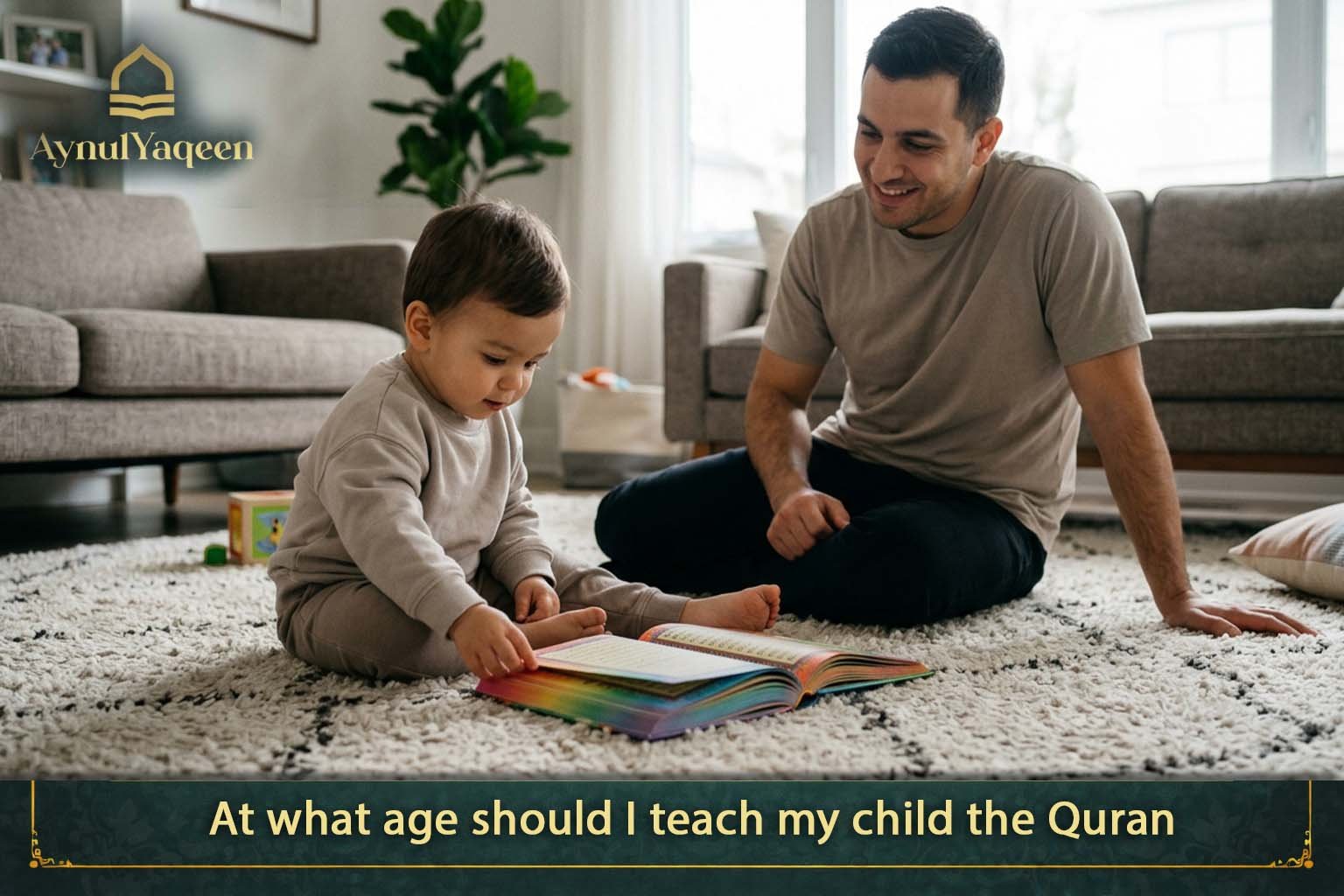
At what age should I teach my child the Quran is a question many Muslim parents ask when they want to build a strong Quranic foundation at home. Parents may wonder whether they should begin during the toddler years, wait until the child enters school, or start when the child can read independently. In reality, Quran learning does not follow one fixed timetable for every child.
At what age should I teach my child the Quran depends on several factors, including the child’s communication skills, attention span, emotional readiness, family routine, and previous exposure to the Quran. Some children enjoy listening from an early age, while others become more interested when they begin recognizing letters and words.
The goal is not simply to start as early as possible. Instead, parents should create a positive relationship with the Quran that can develop gradually. A child who associates Quran learning with encouragement, warmth, and meaningful interaction is more likely to continue learning with confidence.
Why Is There No Perfect Age for Quran Learning?
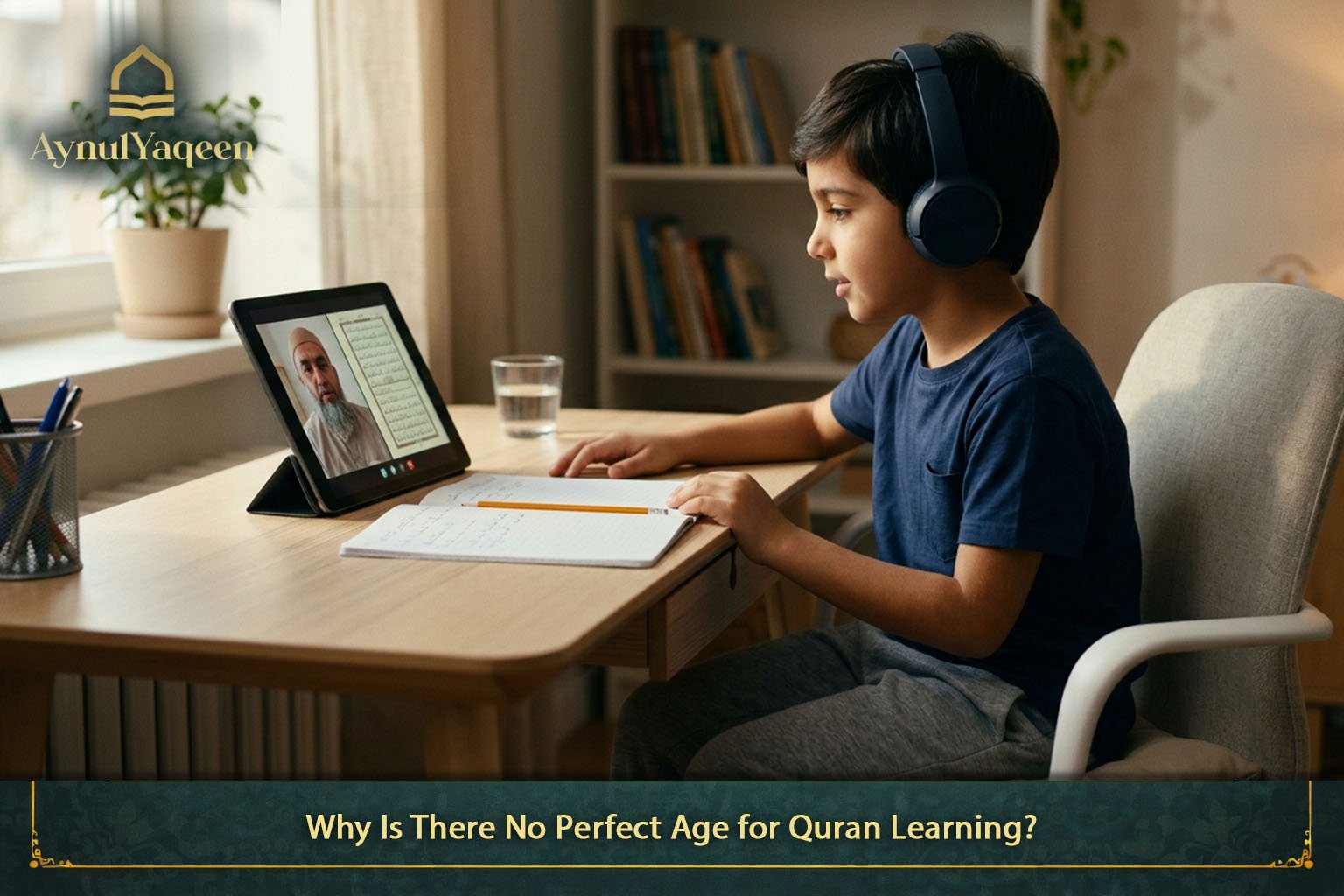
At what age should I teach my child the Quran cannot be answered with one number because children develop differently. One child may be ready to recognize Arabic letters at an early age, while another may need more time before formal lessons become productive.
Readiness is often more useful than age alone. Parents can observe whether their child can sit for a short activity, listen to repeated sounds, follow simple instructions, and show curiosity about Quran recitation.
A child does not need to master Arabic before beginning Quran education. Early exposure can involve listening, repeating short verses, recognizing familiar sounds, and becoming comfortable with the Quran.
Learn Online with Aynulyaqeen Quran Academy
Choosing the right online Quran academy can make a significant difference in your learning journey. Aynulyaqeen Quran Academy provides structured Quran courses for beginners and advanced learners, focusing on accurate Quran reading, Tajweed, memorisation, and Islamic studies.
With qualified teachers, flexible class schedules, and personalised one-on-one lessons, students of all ages can learn at their own pace while building confidence in reciting and understanding the Holy Quran from anywhere in the world.

At What Age Should I Teach My Child the Quran Through Listening?
At what age should I teach my child the Quran becomes easier to understand when parents distinguish between listening and formal study. Listening can begin naturally during early childhood because it does not require the same concentration as reading or memorization.
Parents can play gentle Quran recitation during appropriate moments at home. They can also recite themselves while the child is nearby. This type of exposure helps make Quran recitation a familiar part of everyday life.
At what age should I teach my child the Quran through listening does not mean that the child must sit through a long session. A few minutes of calm listening can be enough, especially for a very young child.
At this stage, the purpose is familiarity rather than achievement. Parents should avoid turning every listening experience into a test.
Signs Your Child May Be Ready to Start
When to start teaching the Quran should also be considered alongside practical signs of readiness. A child may be ready for more structured learning when they can:
- Follow simple directions.
- Repeat short sounds or words.
- Recognize some letters or symbols.
- Stay focused on a short activity.
- Ask questions about Quran recitation.
- Enjoy listening to parents read.
- Participate without becoming consistently distressed.
At what age should I teach my child the Quran may therefore be different for two children of the same age. Parents should focus on development instead of comparing siblings, classmates, or children seen online.
Readiness can also change over time. A child who struggles with formal lessons today may respond much better after several months of natural exposure and encouragement.
At What Age Should I Teach My Child the Quran Without Pressure?
At what age should I teach my child the Quran should never become a reason to pressure a child into long lessons before they are ready. Excessive pressure can make Quran learning feel like punishment rather than an important part of Muslim life.
Short sessions are often more practical than demanding a young child remain seated for a long period. The lesson can begin with listening, move to repetition, and gradually include reading or memorization.
At what age should I teach my child the Quran is less important than how the learning experience feels to the child. A calm five-minute activity can sometimes be more beneficial than a stressful thirty-minute session.
Parents can also give children small choices, such as deciding whether to begin with reading, repetition, or listening. Limited choices can help children feel involved without removing the structure of the lesson.
Start With Short and Manageable Lessons
At what age should I teach my child the Quran becomes more practical when the family creates realistic expectations. Young children usually benefit from lessons that match their attention span rather than an adult-style study schedule.
A simple routine might include a short review, a new portion, pronunciation practice, and a positive ending. The exact structure can change according to the child’s level.
At what age should I teach my child the Quran should not be connected to a fixed number of minutes for every child. Some learners may manage ten minutes comfortably, while others may need shorter sessions with breaks.
Consistency matters more than making every lesson long. Regular contact with the Quran allows skills to develop gradually without making learning feel overwhelming.
At What Age Should I Teach My Child the Quran and Arabic Letters?
At what age should I teach my child the Quran often becomes a question about when formal reading should begin. Learning Arabic letters can be introduced once the child shows enough interest and attention to benefit from structured practice.
Children can learn through visual recognition, sound repetition, tracing, matching activities, and simple reading exercises. The method should be adapted to their developmental stage.
At what age should I teach my child the Quran through Arabic reading does not require parents to rush through all twenty-eight letters. It is usually more helpful to establish accurate recognition and pronunciation before moving quickly to more complex combinations.
Some letters may require additional practice because their sounds are unfamiliar to children who do not hear Arabic regularly. Repetition should therefore be patient and consistent.
How can Parents Make Quran Learning Enjoyable?
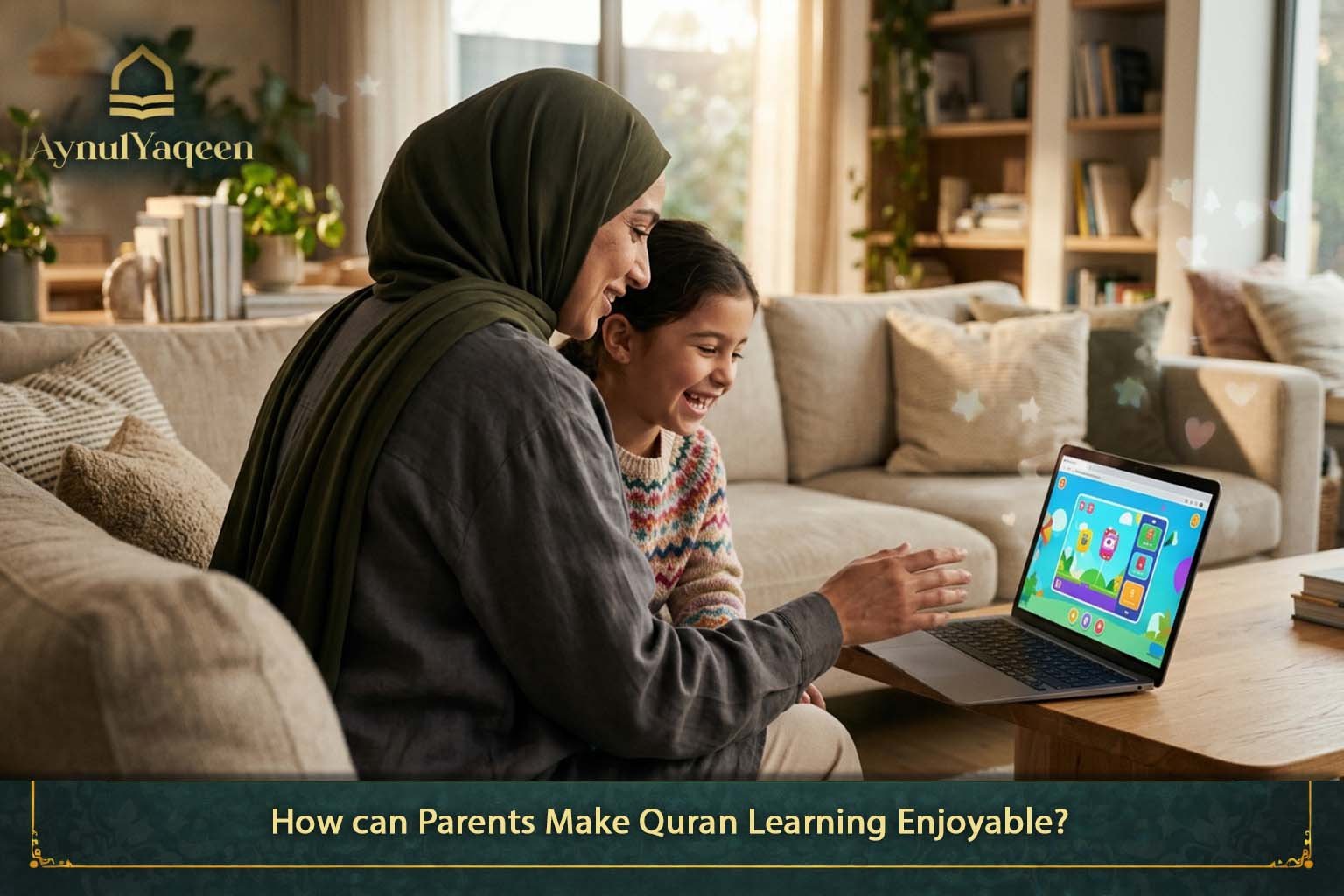
At what age should I teach my child the Quran is only one part of creating a successful learning environment. The child’s emotional experience also matters greatly.
Parents can connect lessons with daily family life. They might recite a short surah together, listen to a familiar reciter, or discuss a simple value found in a verse.
At what age should I teach my child the Quran should not become a daily argument. If every lesson ends with frustration, parents may need to adjust the activity rather than simply increase discipline.
Praise should focus on effort, improvement, and persistence. Saying that a child pronounced a difficult letter more clearly today can be more meaningful than giving general praise without explaining what improved.
At What Age Should I Teach My Child the Quran With Memorization?
At what age should I teach my child the Quran for memorization depends on the child’s ability to retain and review material consistently. Some children enjoy memorizing short surahs early, while others first need to develop reading confidence.
Memorization should include regular revision. Learning new verses without maintaining previous material can create an unstable foundation.
At what age should I teach my child the Quran through memorization should therefore be considered together with the child’s ability to review. A small amount learned securely is usually more useful than a large amount quickly forgotten.
Parents can begin with short passages that the child already hears during daily prayers. Familiarity can make repetition easier and help connect memorization with worship.
Understanding Should Grow Alongside Memorization
At what age should I teach my child the Quran should not be reduced to how many pages a child can memorize. Quran education also includes understanding, manners, reflection, and practical application.
Even young learners can receive age-appropriate explanations. Parents do not need to provide complicated tafsir. A simple explanation of a verse’s general message may be enough for a young child.
At what age should I teach my child the Quran becomes more meaningful when children understand that the Quran is not merely a text to memorize. It is guidance that influences how Muslims speak, behave, worship, and treat other people.
Parents can ask simple questions after a lesson, such as what the child remembers or which idea they found interesting. This encourages understanding without turning every lesson into an examination.
At What Age Should I Teach My Child the Quran With Tajweed?
At what age should I teach my child the Quran with Tajweed depends on the child’s reading development. Basic pronunciation awareness can begin early, while more detailed Tajweed rules may be introduced progressively.
Children should first become comfortable with Arabic letters and their sounds. As reading develops, a teacher can gradually introduce rules that help improve accuracy.
At what age should I teach my child the Quran with formal Tajweed should therefore be determined according to the learner’s ability rather than an arbitrary birthday. A ready child can progress, while another may need more foundational practice.
Correcting mistakes should also be handled carefully. Children need to understand that correction is part of learning, not evidence that they have failed.
The Parent’s Role in a Child’s Quran Journey
At what age should I teach my child the Quran is closely connected to the environment created at home. Parents influence how children view Quran learning through their own behavior.
When children see parents reading the Quran, listening attentively, or making time for worship, they receive a practical example. The home environment can reinforce what the child learns during formal lessons.
At what age should I teach my child the Quran should therefore be considered as part of a broader family routine. The Quran does not need to appear only during scheduled lessons.
Parents can also celebrate progress without turning Quran learning into competition. A child’s journey should be measured against their own previous ability.
Avoid Using Fear as the Main Teaching Method
At what age should I teach my child the Quran should never be separated from the way discipline is handled. Fear may produce short-term compliance, but it can create negative associations with learning. Parents can instead explain the value of worship and introduce topics such as ramadan fasting rules in an age-appropriate way, helping children understand religious practices without making them feel pressured.
Children need boundaries, yet correction can remain respectful. A parent can explain expectations clearly while still recognizing tiredness, frustration, or difficulty.
At what age should I teach my child the Quran becomes a healthier question when parents focus on building commitment rather than forcing immediate performance. Teaching should also emphasize accurate recitation, especially when children begin learning what is the importance of tajweed and understanding why correct pronunciation matters.
If a child repeatedly resists a particular lesson, parents can examine the possible cause. The problem may involve lesson length, teaching style, timing, difficulty level, or fatigue.
Choosing an Online Quran Teacher for Your Child
At what age should I teach my child the Quran also depends on the quality of instruction available to the child. A suitable teacher should understand children’s different learning speeds and communicate with patience.
Parents should consider whether the teacher can explain clearly, correct pronunciation appropriately, maintain the child’s attention, and adapt lessons when necessary. A teacher can also introduce broader Quran knowledge gradually, including helping children understand How many surahs are in the Quran when they are ready for this type of information.
At what age should I teach my child the Quran online can be especially practical for families that need flexible scheduling. However, online learning still requires an instructor who knows how to engage young learners through a digital environment.
At Aynulyaqeen Quran Academy, families can seek structured Quran learning designed around the student’s level and learning needs.
A good teacher should also communicate with parents when there are meaningful concerns about progress. Regular feedback can help the family understand what the child is practicing and where additional support may be useful.
At What Age Should I Teach My Child the Quran if They Are Easily Distracted?
At what age should I teach my child the Quran when a child has a short attention span should be approached with flexibility. Distraction does not automatically mean that the child is not ready.
Short activities can help maintain attention. Parents can divide one lesson into smaller tasks rather than expecting continuous concentration.
At what age should I teach my child the Quran should not be decided only by how long a child can sit quietly. Active repetition, visual materials, listening, and teacher interaction may all improve engagement.
Parents can also schedule lessons when the child is normally alert. A tired learner may appear unwilling even when they are genuinely interested in the subject. When children show a stronger interest in memorization, parents can also consider What is the best age for Quran memorization while keeping expectations appropriate for their individual development.
How to Build a Simple Quran Routine at Home?
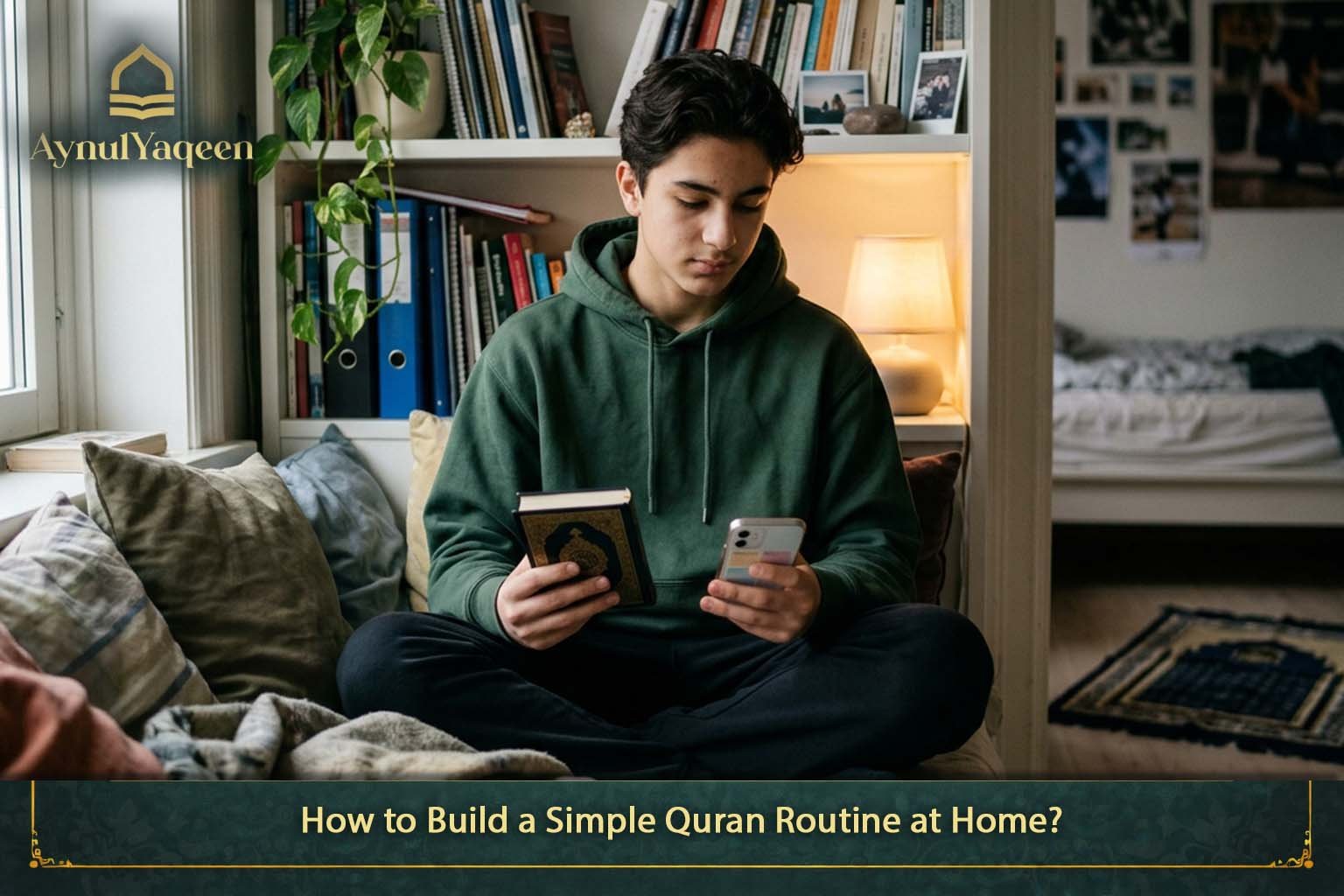
At what age should I teach my child the Quran becomes easier to manage when parents establish a predictable routine. Children often respond well when they know what will happen and when. A home routine might include:
- A short daily listening period.
- Several reading sessions each week.
- Regular memorization review.
- Family Quran time.
- Occasional progress checks.
- Quiet time for individual practice.
At what age should I teach my child the Quran should not require parents to create an unrealistic schedule. A simple routine that the family can maintain is more useful than an ambitious plan that disappears after a few days.
At Aynulyaqeen Quran Academy, structured lessons can complement home practice by giving children regular guidance while parents reinforce learning between sessions. Families can also explore How can a girl child learn Quran online when looking for an online learning approach that suits their daughter’s needs.
At What Age Should I Teach My Child the Quran if We Start Late?
At what age should I teach my child the Quran if the child is already older should not create anxiety. Starting later does not mean that meaningful Quran education is impossible.
Older children may actually have advantages. They may understand instructions better, concentrate for longer periods, and recognize why Quran learning matters.
At what age should I teach my child the Quran should therefore never become a source of guilt for parents who did not start earlier. The most useful step is to begin with an appropriate level now.
An older beginner may need an assessment before starting. This allows the teacher to identify reading ability, pronunciation needs, memorization experience, and areas that require additional practice.
What Should Parents Look for in a Quran Learning Program?
At what age should I teach my child the Quran is easier to answer when parents know what a suitable program should provide. A strong program should consider the child’s current ability rather than placing every learner on the same path. Parents can look for:
- Age-appropriate teaching methods.
- Clear Quran reading instruction.
- Gradual Tajweed development.
- Memorization with revision.
- Patient correction.
- Communication with parents.
- Flexible scheduling when needed.
- A clear learning progression.
At what age should I teach my child the Quran should be discussed with the teacher before committing to a particular learning plan. The teacher can explain what the child can reasonably work on at the current stage.
At Aynulyaqeen Quran Academy, the learning process can be organized around the student’s starting level, helping families avoid unnecessary pressure or unsuitable expectations.
At What Age Should I Teach My Child the Quran for Long-Term Results?
At what age should I teach my child the Quran for lasting results is less about starting at a specific age and more about maintaining a sustainable relationship with learning. Children need opportunities to review what they have learned. Without revision, memorized material may gradually become weaker.
At what age should I teach my child the Quran should also be considered alongside family consistency. A child who learns gradually over several years may develop stronger long-term skills than one who follows an intense schedule for a short period.
The family should therefore prioritize steady progress, accurate reading, positive motivation, and regular practice.
How can Quran Learning Support a Child’s Character?
At what age should I teach my child the Quran matters because Quran education can extend beyond reading and memorization. Parents can connect lessons with values such as honesty, patience, kindness, responsibility, and respect.
At what age should I teach my child the Quran becomes more meaningful when the child begins to see how Quranic guidance relates to everyday decisions.
For example, parents can connect a lesson with how children speak to siblings, treat classmates, respond to mistakes, or help family members. These conversations should remain age-appropriate and practical.
At Aynulyaqeen Quran Academy, Quran learning can be approached as a gradual educational journey rather than a race to complete a certain amount of material.
At What Age Should I Teach My Child the Quran? A Practical Answer
At what age should I teach my child the Quran does not have one universal answer. Listening and positive exposure can begin very early, while structured reading, memorization, and Tajweed should develop according to the child’s readiness.
At what age should I teach my child the Quran should be answered by looking at several factors together: age, attention, language development, reading ability, emotional readiness, family routine, and the child’s response to learning.
Parents should not compare their child’s progress with another child’s timeline. A slower beginning can still lead to excellent progress when teaching is consistent and supportive.
The most important objective is to help the child develop a lasting connection with the Quran. Starting at an appropriate stage, using manageable lessons, and maintaining a positive environment can make that journey easier.

At what age should I teach my child the Quran is a question that can be discussed with an experienced teacher after considering the child’s current level and learning needs.
At Aynulyaqeen Quran Academy, parents can explore a structured approach that takes the learner’s abilities and goals into account. The purpose is to help children progress gradually while receiving appropriate guidance.
At what age should I teach my child the Quran should not be separated from the question of how the child will learn. A suitable program can make lessons clearer, provide regular correction, and help parents understand the learner’s progress.
At Aynulyaqeen Quran Academy, students can receive support with Quran reading, memorization, pronunciation, and progressive Tajweed according to their learning stage.
Parents can also use home practice to reinforce what is taught during lessons. Even a few minutes of consistent review can help children maintain familiarity with previously learned material.
Frequently Asked Questions About Teaching the Quran to Children
Should I teach Quran reading before memorization?
Reading skills provide an important foundation for independent Quran study. However, young children can also memorize short surahs through listening and repetition while they are developing their reading ability.
How often should a child’s Quran progress be assessed?
There is no single schedule that suits every learner. A teacher can review progress whenever there is enough new material or when parents notice a change in reading accuracy, retention, or confidence.
Should children use the same Mushaf during memorization?
Using a consistent Mushaf can help some learners remember the visual position of verses on the page. The most important consideration is that the child uses a clear and appropriate Mushaf consistently.
What should parents do during busy school periods?
During exams or demanding school periods, families can temporarily reduce Quran practice while maintaining a small amount of regular review. This can help preserve continuity without creating unnecessary pressure.
In conclusion At what age should I teach my child the Quran is ultimately a question about readiness rather than a single number. Early exposure can help children become familiar with recitation, while formal learning can develop as their skills and attention grow.
At what age should I teach my child the Quran should be answered with patience. Some children will progress quickly, while others will need more repetition and encouragement.
Parents can focus on creating a calm environment, choosing suitable lesson lengths, encouraging effort, and avoiding unnecessary comparisons.
At Aynulyaqeen Quran Academy, families can seek guidance based on the child’s level and goals, helping make Quran learning a structured and manageable part of the child’s education.
The best starting point is the one that allows the child to learn consistently without losing their love and respect for the Quran.
