

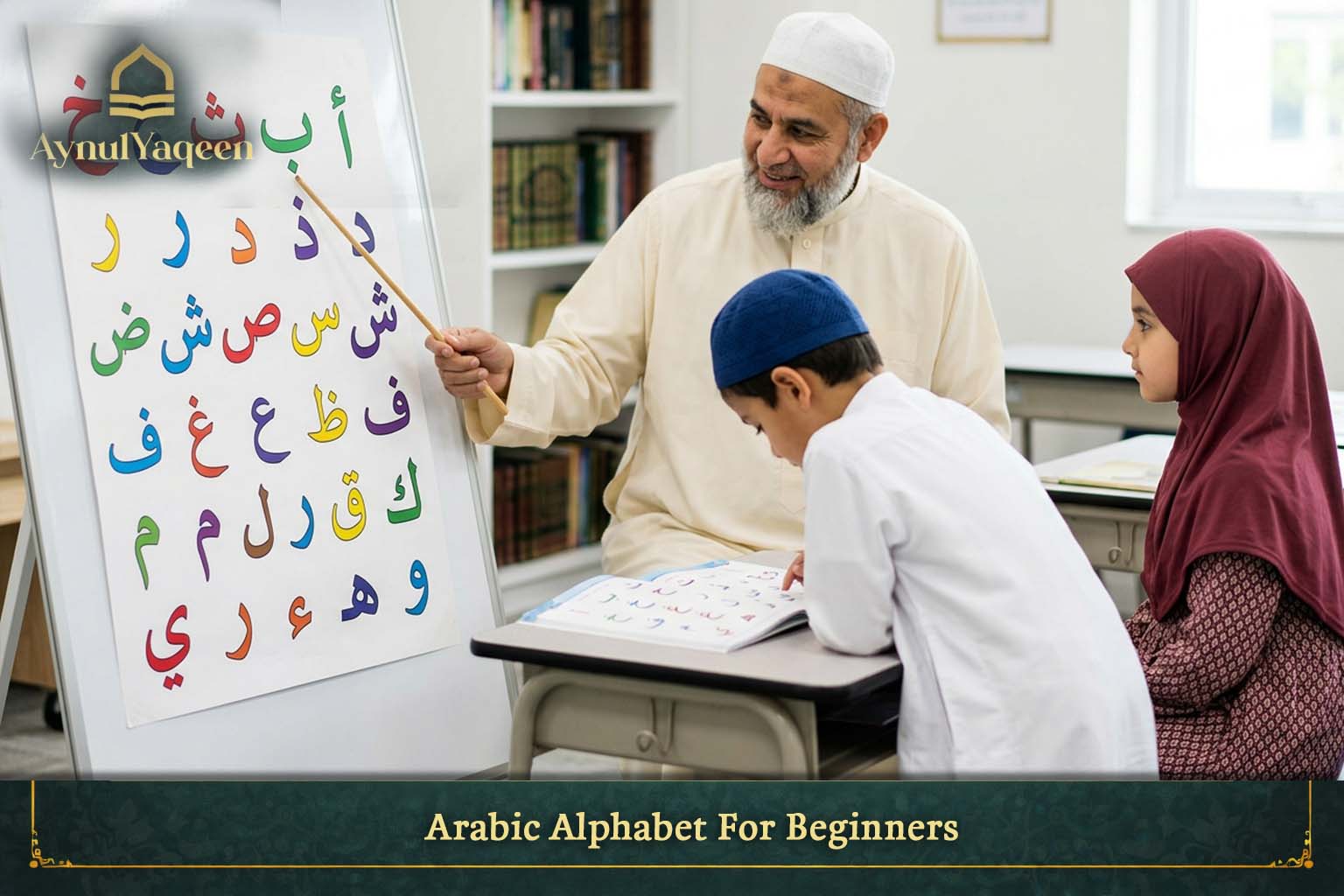
Arabic alphabet for beginners Learning with Aynulyaqeen Arabic academy is the essential first step for anyone who wants to start learning the Arabic language in a correct and structured way. The Arabic alphabet forms the foundation of reading, writing, and pronunciation, making it impossible to progress without mastering it first.
At this early stage, beginners learn how each letter sounds, how it changes shape in words, and how to pronounce it properly. With consistent practice and the right guidance, learners can quickly build confidence and avoid common mistakes.
Understanding the Arabic alphabet also makes future learning easier, smoother, and more enjoyable, as it opens the door to reading real Arabic words and sentences effectively.
A beginner’s step-by-step guide to learning Arabic letters

Learning Arabic letters for beginners, also known as arabic alphabet for beginners, is the very first and most important step for anyone who wants to learn Arabic in a correct and smooth way. Without mastering the Arabic alphabet, learners will struggle with reading, writing, and even pronunciation, because the alphabet is the foundation of everything in the language.
In this complete guide, we will take you through a structured learning journey that starts from understanding the Arabic letters, moves to pronunciation, and ends with practical strategies and tips to help you learn confidently and effectively.
Online Quran Academy
Online Quran academy learning has become one of the most effective and accessible ways for students around the world to study the Holy Quran with proper guidance and flexible schedules. It allows learners to connect with qualified teachers, improve their recitation, and understand Tajweed rules from the comfort of their homes.
Aynulyaqeen Arabic academy provides a structured online Quran academy program designed for beginners and advanced learners alike. Through personalized lessons, students can develop accurate pronunciation, strengthen their reading skills, and build a deeper connection with the Quran in a supportive learning environment.

Importance of Learning Arabic Letters for Beginners
Learning Arabic letters is not just a simple stage in language learning; it is the foundation that determines your overall success. Many learners start with excitement but struggle later because they skip this essential step.
Arabic letters are unique because they include sounds that do not exist in English or many other languages. This makes learning them at the beginning very important.
When a learner starts correctly, they can:
- Read faster and more accurately
- Improve pronunciation significantly
- Understand words without difficulty
- Avoid mistakes that change meaning
In addition, learning Arabic letters builds confidence when dealing with Arabic texts, whether they are simple, religious, or educational materials.
Overview of the Arabic Alphabet
The Arabic language consists of 28 letters and is written from right to left. This direction may feel unusual at first, but it becomes natural with practice.
Key characteristics of Arabic letters:
Arabic letters are written from right to left, change shape depending on their position in a word, and require precise pronunciation from different parts of the mouth and throat.
1. Letters change shape depending on position
A letter can appear at the beginning, middle, or end of a word, and its shape changes while its sound remains the same.
2. Letters are connected
Arabic letters are written in a connected form, which makes handwriting beautiful but requires practice to recognize different shapes.
3. Vowel marks (Tashkeel)
Short vowels such as Fatha, Damma, and Kasra are placed above or below letters to guide pronunciation. These are especially important for beginners to avoid confusion.
Grouping Arabic Letters for Easier Learning
To make learning easier, Arabic letters can be divided into three groups:
Easy letters for beginners
ب، ت، د، ف، ك، م، ن
These are similar to English sounds and easy to learn quickly.
Medium difficulty letters
ث، ذ، س، ش، ز، ر، و، ي
These require listening and repetition to master.
Difficult letters
خ، ع، غ، ق، ص، ض، ط، ظ
These letters require special pronunciation techniques because they come from deep or unique articulation points.
This grouping helps learners progress step by step without feeling overwhelmed.
Step-by-Step Method to Learn Arabic Letters
Success in learning Best Online Quranic Arabic Course depends more on method than time. Following a clear plan is essential.
1. Gradual learning
Start with 3 to 5 letters per day and revise regularly.
2. Listening and imitation
Listen to native speakers and try to imitate their pronunciation exactly.
3. Daily repetition
Repetition is the key to memorization and mastery.
4. Speaking out loud
Do not study silently only; always pronounce letters clearly.
5. Use learning tools
Flashcards, apps, and audio tools help connect sound with shape.
Improving Arabic Pronunciation
Correct pronunciation is one of the most important skills when learning quranic arabic grammar lessons letters. Some letters require special articulation from the throat or tongue.
For example:
- The letter “ع” (Ayn) comes from deep in the throat
- The letter “ق” (Qaf) is also produced from the back of the throat
- The letter “خ” (Kha) has a rough sound similar to the Scottish “loch”
Effective ways to improve pronunciation:
- Practice in front of a mirror
- Record your voice and compare it with native speakers
- Repeat after audio examples
- Practice daily without interruption
Common Mistakes When Learning Arabic Letters
Many beginners confuse similar-looking online arabic classes for kids letters and ignore vowel marks, which leads to incorrect pronunciation and misunderstanding. Another common mistake is relying too much on English sounds instead of learning Arabic letters as unique sounds that require practice and repetition.
1. Confusing similar letters
For example: ب، ت، ث or د، ذ
They look similar but differ in sound and meaning.
2. Ignoring vowel marks
Skipping Tashkeel leads to incorrect pronunciation and misunderstanding.
3. Relying on English sounds
Some learn arabic online in usa sounds do not exist in English and cannot be compared directly.
4. Lack of daily practice
Inconsistent learning slows progress significantly.
The Role of Aynulyaqeen Arabic academy in Learning
Aynulyaqeen Arabic academy plays an important role in helping beginners understand Arabic letters in a structured and simple way. It follows a step-by-step method that starts with basics and gradually builds strong reading and pronunciation skills.
Aynulyaqeen Arabic academy also helps learners correct pronunciation errors in real time, which speeds up the learning process and improves accuracy.
Many students report that joining Aynulyaqeen Arabic academy helped them gain confidence in reading and speaking Arabic in a short time due to its structured lessons and consistent practice environment.
Effective Tools for Learning Arabic Letters
Several tools can help improve learning efficiency:
- Educational videos
- Audio pronunciation apps
- Daily repetition exercises
- Reading aloud practice
- Interactive learning activities
These tools help strengthen memory and improve retention.
Daily Learning Plan
To achieve the best results, follow this structured plan:
Days 1–3
Learn 3 letters daily with repetition.
Days 4–7
Add new letters while reviewing previous ones.
Week 2
Start reading simple words.
Week 3
Move on to short sentences.
Following this plan ensures steady and organized progress.
Gradual Development of Reading Skills
After mastering letters, learners should gradually progress:
- Simple words
- Short sentences
- Longer texts
This gradual approach builds strong reading confidence over time.
Importance of Daily Practice
Daily practice is the most powerful factor in language learning. Even 10 minutes per day can make a huge difference if done consistently.
With regular practice:
- Pronunciation improves
- Reading speed increases
- Mistakes decrease
Building Confidence Through Arabic Learning Practice
Building confidence in learning comes through continuous repetition, patience, and real experience. Every learner begins their journey with mistakes, and this is completely normal. In fact, mistakes are an important part of the learning process because they help identify areas that need improvement and guide the learner toward better understanding over time.
As learners continue practicing, they gradually notice improvement in their skills, pronunciation, and understanding. This progress builds motivation and encourages them to keep going. The key to success is not perfection from the beginning, but consistency in effort every day.
With time and regular practice, confidence naturally grows, and learning becomes easier, more enjoyable, and more effective.
Final Tips for Beginners
- Do not try to learn everything at once
- Focus on letters first
- Listen more than you read in the beginning
- Practice speaking daily
- Do not fear mistakes
Why Arabic Alphabet for Beginners is Essential
Mastering the arabic alphabet for beginners is the most important step in starting your journey to learn Arabic successfully. Once learners understand the online arabic tutor for kids letters, they can easily move on to reading words, forming sentences, and gradually improving their overall language skills with confidence.
This stage is not just a basic introduction, but the real foundation of the entire learning process. Without it, learners may struggle with pronunciation, reading accuracy, and comprehension.
However, when the alphabet is mastered correctly, everything else in the language becomes clearer, simpler, and more enjoyable.That is why this step should never be skipped or rushed.
FAQs
provide clear answers to the most common questions learners may have, helping them understand key points quickly and easily without confusion.
1. How long does it take to learn Arabic letters?
Usually between two weeks and one month depending on daily practice.
2.Can I learn Arabic letters without a teacher?
Yes, but having a teacher or platform helps correct mistakes faster.
3. What is the best way to memorize Arabic letters?
Repetition, listening, and speaking out loud while connecting letters with simple words.
In conclusion, learning Arabic letters is the true starting point for anyone who wants to master the Arabic language. With consistent daily practice, effective learning techniques, and proper guidance, learners can make strong and steady progress in a relatively short time.
Following a clear and structured study plan helps remove confusion and builds a solid foundation for reading, writing, and pronunciation. Using supportive educational platforms such as Aynulyaqeen Arabic academy can further enhance the learning experience by making it more organized, interactive, and efficient.
This combination of discipline and guidance ultimately leads to greater confidence and long-term success in using the Arabic language effectively.
