

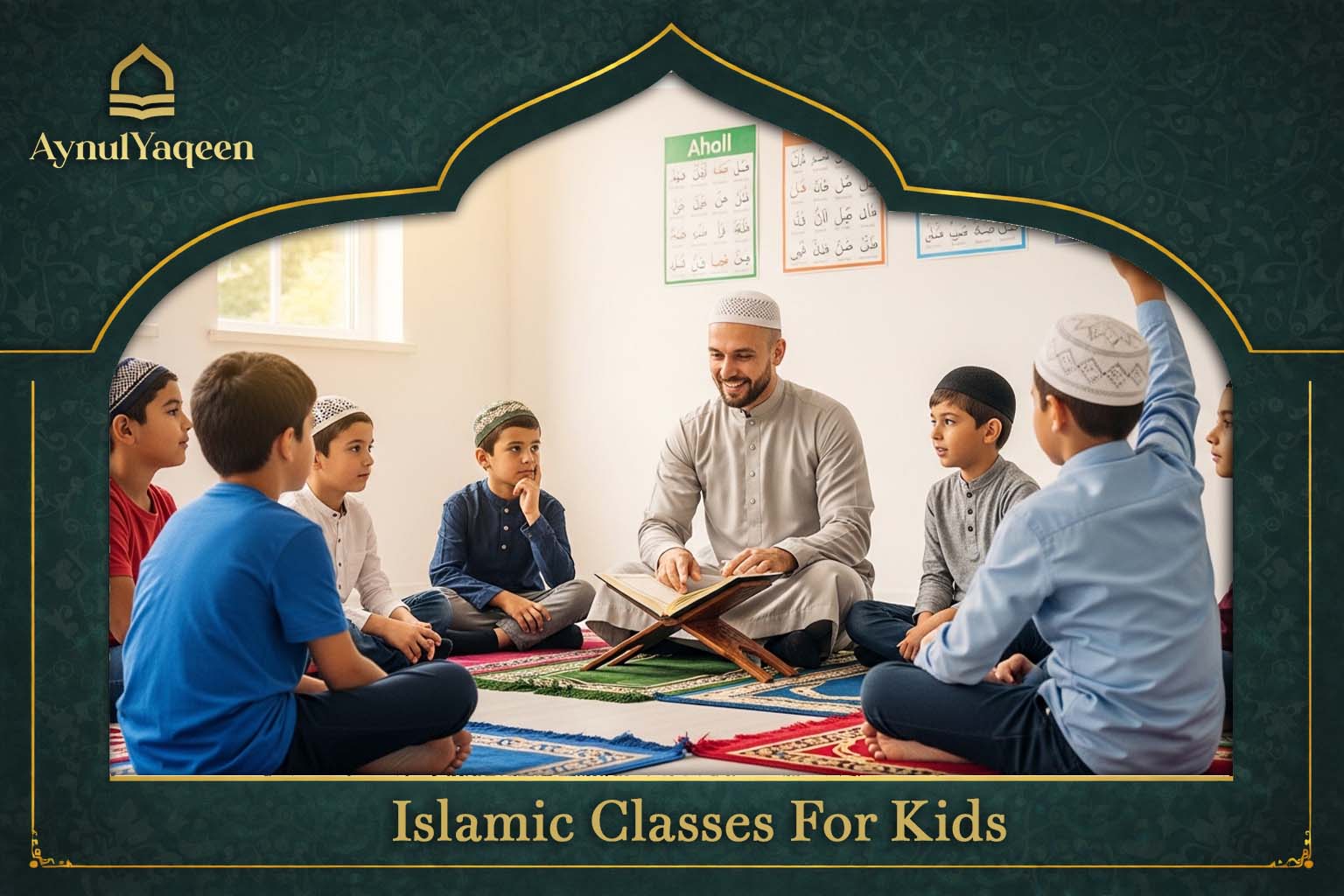
Islamic classes for kids are an important way for parents to build a strong Islamic foundation from an early age. In a world full of distractions, children need structured and engaging learning to stay focused on meaningful education.
These classes help shape not only knowledge but also character, behavior, and values in a balanced way.
Modern platforms such as Aynulyaqeen Quran academy for kids provide a simple and interactive learning experience that helps children connect with Islamic teachings naturally.
The focus is on gradual learning, understanding, and building confidence rather than pressure or memorization alone, making education more effective and enjoyable.
The Importance of Early Islamic Education for Children
Early childhood is the stage where personality, habits, and values are formed. When children are introduced to Islamic teachings at this stage, they naturally develop a strong sense of identity and moral direction.
Learning Islam early helps children understand the difference between right and wrong in everyday situations. It also builds emotional intelligence by teaching values like patience, honesty, respect, and kindness. These qualities are not just theoretical lessons; they become part of the child’s daily behavior.
A well-structured islamic class for kids ensures that children learn in a way that feels natural and enjoyable. Instead of overwhelming them with complex rules, lessons are simplified and delivered through stories, visuals, and interactive activities.
Online Quran Academy
Online Quran learning offers children a flexible and effective way to study from home while maintaining consistency and focus. It helps kids improve Quran reading, pronunciation, and understanding through interactive and structured lessons that suit their learning pace. This approach makes Islamic education more accessible and engaging for young learners.
The Aynulyaqeen Quran academy for kids provides a well-organized online Quran program designed to support children step by step. With qualified teachers and simple methods, kids build strong Quranic skills, confidence, and a lasting connection with Islamic teachings.

Online Islamic Studies For Kids and Modern Learning Methods
Online Islamic Studies For Kids programs have changed the way religious education is delivered. Instead of traditional rigid methods, children now learn through interactive sessions that keep them engaged and motivated.
One of the strongest advantages of online learning is flexibility. Children can learn from a comfortable environment without pressure, which helps them absorb information more effectively. Lessons are usually structured in short, focused sessions that match a child’s attention span.
The use of storytelling, visuals, repetition, and interactive questioning makes learning more effective. This approach ensures that children do not simply memorize information but actually understand and apply it in real life.
Platforms like Aynulyaqeen Quran academy for kids use these modern teaching methods to create a smooth and enjoyable learning experience.
What Children Learn in Online Islamic Classes
A well-designed curriculum for online islamic classes for kids covers all essential areas of Islamic knowledge in a structured way. The content is divided into core subjects that gradually build a child’s understanding.
1. Quran Reading, Tafseer, and Tajweed
The Quran is the foundation of Islamic learning. Children begin by learning how to read Arabic letters correctly and gradually move toward reading short Surahs with proper pronunciation.
Tajweed rules are introduced in a simple way so children can recite the Quran correctly without difficulty. Alongside reading, basic Tafseer is taught through storytelling methods, helping children understand the meaning behind verses in an age-appropriate way.
This approach ensures that children not only read the Quran but also develop a spiritual connection with it.
2. Hadith and Daily Supplications
Hadith lessons introduce children to the sayings and teachings of the Prophet Muhammad (peace be upon him). These lessons focus on simple, meaningful messages that children can apply in their daily lives.
Common topics include honesty, kindness, respect for parents, and helping others. Children also learn daily supplications that help them build a habit of remembering God throughout the day.
This part of the curriculum strengthens both faith and behavior in a practical way.
3. Basic Fiqh for Daily Life
Fiqh lessons are designed to teach children how to perform basic Islamic practices correctly. These include:
- How to perform ablution (wudu)
- How to pray step by step
- Understanding cleanliness and purity
- Learning the importance of charity
- Introduction to fasting in a simple way
These lessons are taught through demonstration and repetition, making it easy for children to understand and remember.
4. Character Building and Islamic Manners
One of the most important parts of Islamic education is character development. Children are taught how to behave respectfully with parents, siblings, teachers, and friends.
Stories, examples, and real-life situations are used to explain values such as honesty, patience, forgiveness, and gratitude. This helps children apply Islamic manners in their everyday interactions.
A strong focus on character ensures that learning is not limited to knowledge but extends to behavior and attitude.
Read also:quran recitation with tajweed
Structured Learning Levels for Better Understanding
To ensure effective learning, Islamic education for children is divided into structured levels. Each level builds on the previous one, allowing children to progress step by step.
Beginner Level
At this stage, children focus on learning Arabic letters, short Surahs, and basic Islamic concepts. The goal is to build familiarity and confidence.
Intermediate Level
Children begin to understand meanings, learn basic Tafseer, and apply simple Islamic practices in daily life.
Advanced Level
At this stage, the focus shifts to deeper understanding of Islamic values, stories of prophets, and stronger character development.This gradual structure ensures that learning is smooth, consistent, and stress-free.
Read also:online arabic classes for kids
Learning Outcomes of Islamic Education Programs
A well-designed program delivers clear and meaningful outcomes for children, including:
- Ability to read the Quran with correct pronunciation
- Understanding of basic Islamic beliefs and practices
- Development of daily Islamic habits
- Strong moral and ethical behavior
- Awareness of Islamic manners in social life
- Emotional and spiritual growth
These outcomes ensure that children grow with both knowledge and character.
Read also:egyptian quran tutor
Requirements for Effective Online Learning
To make the most of online islamic classes for kids, a few basic requirements are important:
- A stable internet connection
- A quiet and comfortable learning environment
- A device suitable for online learning
- Basic familiarity with video learning tools
- Regular attendance and consistency
These simple requirements help ensure that children remain focused and benefit fully from their lessons.
Read also:islamic courses for beginners
One-to-One Learning Experience
Personalized learning plays a major role in helping children progress faster. One-to-one classes allow teachers to focus entirely on a single student, adjusting lessons according to their pace and understanding.
This approach is especially helpful for children who may need extra attention or feel shy in group settings. It encourages open communication and builds confidence.
Through Aynulyaqeen Online Quran Academy for kids, personalized sessions are designed to meet each child’s unique learning needs. The academy provides structured guidance that helps children develop their Arabic and Quran skills while learning important Islamic practices, including understanding the wudu steps in a simple and age-appropriate way.
Read also:tafsir classes online
The Role of Teachers in Islamic Education
Teachers play a vital role in shaping a child’s learning experience. A good teacher does more than explain lessons; they inspire, motivate, and guide children with patience and care.
Effective Islamic teachers use simple language, storytelling techniques, and interactive methods to keep children engaged. Their goal is to make learning enjoyable while ensuring that concepts are understood clearly.
Careful selection of qualified instructors ensures high-quality education and a positive learning environment.
Read also:best quran teachers online
Benefits of Online Islamic Learning for Kids
There are many benefits to enrolling children in structured Islamic learning programs:
- Flexible learning schedule
- Comfortable learning environment
- Interactive and engaging lessons
- Strong focus on character building
- Step-by-step structured curriculum
- Continuous progress tracking
These benefits make online learning a practical and effective solution for modern families.
Read also:aqidah classes for beginners
How Online Islamic Classes Work
Online learning sessions are usually conducted through interactive video classes. Each session focuses on a specific topic and includes explanation, practice, and review.
Children are encouraged to participate actively by answering questions and repeating lessons. This interaction helps improve understanding and memory retention.
Regular assessments are also conducted to track progress and identify areas that need improvement.
The Role of Parents in the Learning Journey
Parental involvement is essential in a child’s educational journey. When parents show interest in what their children are learning, it increases motivation and consistency.
Simple actions like reviewing lessons, encouraging practice, and maintaining a routine can significantly improve learning outcomes.
A supportive home environment helps children stay focused and develop a positive attitude toward learning.
Frequently Asked Questions
is a section that answers common questions in a simple and clear way.It helps users quickly find important information without needing extra help or searching elsewhere.
1.What is the best age to start Islamic learning for kids?
Children can start basic Islamic learning as early as the age when they begin recognizing letters and simple instructions.
2.How long does it take for a child to learn Quran reading?
It depends on the child’s pace, consistency, and practice, but structured programs help make progress steady and smooth.
3.Are online Islamic classes effective for children?
Yes, when delivered through interactive methods and proper structure, they are highly effective and engaging.
In conclusion, building a strong Islamic foundation for children requires structured, consistent, and engaging learning methods.
When kids follow a clear step-by-step system, they understand concepts better, retain knowledge longer, and apply Islamic values in their daily lives.
This approach also helps shape their character, behavior, and sense of responsibility in a positive way. At Aynulyaqeen Quran academy for kids, learning is designed to be simple, meaningful, and enjoyable, ensuring every child grows with confidence, understanding, and a strong connection to Islamic teachings.
Learn also:
