


Quran Memorization Plan for Kids is one of the most valuable steps parents can take to build a lifelong connection between their children and the words of Allah. Helping a child memorize the Quran is not only about completing a certain number of pages or chapters; it is about creating a positive relationship with the Holy Quran through patience, consistency, understanding, and love.
At Aynulyaqeen Quran Academy, experienced Quran teachers help children follow a structured memorization plan that combines proper Tajweed, regular revision, and personalized guidance, making the learning journey both enjoyable and effective.
Many parents search for an effective way to help their children memorize the Quran because they want a method that fits their child’s age, learning ability, and daily routine. Children have different learning styles, and a successful memorization journey requires a balanced approach that combines repetition, encouragement, proper guidance, and a supportive environment.
Understanding the Importance of a Quran Memorization Plan for Kids
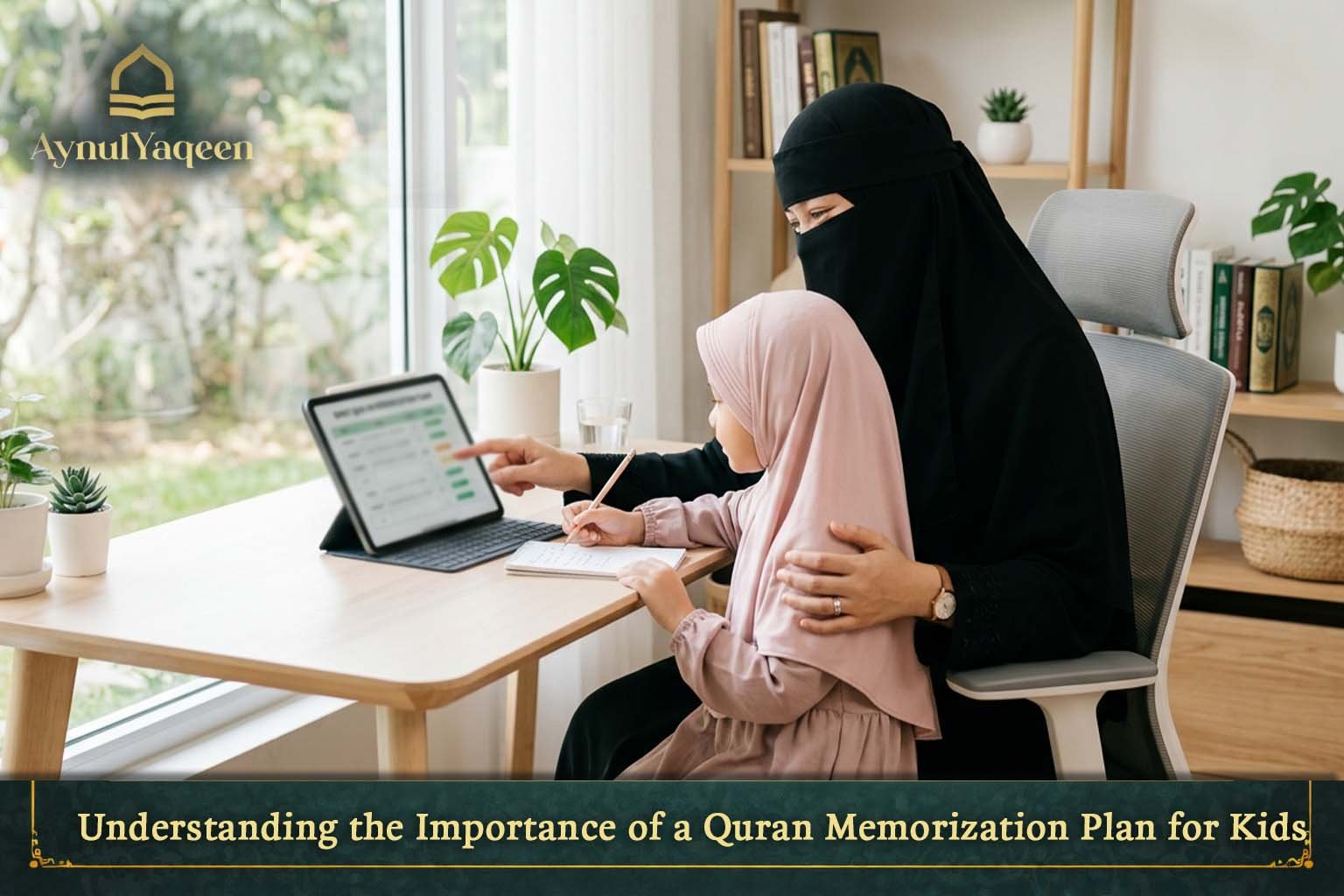
A structured quran memorization plan for kids gives children a clear path and helps parents organize their efforts. Without a proper plan, families may struggle with consistency, revision, and maintaining the child’s motivation.
The purpose of a Quran memorization plan is not simply to make children memorize quickly. The real goal is to help them memorize correctly, maintain what they have learned, improve their pronunciation, and understand the meaning of the verses.A well-designed plan provides several important benefits:
- It creates a consistent daily connection with the Quran.
- It helps children develop discipline and focus.
- It reduces the feeling that memorization is difficult.
- It allows parents to track progress effectively.
- It encourages children through achievable goals.
Children usually respond better when they know what is expected from them. A simple schedule that includes specific memorization and revision times can make the process easier and more enjoyable. For example, a child may spend a short period every day learning new verses and another period reviewing previous memorization. This balance prevents forgetting and strengthens long-term retention.
Learn Online with Aynulyaqeen Quran Academy
Choosing the right online Quran academy can make a significant difference in your learning journey. Aynulyaqeen Quran Academy provides structured Quran courses for beginners and advanced learners, focusing on accurate Quran reading, Tajweed, memorisation, and Islamic studies. With qualified teachers, flexible class schedules, and personalised one-on-one lessons, students of all ages can learn at their own pace while building confidence in reciting and understanding the Holy Quran from anywhere in the world.

Creating the Right Environment for Quran Memorization
The environment around a child has a significant impact on learning. A peaceful and organized place helps children concentrate and associate Quran time with calmness and importance. Parents can create a special Quran corner at home where the child keeps their Mushaf, notebook, and learning materials. This small step can make the child feel that online Quran memorization classes are a special and respected activity.
During memorization sessions, distractions should be minimized. Turning off unnecessary devices, reducing noise, and choosing a comfortable place can improve the child’s ability to focus. However, creating the right environment is not only about the physical space. Emotional support is equally important. Children need encouragement, kindness, and patience from the people around them. A child who feels supported will usually be more willing to repeat verses, correct mistakes, and continue learning even when some parts become challenging.
Choosing the Best Time for Quran Memorization
Timing is one of the important factors that can affect a child’s ability to memorize. Every child has different energy levels, but many children perform well during quiet times when their minds are fresh. Early morning after Fajr prayer is often considered a productive time because the environment is usually peaceful and the mind is less distracted. Some families may also prefer evening sessions after school activities are finished.
The most important thing is consistency. A short daily session is usually more effective than occasional long sessions. Parents should avoid scheduling memorization when the child is tired, hungry, or overwhelmed. Learning becomes much easier when the child feels comfortable and ready. A practical daily routine may include:
- Reviewing previously memorized verses.
- Learning a small number of new verses.
- Listening to correct recitation.
- Practicing pronunciation.
- Ending the session with positive encouragement.
This approach helps children build confidence and prevents Quran learning from becoming a stressful experience.
Quran memorization plan for kids based on Repetition and Listening
Repetition is one of the strongest tools for helping children remember Quran verses. Young learners often memorize better when they hear the same verses multiple times before attempting to recite them independently. Listening allows children to become familiar with the pronunciation, rhythm, and structure of the verses. Parents can encourage children to listen to a clear recitation regularly.A useful method is the listen-read-repeat approach:
- Listen: The child listens carefully to the verse several times from a skilled reciter. This helps them recognize the correct pronunciation and rhythm.
- Read: The child follows the verse from the Mushaf while listening. This connects visual memory with sound memory.
- Repeat: The child repeats the verse aloud several times until they can recite it confidently. Repeating verses aloud is especially helpful because children use both hearing and speaking skills during the learning process. Parents can also encourage passive listening during daily activities. Playing Quran recitation while traveling, relaxing, or before sleeping can help children become familiar with the verses naturally.
Starting with Short Surahs and Achievable Goals
Beginning with short surahs is one of the best ways to encourage young children. Short chapters allow children to experience success quickly, which increases their confidence and motivation. When a child completes a short surah, they feel proud of their achievement and become excited to memorize more.
Parents should avoid comparing their child’s progress to that of other children. Every child has a unique learning speed, and the most important factor is steady improvement. Small goals can make the journey easier. Instead of focusing on memorizing a large portion of the Quran, parents can create smaller targets such as:
- Memorizing a few verses each week.
- Completing one short surah.
- Improving one aspect of Tajweed.
- Increasing daily revision time gradually.
Using Creative Methods to Make Memorization Enjoyable
Children learn quran with Academy better when they are actively involved. Traditional repetition is important, but adding creative activities can make Quran memorization more engaging. Parents can use different methods depending on their child’s personality:
- Visual Learning: Some children remember better through seeing information. A color-coded Mushaf, written notes, or a memorization chart can help them organize what they learn.
- Writing Practice: Writing verses by hand can strengthen memory. It allows children to interact with the words and notice details they may miss while only reading.
- Games and Challenges: Simple educational games can make revision enjoyable. For example, parents can start a verse and ask the child to complete it, or use cards containing parts of verses. The purpose of these activities is not to turn Quran learning into entertainment only, but to create a positive emotional connection with memorization.
The Role of Revision in a Successful Quran Memorization Journey
Memorizing new verses is an important part of learning the Quran, but revision is what protects the memorization and keeps it strong over time. Many children can memorize new verses quickly, but without a consistent review system, they may forget what they learned.
A strong quran memorization plan for kids must include revision as a daily habit, not something done only before tests or special occasions. Revision helps children strengthen their memory and become more confident when reciting. A simple revision system can include three stages:
Reviewing Recent Memorization
The child should review the verses they learned recently before adding new ones. This ensures that the latest memorization becomes stronger before moving forward.
Reviewing Older Verses
Older memorized portions should also be included regularly. This prevents children from remembering only the newest lessons while forgetting previous ones.
Weekly and Monthly Review
Families can choose specific days for larger revision sessions. These sessions allow parents to identify areas that need more attention. Using a simple progress chart can also motivate children. When they see their achievements written down, they feel encouraged to continue. A chart can include completed surahs, daily revision goals, and personal achievements.
Parents should remember that revision is not a punishment or a sign that the child is struggling. It is a natural part of memorization that every Quran learner needs.
Helping Children Understand the Meaning of Quran Verses
Memorization becomes more meaningful when children understand what they are learning. Although young children may not understand every detail of the Quran, explaining simple meanings can help them connect with the verses. For example, parents can explain the main message of a surah using words suitable for the child’s age. They can discuss lessons about kindness, patience, gratitude, honesty, and obedience to Allah.
Understanding the meaning helps children remember because the verses become connected to ideas and emotions rather than being only a sequence of words. Parents can also share stories related to Quranic lessons. Children naturally remember stories, and connecting verses with meaningful examples makes learning more effective. A child who understands the beauty of the Quran is more likely to enjoy memorizing it and applying its teachings in daily life.
Encouragement and Positive Support During Memorization
The attitude of parents has a powerful effect on children. A supportive approach can increase confidence, while constant pressure may reduce motivation. Children need to feel that their efforts are appreciated. Even when they make mistakes, they should receive guidance with kindness. Helpful encouragement methods include:
- Praising the child’s effort and improvement.
- Celebrating the completion of a surah.
- Listening carefully when they recite.
- Offering words of appreciation.
- Creating a peaceful learning atmosphere.
Parents should focus on progress rather than perfection. A child who feels successful will usually continue trying, while a child who feels constantly criticized may lose interest. Small rewards can also be useful when used correctly. A special family activity, a certificate, or a simple celebration can help children feel proud of their achievements. However, the greatest motivation should always be helping children love the Quran and understand its importance.
The Importance of Parents Being Good Examples
Children learn from what they see. When parents regularly read the Quran, children naturally understand that the Quran has an important place in family life. A parent who makes time for Quran recitation creates a powerful example. Children often copy the habits and behaviors they observe at home. Families can create a Quran-centered atmosphere by:
- Reading Quran together.
- Listening to recitation as a family.
- Discussing lessons from verses.
- Encouraging children to use memorized verses during Salah.
When Quran becomes part of everyday life, children do not see memorization as a separate activity. Instead, they see it as a natural and beautiful part of their identity.
Developing a quran memorization plan for kids according to Age
Children at different ages require different approaches. A method that works for an older child may not work for a younger one.
Preschool Children
Young children usually benefit from listening, repetition, and short sessions. At this stage, the goal is to build familiarity and love for the Quran. Parents can focus on:
- Listening to short surahs.
- Repeating simple verses.
- Learning through songs of correct Quran recitation.
- Creating positive Quran experiences.
School-Age Children
Children in school usually have better concentration and can follow a more structured routine. They can begin working on:
- Daily memorization goals.
- Regular revision schedules.
- Basic Tajweed improvement.
- Understanding simple meanings.
Older Children
Older children can handle more responsibility. They can track their own progress and develop personal memorization habits. The key is adapting the method to the child instead of forcing every child to follow the same schedule.
How Professional Quran Guidance Can Support Children?

Some families choose to combine home practice with professional Quran education. A qualified teacher can help children improve pronunciation, correct mistakes, and maintain consistency. A good teacher understands that children need patience and encouragement. The learning environment should make children feel comfortable asking questions and improving step by step.
Aynulyaqeen quran hifz academy provides structured Quran learning support designed to help students develop their recitation and memorization skills through organized lessons and guidance. Professional support can be especially helpful for families who want a clear learning path while continuing daily practice at home.
Making a Quran Memorization Plan for Kids Part of Daily Life
One of the best quran hifz school ways to make a quran memorization plan for kids successful is to connect Quran memorization with daily activities. When Quran becomes part of everyday routines, children naturally develop consistency. Children can practice their memorized verses during Salah, listen to Quran during family time, or revise verses before bedtime as part of their quran memorization plan for kids.
When Quran becomes part of daily routines, a quran memorization plan for kids becomes easier to follow because children interact with the Quran frequently. Families do not need to make every moment a formal lesson. Instead, a quran memorization plan for kids can be strengthened through simple daily habits that create lasting results. Examples include:
- Listening to a surah during a car journey.
- Reviewing one verse after prayer.
- Reading Quran together on weekends.
- Discussing a verse’s lesson during family conversations.
These habits make every quran memorization plan for kids more effective and create a lasting relationship between children and the Quran.
Common Challenges Parents Face During a quran memorization plan for kids
Every quran memorization plan for kids comes with challenges, and understanding them helps parents respond in the right way.
Lack of Motivation
Some children may lose interest after the excitement of starting disappears. Parents can strengthen a quran memorization plan for kids by changing activities, setting smaller goals, and reminding children of the value of their efforts.
Forgetting Memorized Verses
Forgetting is normal during any quran memorization plan for kids. The solution is not frustration but increasing revision and repetition.
Difficulty With Pronunciation
Some children struggle with certain Arabic letters or Tajweed rules. Patient correction and proper guidance help every quran memorization plan for kids become more successful.
Busy Schedules
School, activities, and family responsibilities can make consistency difficult. Even a short daily session can improve a quran memorization plan for kids when maintained regularly. The important thing is continuing with patience and flexibility throughout the quran memorization plan for kids.
How to Track Your Child’s Progress in a quran memorization plan for kids?
Tracking progress helps both parents and children understand improvement. A simple tracking system makes every quran memorization plan for kids more organized.
Parents can record:
- The surahs completed.
- The verses currently being memorized.
- Revision progress.
- Areas that need improvement.
Children can also participate by marking their own achievements. This creates responsibility and encourages independence during the quran memorization plan for kids. A progress system should always feel encouraging, not stressful. Its purpose is to celebrate growth and help families improve their quran memorization plan for kids.
quran memorization plan for kids: Building a Lifelong Connection With the Quran
The ultimate goal of a quran memorization plan for kids is not only completing memorization milestones. The greater purpose is helping children develop a lifelong relationship with the online quran hifz program UK. A successful plan combines several important elements:
- Consistent daily practice.
- Proper revision.
- Understanding the meaning.
- Positive encouragement.
- A supportive environment.
- Love and respect for the Quran.
Every child progresses differently. Some children memorize quickly, while others need more time. The most important achievement of any quran memorization plan for kids is creating a child who loves the Quran and enjoys spending time with it.
Parents who provide patience, guidance, and encouragement give their children a valuable gift that can benefit them throughout their lives. With the right approach, a quran memorization plan for kids becomes a joyful experience filled with confidence, spiritual growth, and beautiful memories.
Choosing the Right Support for Your Child’s quran memorization plan for kids
Families looking for organized Quran education should consider programs that focus on both memorization and proper recitation. The right learning environment can make a quran memorization plan for kids easier and more enjoyable for children.
Aynulyaqeen Quran Academy focuses on providing structured Quran education while supporting students through every stage of their quran memorization plan for kids with appropriate guidance.
The combination of family support, daily practice, and professional instruction can help children achieve steady progress while maintaining a positive relationship with the Quran. A child who grows up connected to the Quran carries a valuable foundation that continues to guide them throughout life.
Common Mistakes Parents Should Avoid During a Quran Memorization Plan for Kids
Even with the best intentions, parents may unintentionally make mistakes that slow their child’s progress in a quran memorization plan for kids. Recognizing these mistakes can help create a healthier, more productive, and enjoyable learning experience.
Some common mistakes include:
- Setting unrealistic memorization goals.
- Comparing one child with siblings or friends.
- Skipping regular revision sessions.
- Correcting every mistake harshly during recitation.
- Prioritizing speed over accurate memorization.
Children respond much better to encouragement than pressure. A balanced quran memorization plan for kids helps them enjoy learning, build confidence, and stay committed to memorizing the Quran over the long term.
How Long Does It Take a Child to Complete a quran memorization plan for kids?
One of the most common questions parents ask is how long a quran memorization plan for kids usually takes. The answer depends on several factors, including the child’s age, consistency, revision habits, learning ability, and daily schedule.
Some children may memorize a few juz’ over several years, while others complete the Quran in a shorter period under structured guidance. Rather than focusing on finishing quickly, parents should prioritize steady progress, correct pronunciation, and strong retention.
A realistic quran memorization plan for kids with daily memorization and consistent review often produces better long-term results than rushing through large portions.
Signs That Your Child Is Ready to Advance in a quran memorization plan for kids
Not every child progresses at the same pace. Before increasing the daily memorization amount, parents should look for signs that the child is ready for the next stage of a quran memorization plan for kids.
These signs may include:
- Reciting previously memorized verses confidently.
- Completing daily revision without difficulty.
- Showing enthusiasm for learning new surahs.
- Maintaining good Tajweed while memorizing.
- Asking independently to learn more Quran.
Increasing memorization gradually within a quran memorization plan for kids helps children maintain confidence while preventing overload.
How to Balance a quran memorization plan for kids with School Responsibilities
Many parents worry that following a quran memorization plan for kids may interfere with school performance. In reality, good planning allows children to succeed in both areas. Families can create a balanced schedule by:
- Choosing fixed Quran study times each day.
- Keeping memorization sessions short but consistent.
- Increasing revision during weekends.
- Reducing memorization during exam periods while maintaining daily review.
This balanced quran memorization plan for kids allows children to stay connected to the Quran throughout the school year without feeling overwhelmed.
One-on-One Quran Classes for Quran Memorization Plan for Kids

Individual Quran lessons provide children with personalized attention that is difficult to achieve in large group classes. A qualified teacher can adjust the lesson according to the child’s pace, identify pronunciation mistakes immediately, and provide targeted encouragement throughout the quran memorization plan for kids.
One-on-one learning also allows children to ask questions comfortably, receive instant feedback, and build confidence during recitation. For many families, this personalized approach leads to faster improvement in both memorization and Tajweed skills, making every quran memorization plan for kids more effective and enjoyable.
Frequently Asked Questions
Below are answers to some of the most common questions parents ask about creating a successful Quran Memorization Plan for Kids and helping children memorize the Quran effectively.
How many verses should a child memorize each day?
The number of verses depends on the child’s age, concentration level, and previous experience. A small amount memorized consistently is usually better than a large amount learned without proper revision.
What should parents do if their child loses interest in Quran memorization?
Parents can make the process more enjoyable by changing activities, reducing pressure, celebrating progress, and reminding the child of the beauty and importance of the Quran.
Can children memorize Quran while attending school?
Yes. Many children successfully balance school and Quran memorization by following a realistic schedule that includes short daily sessions and regular revision. Sharing helpful Quran learning ideas on platforms like YouTube and Pinterest can also inspire more families to create positive Quran experiences for their children.
In conclusion, creating a successful quran memorization plan for kids is one of the best investments parents can make in their children’s spiritual and personal development. A structured plan that combines consistent memorization, regular revision, proper Tajweed, and positive encouragement helps children build confidence while strengthening their relationship with the Quran.
Every child learns differently, so patience, flexibility, and continuous support are essential for long-term success. Whether your child is just beginning or advancing in their memorization journey, following a well-organized quran memorization plan for kids can turn Quran learning into a rewarding habit that lasts a lifetime and inspires a deep love for the words of Allah.
