

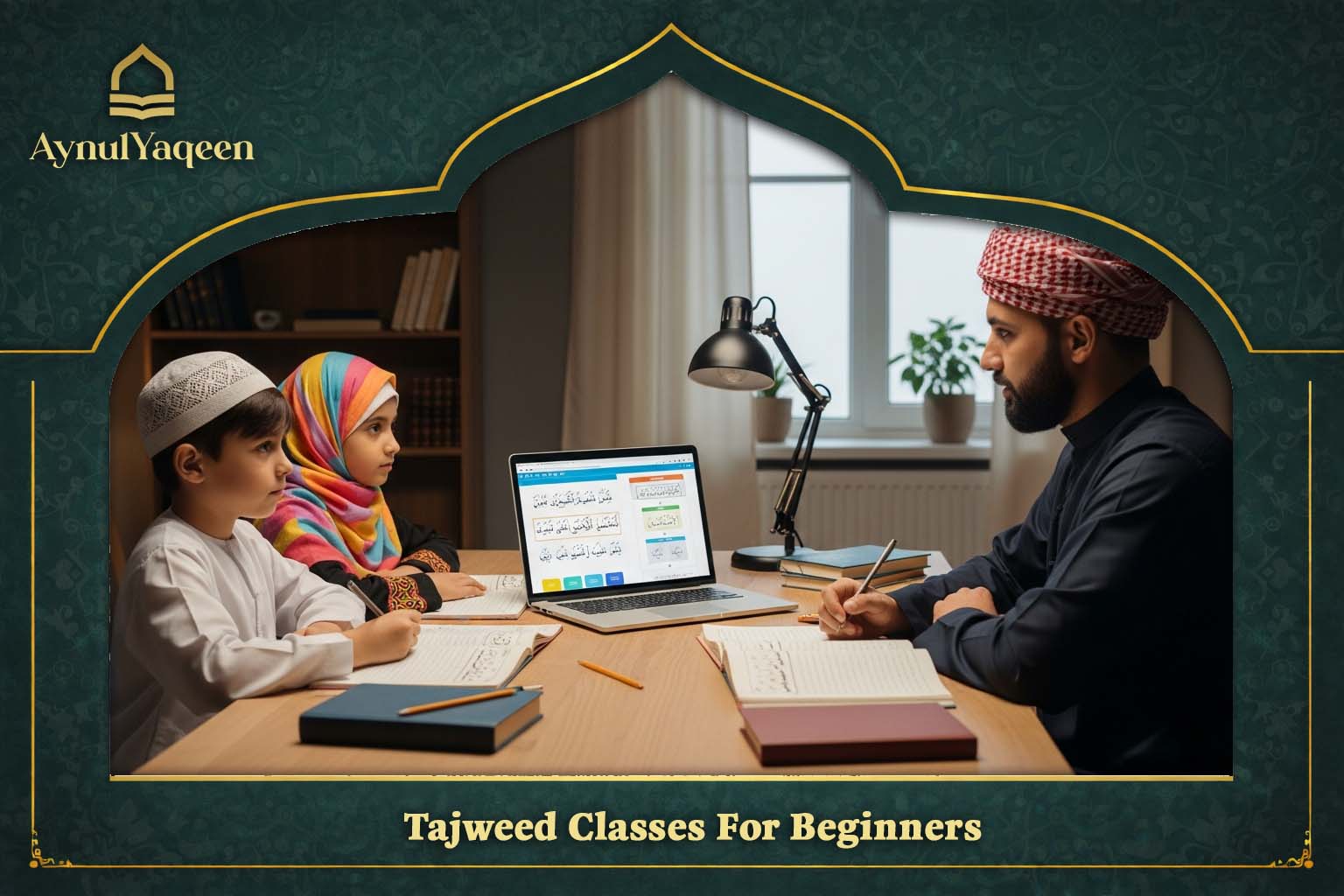
Tajweed classes for beginners are the first step for anyone who wants to recite the Quran correctly and with proper pronunciation. Many learners feel connected to the Quran, but soon realize that reading Arabic accurately requires guidance and practice. Small mistakes can change meanings, which makes structured learning very important.
Learning Tajweed is not about memorizing rules quickly, but about steady training of the tongue, ear, and heart together. Beginners need continuous correction before errors become habits.
Without proper guidance, confidence can take a long time to develop. That is why joining Aynulyaqeen Quran academyfor beginners helps students follow a clear path, improve step by step, and build accurate recitation skills with confidence.
Why beginners struggle with Quran recitation at the start
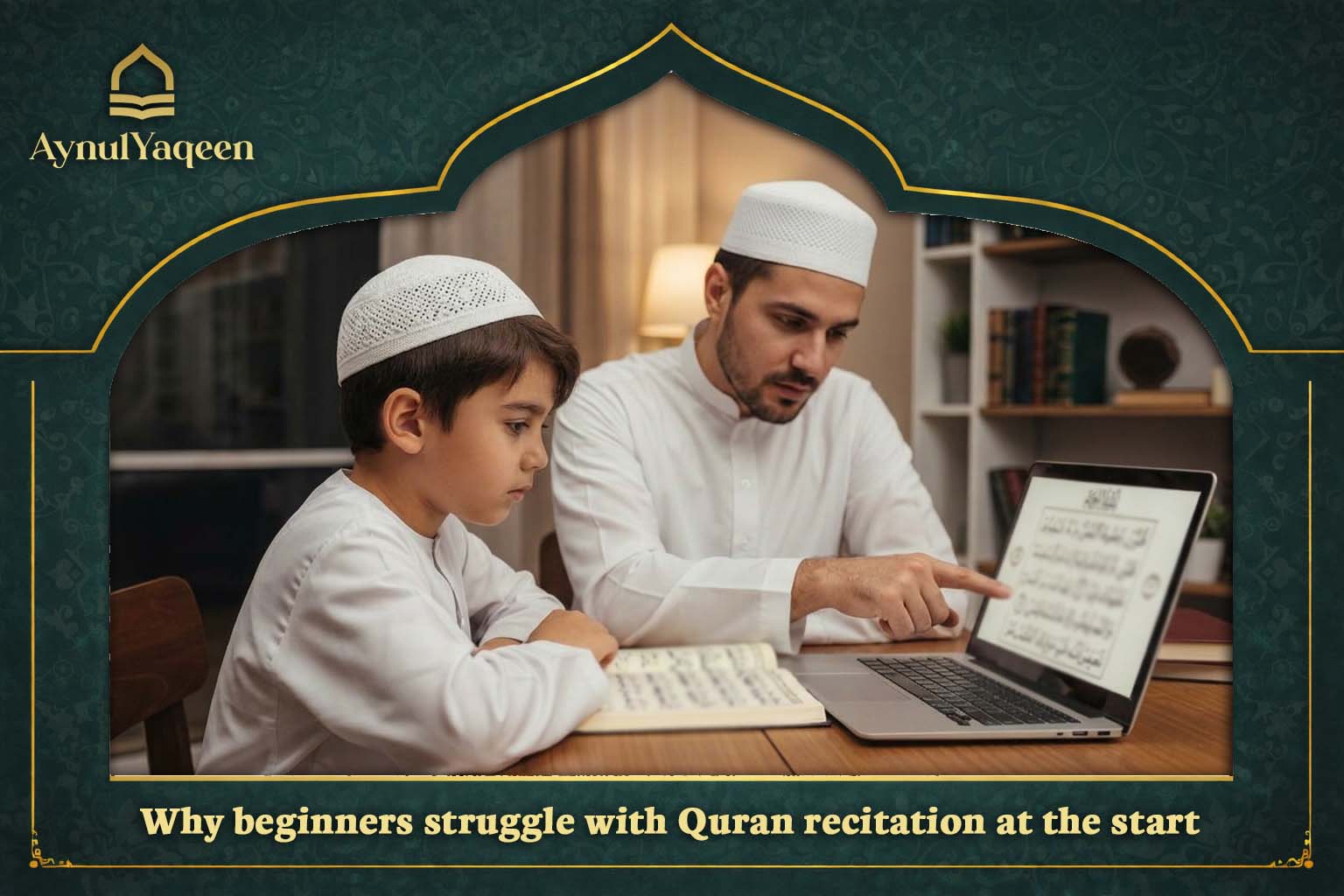
Most beginners face similar challenges when they start learning Tajweed. Arabic letters that look similar in writing often sound completely different when pronounced. For example, letters that come from the throat require a different effort compared to letters that come from the lips or tongue.
A common issue is mixing between heavy and light letters. Another challenge is not applying elongation rules properly, which affects the rhythm of recitation. Some learners also skip subtle rules like stopping signs, which are essential for meaning and flow.
Without correction, these small issues slowly become habits. That is why a structured environment matters so much. One of the most effective ways to avoid these mistakes is by joining a guided program like Aynulyaqeen Quran academyfor beginners, where learners receive step-by-step correction from qualified teachers instead of guessing on their own.
Online Quran Academy
An online Quran academy offers a flexible and effective way to learn the Quran from anywhere in the world. It allows students to study with qualified teachers without the need to travel, making learning easier and more accessible.
One of the trusted platforms is Aynulyaqeen Quran academyfor beginners, which focuses on building strong foundations in Quran recitation and Tajweed.
Through structured lessons and live guidance, students improve step by step, gain confidence, and develop correct pronunciation while learning at their own pace.

Why is Tajweed Important?
The importance of tajweed for beginners goes far beyond correct pronunciation, as it carries spiritual, linguistic, and historical significance for every Muslim who recites the Quran. Joining a Quranic Arabic language course helps students understand the language of the Quran and its meanings more deeply.
1. A Divine Command:
Allah (SWT) says in the Quran:
“And recite the Quran with a measured recitation” (Surah Al-Muzzammil, 73:4).
The word tartil refers to slow, clear, and precise recitation, which scholars explain as applying Tajweed rules. This verse highlights that proper recitation is not optional but a direct command from Allah.
2. Preserving the Quran:
The Quran was revealed in a specific form and passed down through a chain of transmission known as Isnad. Tajweed helps preserve this exact pronunciation tradition, ensuring the Quran remains unchanged in its oral form as it was taught by the Prophet Muhammad (peace be upon him).
3. Avoiding Errors in Meaning:
Even small pronunciation differences in Arabic can change meanings completely. For example, similar letters such as ث, س, and ص must be pronounced correctly to avoid altering the message. Tajweed protects the reciter from such mistakes.
4. Spiritual Connection:
Reciting the Quran with Tajweed is not just a technical skill; it is a spiritual experience. It enhances reflection, deepens understanding, and strengthens the emotional and spiritual connection with the words of Allah, making recitation more meaningful and heartfelt.
Read also: Hijrah of Prophet Muhammad
Benefits of learning Tajweed Classes For Beginners
Joining a structured learning program offers many advantages compared to studying alone. One major benefit is receiving live correction from a qualified teacher who can immediately fix pronunciation mistakes before they become long-term habits.
Structured quran tajweed online classes provide a clear learning path that ensures consistency, direction, and motivation while helping students track their progress and improve their recitation effectively.
Programs like Aynulyaqeen Quran Academy for beginners create supportive learning spaces that help students remain focused, even during difficult stages of learning.
With regular practice and proper supervision, learners gradually improve their recitation skills, strengthen their confidence, and build a deeper spiritual and emotional connection with the Quran over time. Understanding the pillars of Islam gives every Muslim a strong foundation in the basic principles of the faith.
The Basics of Tajweed for Beginners
For those just starting, Tajweed may seem complex at first, but breaking it into simple parts makes it much easier to understand and apply in daily recitation. Following a quran memorization plan for kids helps children memorize the Quran through organized and achievable goals.
1. Understanding Arabic Letters and Their Makharij (Points of Articulation)
Arabic consists of 28 letters, and each letter has a specific point of articulation (makhraj) in the mouth, throat, or lips. Learning these points is the foundation of correct pronunciation.
- Throat letters: Such as ء (Hamza), ه (Ha), ع (Ayn), غ (Ghayn), and خ (Kha), which are produced from different parts of the throat.
- Tongue letters: Such as ط (Ta), د (Dal), and ص (Sad), which are pronounced using the tongue in specific positions.
- Lips and teeth letters: Such as ف (Fa), produced with the lower lip, and ث (Tha), which involves the tongue and upper front teeth.
A beginner should first master these articulation points to avoid common pronunciation errors. Learning about performing istikhara prayer helps Muslims seek Allah’s guidance before making important decisions.
2. Recognizing Sifat (Characteristics) of Letters
Each Arabic letter also has unique characteristics that affect how it is pronounced:
- Tafkheem (heaviness): Letters pronounced with a strong, deep sound such as ص (Sad), ط (Ta), and ق (Qaf).
- Tarqeeq (lightness): Letters pronounced softly, such as س (Seen) and ن (Noon).
- Tajweed rules like Idgham, Ikhfa, and Iqlab: These rules explain how letters interact, merge, or change during recitation.
Understanding these qualities helps learners improve clarity and beauty in their recitation. Understanding what is Islamic fiqh helps Muslims apply Islamic rulings correctly in their daily lives.
3. Rules of Noon Saakin and Tanween
Noon Saakin (نْ) and Tanween (ً ٍ ٌ) follow important Tajweed rules that every beginner should learn:
- Idgham (Merging): The sound merges smoothly when followed by specific letters such as ل or ر.
- Ikhfa (Concealment): The sound is partially hidden with nasalization when followed by certain letters.
- Iqlab (Conversion): Noon Saakin changes into a Meem sound when followed by ب.
- Izhar (Clear pronunciation): The Noon Saakin or Tanween is pronounced clearly when followed by specific throat letters. These foundational rules help beginners build accurate and confident Quran recitation step by step.
Tajweed rules explained help learners understand correct pronunciation, elongation, and proper application of Quran recitation rules in a simple and clear way.
4. Madd (Prolongation) Rules in tajweed classes for beginners
Madd refers to the extension of vowel sounds in Quran recitation, and it is an essential part of tajweed classes for beginners. The duration of elongation depends on the type of Madd being applied, and each type follows specific rules that affect the flow and meaning of recitation.
- Madd Tabee’i (Natural Prolongation): This is the simplest form, where a vowel is extended for two counts in a natural and smooth way.
- Madd Munfasil, Madd Muttasil, Madd Lazim: These are more advanced forms of Madd that vary in length depending on conditions such as pauses, the presence of certain letters, or a sukoon (a sign indicating no vowel sound).
- Learning the Difference Between Hafs and Warsh Quran helps students understand the authentic methods of Quran recitation.
For learners in tajweed for beginners, it is important to start with Madd Tabee’i first before gradually moving to more complex types. With regular practice and proper guidance, students develop accurate timing, better rhythm, and more beautiful Quran recitation.
Read also: Hajj step by step
How to Start Your Tajweed Journey
Starting your tajweed for beginners journey is a meaningful step toward improving your Quran recitation with clarity and confidence. Although it may feel challenging at first, following a structured approach makes the learning process smooth and manageable.
1. Start With a Qualified Teacher:
The best way to begin is under the guidance of an experienced teacher who can correct your recitation in real time and help you understand each rule properly.
2. Listen and Imitate:
Listening to skilled Quran reciters helps you develop correct pronunciation, rhythm, and fluency. Try to imitate their recitation carefully and consistently.
3. Practice Regularly:
Daily practice, even for a few minutes, builds consistency and improves your recitation gradually over time.
4. Start With the Basics:
Focus first on learning the points of articulation (Makharij) and the characteristics of letters (Sifat) before moving to advanced rules.
5. Use Learning Tools:
Workbooks and interactive apps can support your study and reinforce what you learn in lessons.
6. Be Patient and Sincere:
Tajweed is a journey that requires patience and sincerity. Progress comes step by step, and every effort is rewarded.
A Qualified Tutor Builds Confidence in Quran Recitation
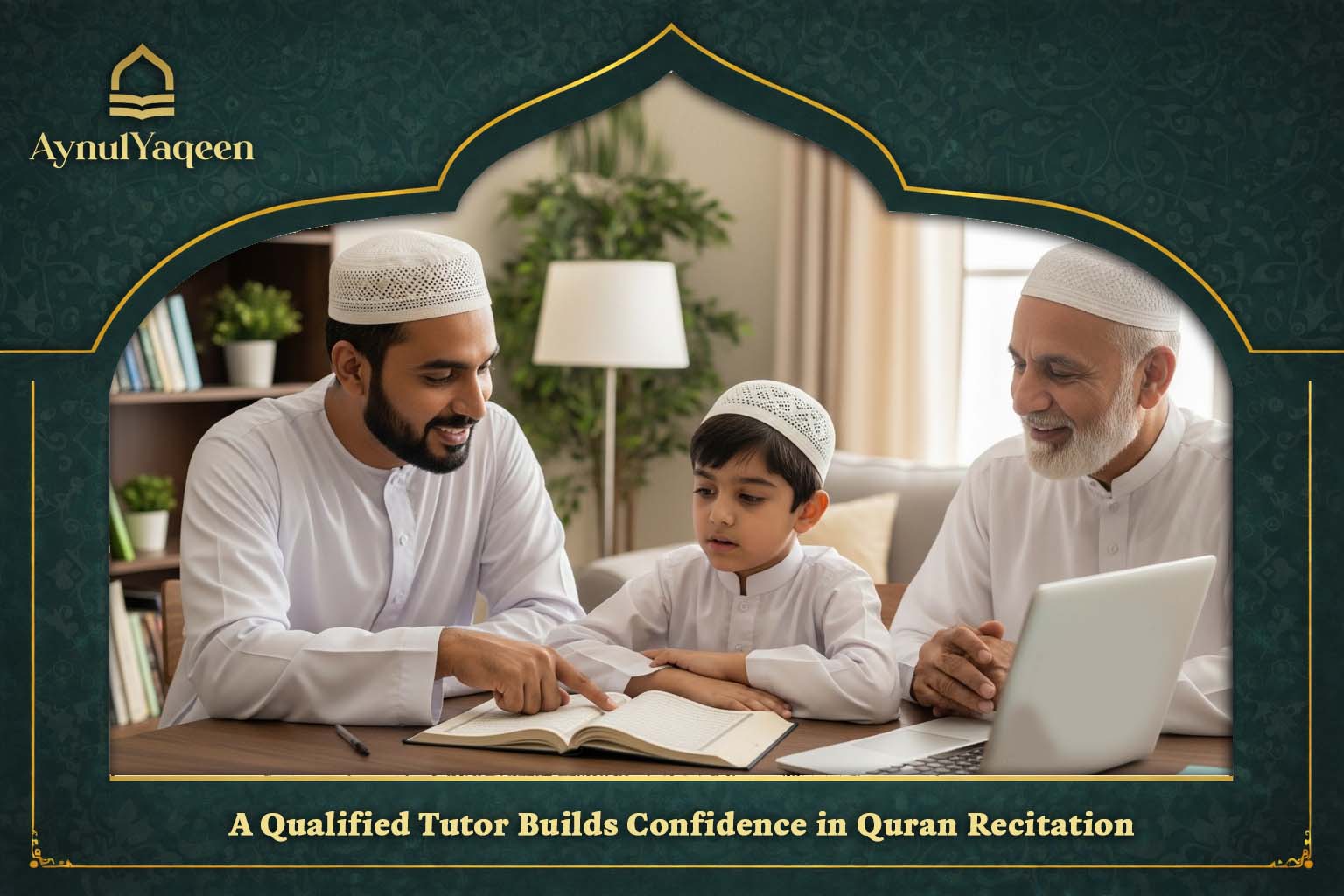
One of the main goals of learning Tajweed is building confidence in Quran recitation. Many beginners feel shy or anxious when reading aloud, especially in front of teachers or family members. They may worry about making pronunciation mistakes or forgetting the rules during recitation.
However, with consistent practice and proper guidance, this fear slowly fades away. As students receive correction and improve their fluency, they become more comfortable and confident while reading the Quran.
Recitation starts to feel peaceful and enjoyable instead of stressful. This positive transformation encourages learners to continue studying, practice regularly, and strengthen their connection with the Quran for the long term.
FAQs
help provide quick answers to common questions, making information easier to understand and access.
They also save time by addressing key concerns in a clear and simple way for learners.
1. How long does it take for a beginner to learn Tajweed properly?
It depends on consistency and practice, but most beginners start noticing clear improvement within a few months of regular guided study.
2. Can I learn Tajweed without knowing Arabic first?
Yes, but learning Arabic basics alongside Tajweed makes pronunciation easier and helps in understanding the rules more clearly.
3. What is the biggest mistake beginners make when learning Tajweed?
The most common mistake is learning without correction, which leads to repeated pronunciation errors that become difficult to fix later.
In conclusion, tajweed classes provide the essential foundation for anyone who wants to recite the Quran correctly and with confidence. Learning with proper guidance helps beginners avoid common pronunciation mistakes and build strong, accurate recitation from the start.
Instead of learning alone and developing incorrect habits, structured study allows steady progress with clear correction and understanding. Over time, students gain fluency, confidence, and a deeper connection with the Quran as their recitation improves.
With patience, consistency, and the right learning environment, every beginner can achieve beautiful and correct recitation that reflects both accuracy and sincerity. For more on choosing a learning method, see our article on the best way to learn Quran online. If you’re interested, check out our article on Islamic courses online.
For a deeper look, read our article on Quran classes online in Sydney.
You may also find our guide to an online Arabic tutor for kids helpful.
