

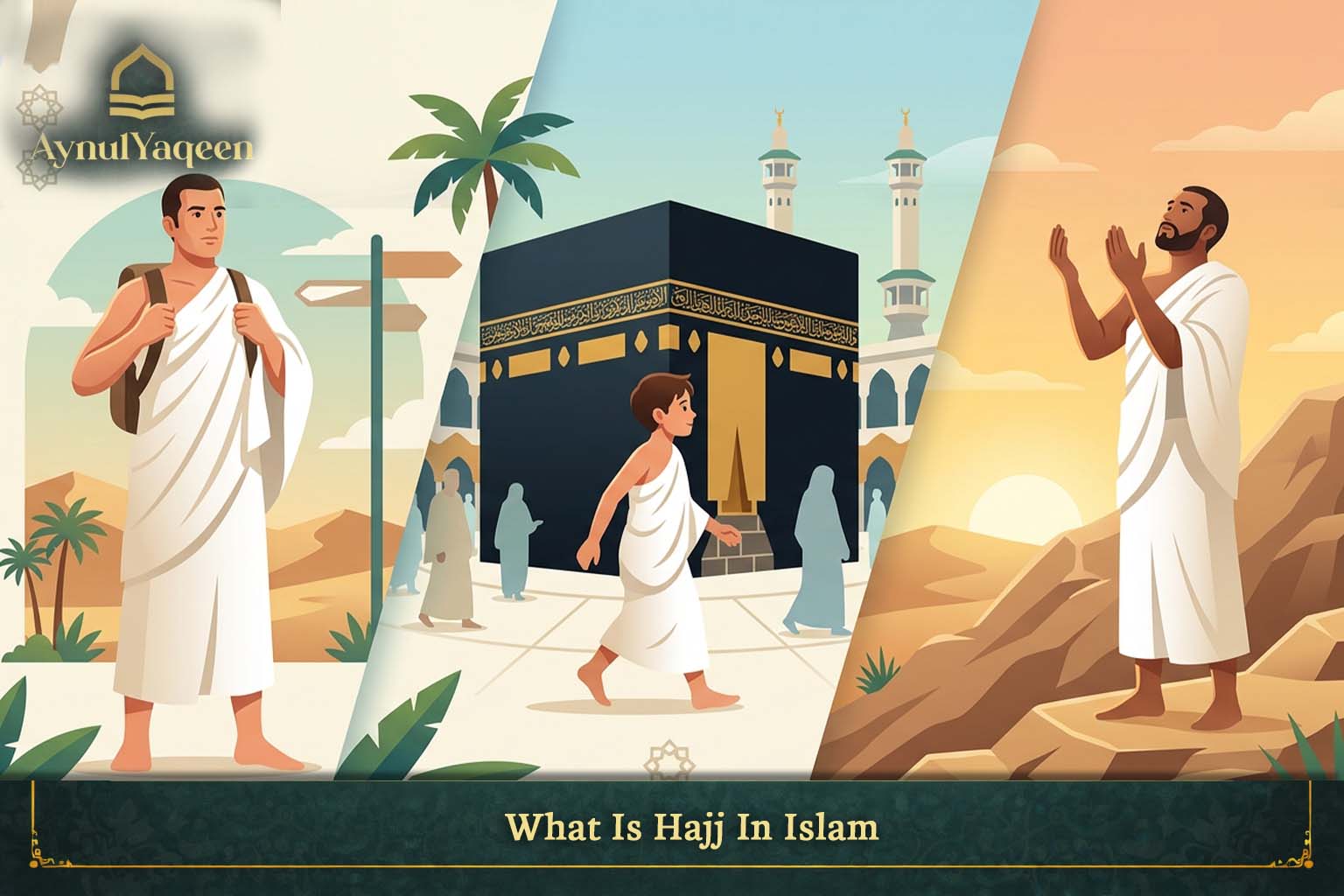
What is Hajj in Islam is one of the most important questions asked by Muslims seeking to understand this powerful act of worship. Hajj is not only a ritual or annual gathering; it is a deep spiritual transformation that reshapes the believer’s heart, mindset, and life.
It is the fifth pillar of Islam and a lifelong obligation for every Muslim who is physically and financially able. Each year, millions travel to Makkah responding to Allah’s call, leaving behind comfort in search of forgiveness and closeness to Him.
Many learners study through platforms such as Aynulyaqeen Quran school to understand Islamic teachings clearly. Hajj is about discipline, worship, and complete submission to Allah with sincerity, humility, and devotion to Allah alone.
The Meaning of Hajj in Islam
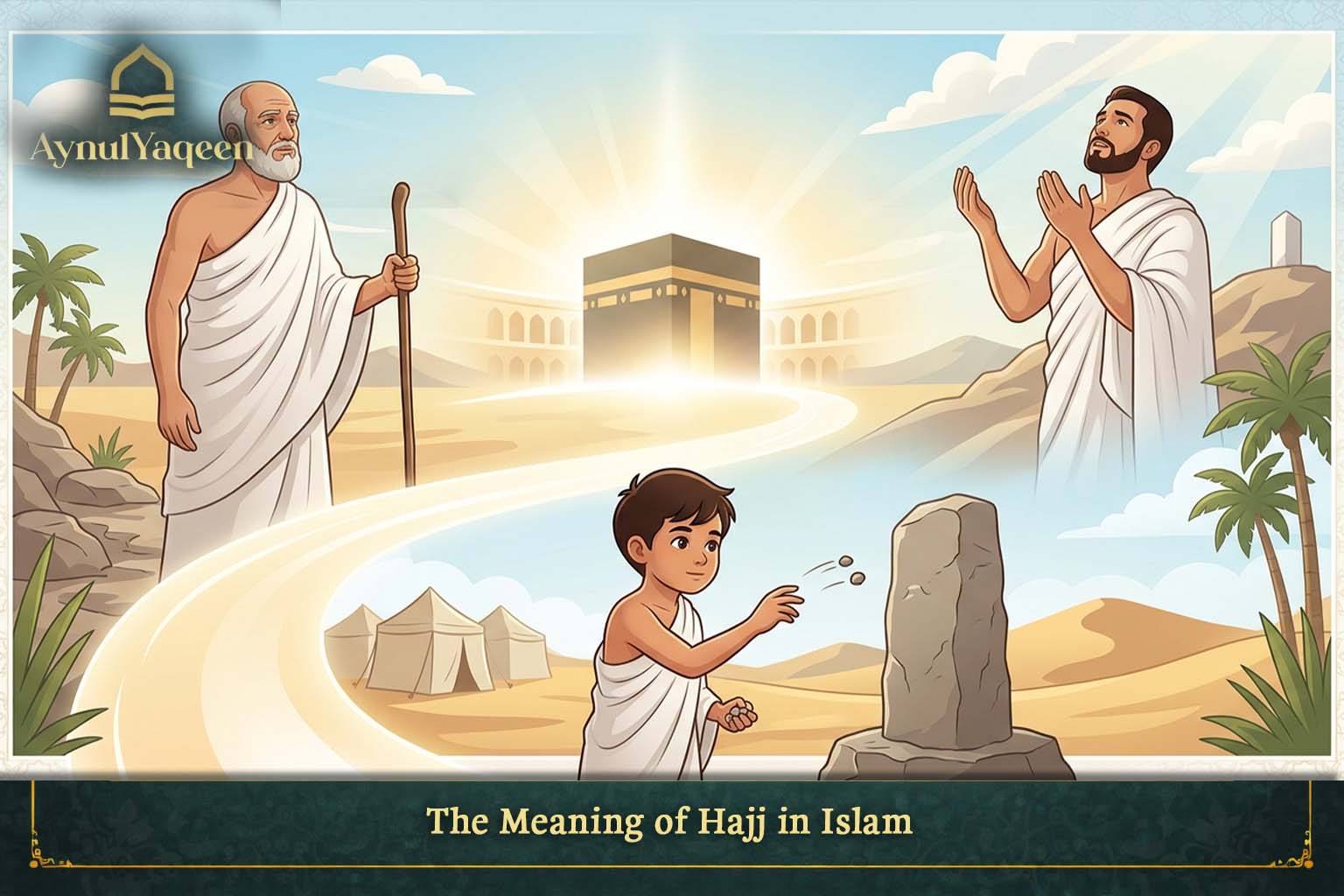
The word “Hajj” in Arabic means to intend or to set out for a great purpose. In Islamic terminology, it refers to traveling to the holy city of Makkah to perform specific rituals at a specific time of the year.
Hajj begins with intention (niyyah), and this intention is what separates it from any other journey in life. A pilgrim does not travel for tourism or personal gain but for worship and purification.
Understanding this meaning helps Muslims realize that Hajj is an internal journey before it is an external one. It starts in the heart and reflects in actions, patience, and behavior throughout the pilgrimage.
The deeper wisdom behind Hajj is often taught in learn islam online educational environments such as Aynulyaqeen Quran school, where students learn not just the rituals but also the spiritual philosophy behind them.
Online Quran Academy
Online Quran Academy offers a convenient and effective way for students to learn the Holy Quran from home. It provides lessons in Quran recitation, Tajweed, and Islamic studies in a simple and structured manner.
One of the trusted platforms in this field is Aynulyaqeen Quran school, which delivers quality Islamic education for all ages. Through experienced teachers and well-organized programs, Aynulyaqeen Quran school helps students improve their recitation and understanding of the Quran while building a strong connection with Islamic values and teachings.
The Importance of Hajj in Islam
Hajj is one of the Five Pillars of Islam, making it a core foundation of a Muslim’s faith and practice. It is obligatory once in a lifetime for those who meet the physical, financial, and mental requirements.
Its importance can be understood through several key dimensions:
- It represents total submission to Allah
- It unites Muslims from all over the world
- It removes social, racial, and economic barriers
- It strengthens faith and self-discipline
- It revives the legacy of Prophet Ibrahim (AS)
When Muslims reflect on What is Hajj in Islam, they begin to understand that it is not just a duty but a complete system of spiritual training that refines the soul and builds moral character.
When Does Hajj Take Place?
Hajj takes place every year during the islamic courses for beginners month of Dhul Hijjah, the final month of the Islamic lunar calendar. The main rituals occur between the 8th and 13th of Dhul Hijjah.
During this period, millions of Muslims gather in Makkah, Mina, Arafat, and Muzdalifah. Despite differences in nationality, language, and culture, all pilgrims wear similar clothing and perform the same rituals in unity.
This gathering is one of the most powerful demonstrations of equality in human history, where status and wealth have no value-only faith and devotion matter.
The Rituals of Hajj Explained
The rituals of Hajj are performed in a specific sequence, each carrying deep symbolic meaning:
Ihram (Entering Sacred State)
Pilgrims enter a state of purity and intention. Men wear simple white garments, symbolizing equality and humility before Allah.
Tawaf (Circling the Kaaba)
Pilgrims walk around the Kaaba seven times, representing devotion to the oneness of Allah.
Sa’i (Walking Between Safa and Marwah)
This ritual remembers the struggle of Hajar (AS), showing patience and trust in Allah’s mercy.
Standing at Arafat
This is the most important day of Hajj, where pilgrims stand in prayer and seek forgiveness.
Muzdalifah and Mina
Pilgrims collect stones and spend the night in worship and reflection.
Rami al-Jamarat (Stoning the Devil)
This symbolizes rejecting evil and resisting temptation.
Sacrifice (Qurbani)
An animal is sacrificed in remembrance of Prophet Ibrahim’s obedience to Allah.
Shaving or Trimming Hair
This marks spiritual renewal and the completion of major rituals.Each step reflects a lesson in humility, obedience, and devotion.
Read also: how to get an ijazah
Historical Background of Hajj
The origins of Hajj date back to Prophet Ibrahim (AS), who, along with his son Ismail (AS), built the Kaaba as the first house of worship dedicated to Allah.
Another important part of Hajj history is the story of Hajar (AS), who ran between Safa and Marwah in search of water for her son. This act became an essential ritual of Hajj, symbolizing perseverance and trust in Allah.
Over time, these practices were preserved and perfected by Prophet Muhammad (PBUH), who re-established Hajj as a pure monotheistic pilgrimage.
Islamic learning platforms such as Aynulyaqeen Quran school help students connect these historical stories with the rituals they perform today, making the experience more meaningful and spiritually impactful.
Spiritual Wisdom Behind Hajj
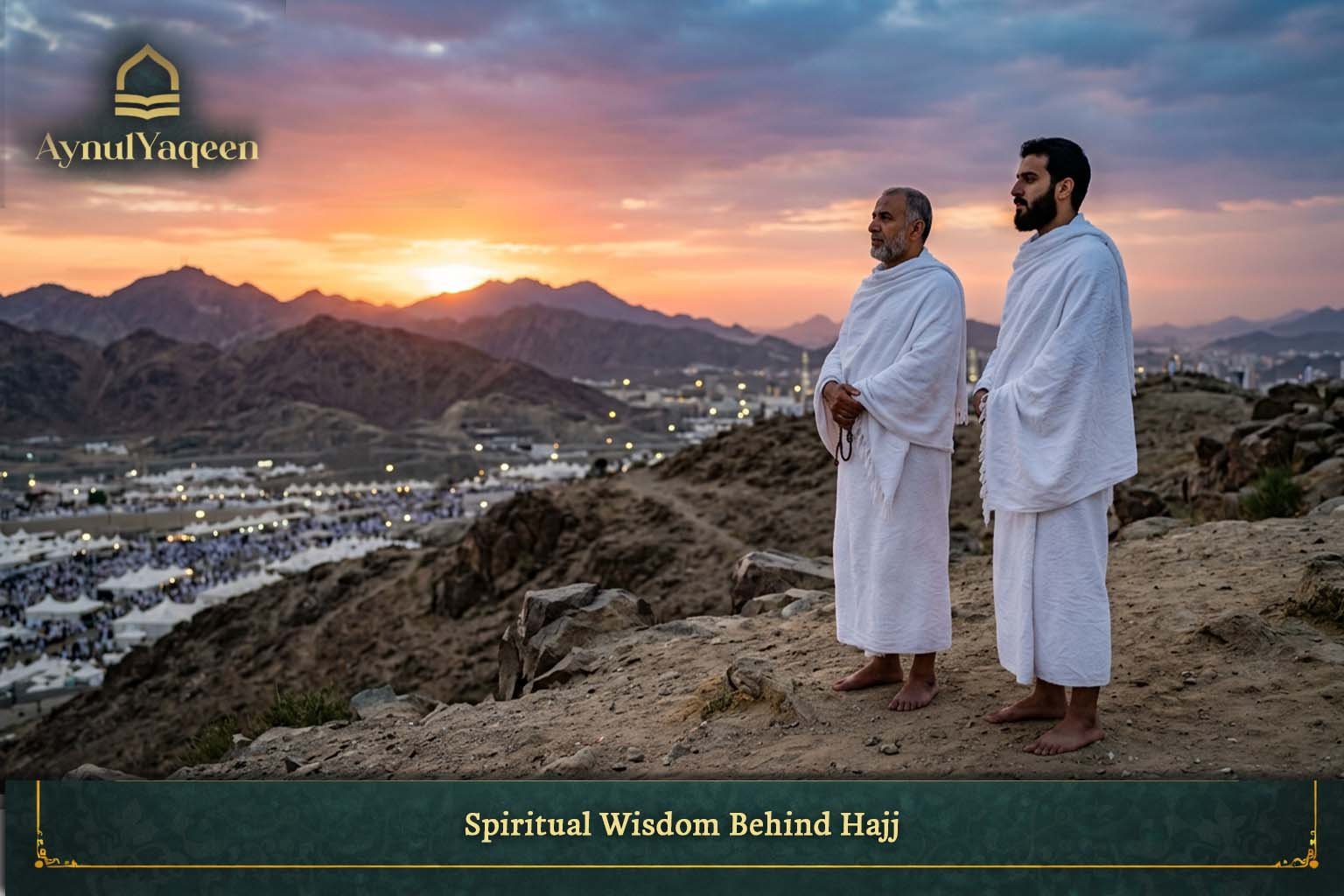
Hajj is not just a physical act; it is a deep spiritual journey that transforms the believer internally.
Its wisdom includes:
- Strengthening connection with Allah
- Purifying sins and past mistakes
- Teaching patience and endurance
- Promoting equality among people
- Building a sense of unity in the Muslim Ummah
At this stage, understanding islamic fiqh basics becomes more than knowledge-it becomes an emotional and spiritual realization that changes how a Muslim views life.
Hajj in the Quran and Sunnah
The Quran emphasizes the obligation and importance of Hajj in multiple verses. One of the most well-known verses states:
“And proclaim to the people the Hajj; they will come to you on foot and on every lean camel; they will come from every distant pass.”
This verse highlights that Hajj is a universal call to all believers, regardless of where they come from.
The Prophet Muhammad (PBUH) also emphasized that an accepted Hajj results in forgiveness of sins and a complete spiritual reset for the believer.
Preparation for Hajj
Preparing for Hajj requires both physical readiness and spiritual purification.
Key preparation steps include:
- Sincere repentance and seeking forgiveness
- Learning all rituals properly
- Preparing travel documents and logistics
- Ensuring good health and stamina
- Increasing prayer, Quran recitation, and remembrance of Allah
Many students rely on structured guidance from Aynulyaqeen islamic online quran academy to ensure they understand the correct method of performing Hajj before traveling.
Proper preparation ensures that the pilgrim performs Hajj with awareness, sincerity, and focus.
Common Mistakes During Hajj
Despite preparation, some pilgrims make mistakes that affect their experience:
- Focusing on worldly matters instead of worship
- Not learning the correct sequence of rituals
- Ignoring crowd safety instructions
- Losing patience in difficult situations
Avoiding these mistakes helps ensure a smoother and more spiritually rewarding pilgrimage.
The Impact of Hajj on a Muslim’s Life
Hajj leaves a long-lasting impact on every believer who performs it sincerely. After returning home, pilgrims often experience:
- A stronger connection with Allah
- A renewed sense of purpose
- Improved behavior and patience
- Greater appreciation for life and blessings
This transformation shows that Hajj is not a temporary act but a permanent change in a believer’s life.
At this point, the meaning of islamic courses online becomes clear-it is a journey of transformation, purification, and rebirth.
What to Do If You Cannot Perform Hajj
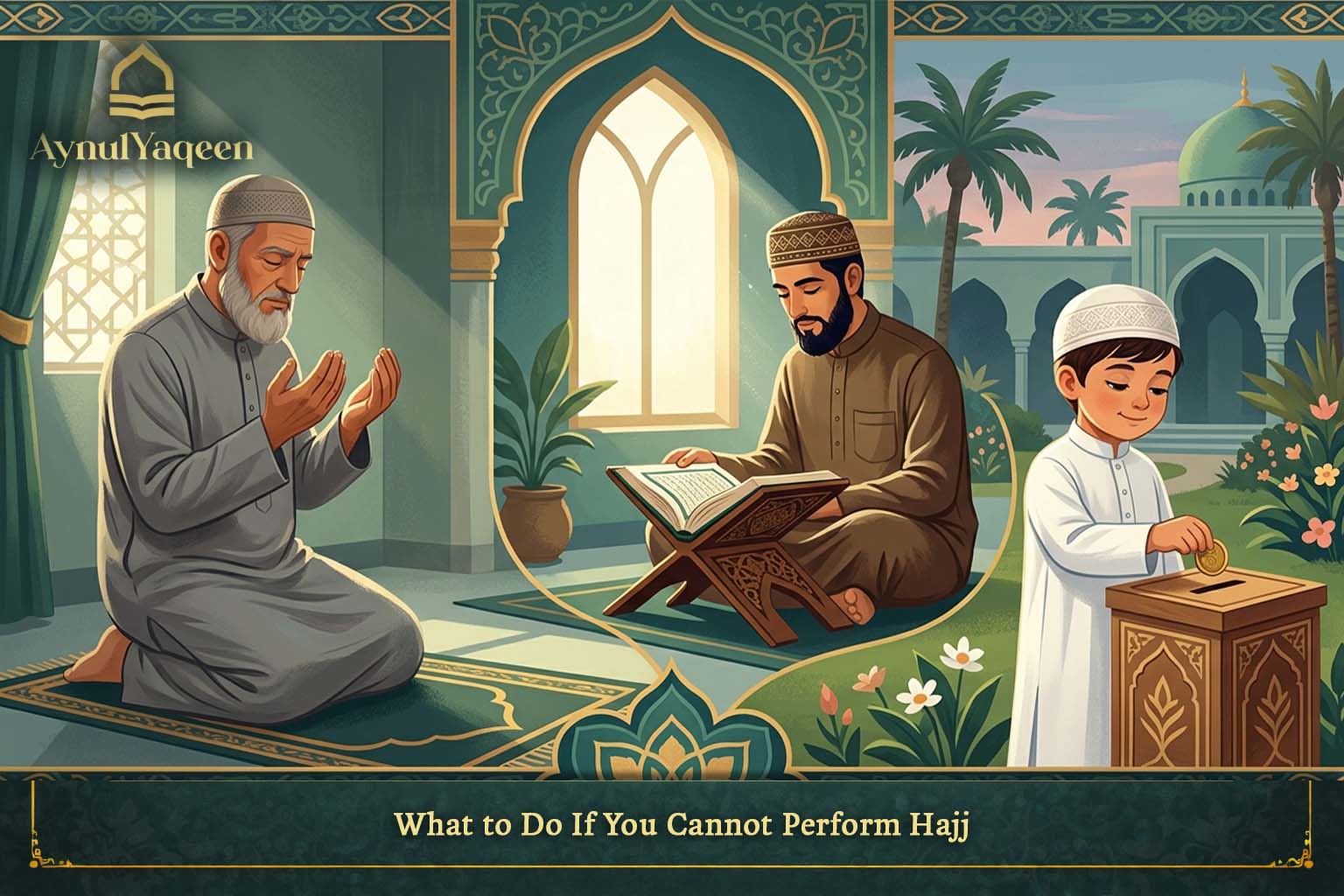
If a Muslim is unable to perform Hajj due to financial, physical, or other valid reasons, there are still many meaningful ways to connect with the spirit of this sacred time and earn great rewards.
- Participate in the spirit of Hajj through sincere intention and continuous remembrance of Allah.
- Increase acts of worship such as prayer, fasting, and reading the Holy Qur’an.
- Give charity (Sadaqah) regularly to help those in need.
- Offer Qurbani (sacrifice) during Eid Al-Adha to support the poor and spread joy among families.
- Support humanitarian efforts that benefit the less fortunate and bring relief to struggling communities.
- Make heartfelt du’a asking Allah to grant the opportunity to perform Hajj in the future.
- Reflect on the values of sacrifice, patience, and devotion shown during Hajj.
Through these actions, a believer can still gain spiritual closeness to Allah even without physically performing Hajj.May Allah bless you and your loved ones and accept all good deeds during these blessed days.
Frequently Asked Questions (FAQ)
section provides clear and simple answers to the most common questions about Hajj, helping readers better understand its meaning, rules, and spiritual importance.
1. Who is obligated to perform Hajj?
Hajj is obligatory for every Muslim who is adult, mentally sound, physically healthy, and financially able to afford the journey without causing hardship to their family.
2. Can someone perform Hajj on behalf of another person?
Yes, in certain cases such as illness or old age, a person may perform Hajj on behalf of someone else, but specific conditions must be met according to Islamic rulings.
3. What should a Muslim do if they are unable to perform Hajj?
If someone cannot perform Hajj, they should increase worship, give charity, perform good deeds, and sincerely pray to Allah to be granted the opportunity in the future.
In conclusion, Hajj is one of the most important and life-changing acts of worship in Islam. It is a spiritual journey that goes beyond travel, as it purifies the heart, strengthens faith, and brings a Muslim closer to Allah.
Through its rituals, Hajj teaches patience, humility, and complete submission to God. It also unites Muslims from all over the world in one place, showing equality and brotherhood.
Even for those who cannot perform Hajj, they can still gain reward through prayer, charity, fasting, and good deeds. Ultimately, Hajj reminds every believer that true success is in obedience to Allah. If you’re teaching young kids, our article on Quran for children offers simple techniques.
Learn more in our detailed guide on the best Quran hifz school near you.
Learn more in our detailed guide on Seerah for beginners.
Curious who’s actually teaching? Meet our certified teachers in the USA before booking a trial.
