

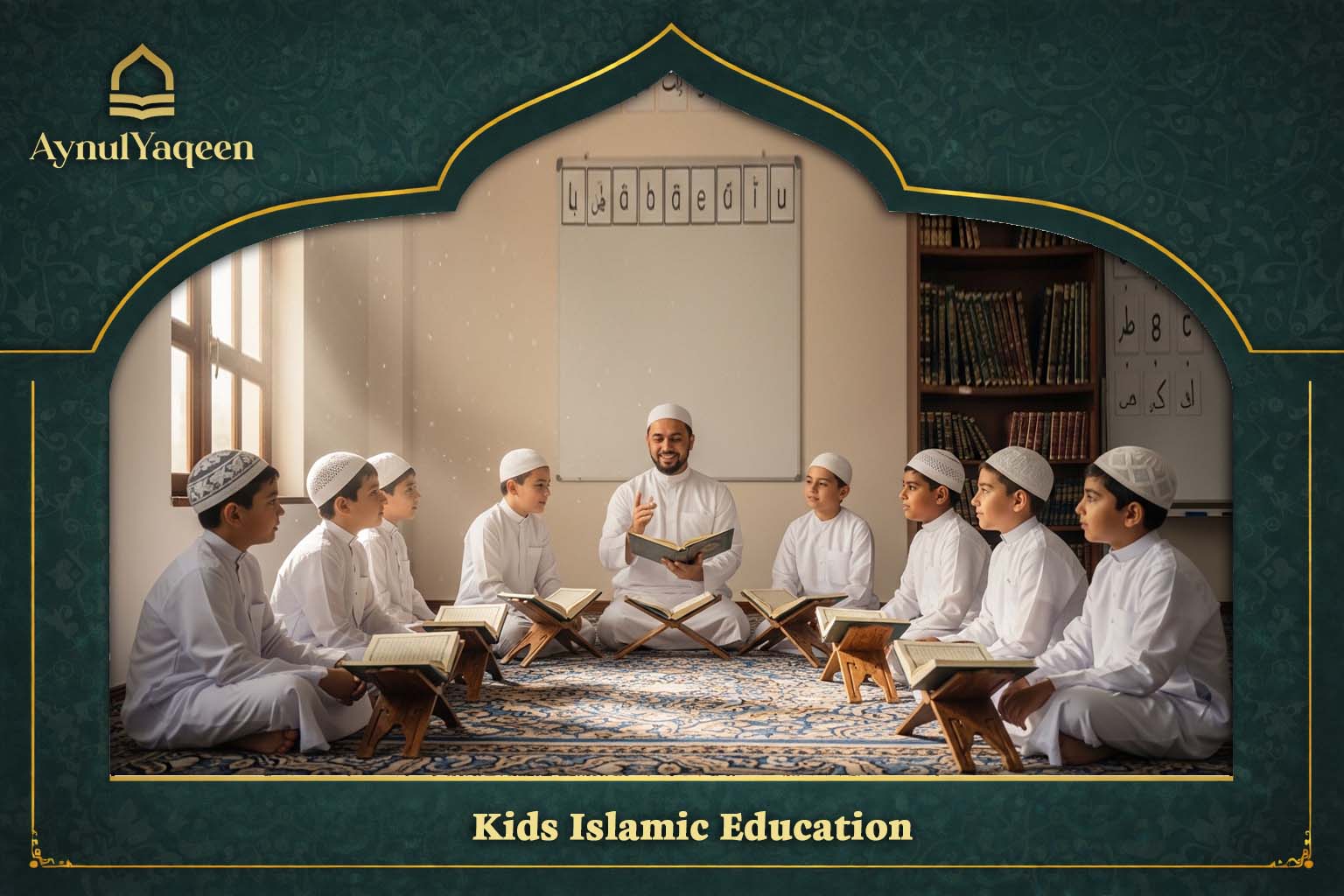
Kids Islamic Education: Faith Foundation for Children
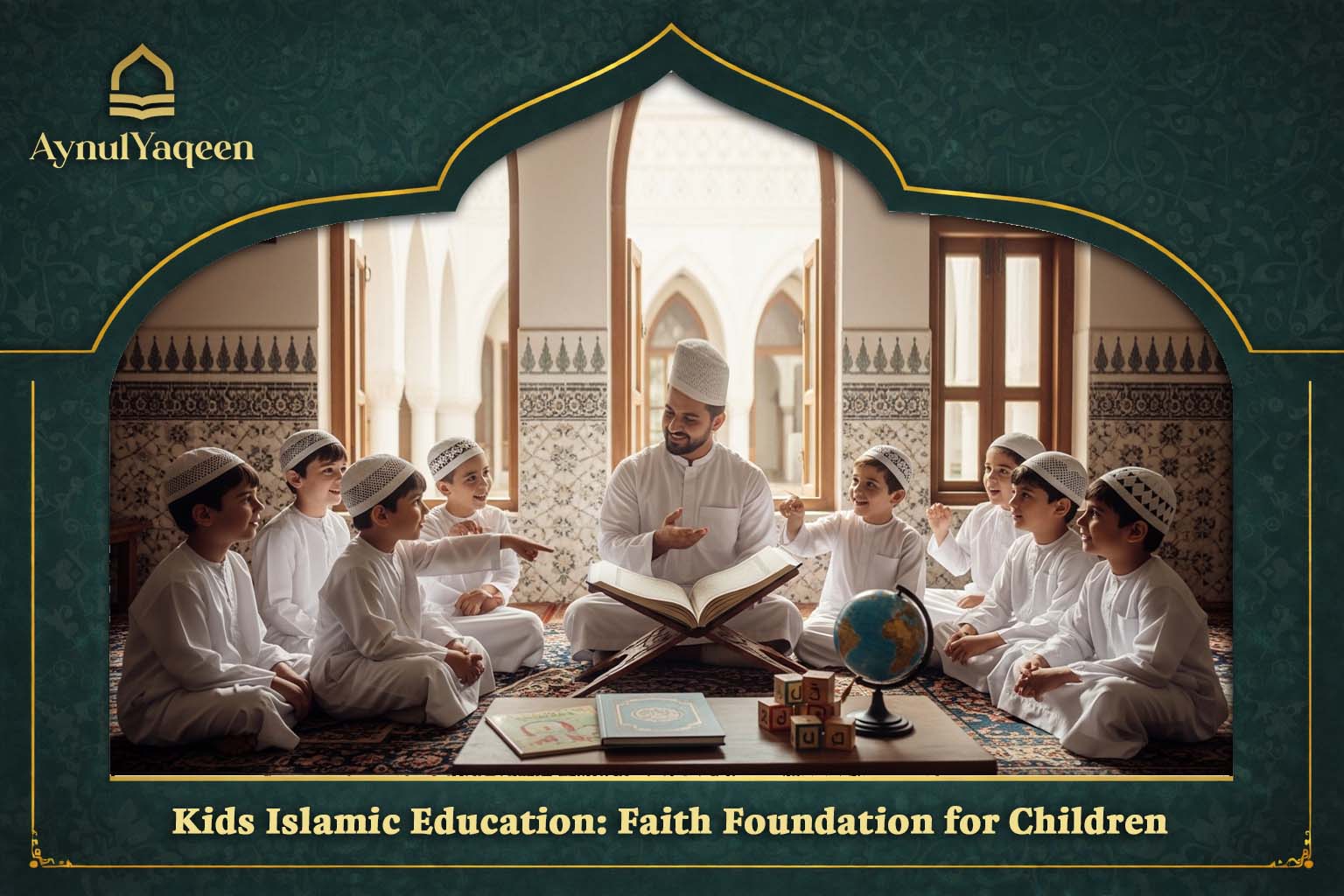
kids islamic education is not something that begins in classrooms or formal institutions. It starts at home, in everyday moments, in conversations between parents and children, and in the small habits that gradually shape a child’s understanding of life, values, and faith.
When Islam is introduced in a natural, simple, and loving way, it becomes part of the child’s identity rather than something they feel forced to learn or memorize.
Raising children on Islamic principles is not just about teaching information or training them to perform rituals. It is about building a complete way of life that grows with them step by step. A child who grows up seeing Islam reflected in daily behavior begins to understand it as a lived experience, not just a subject.
This is why the role of the family is essential, and why supportive educational platforms such as Aynulyaqeen Quran academy for kids can play a valuable role in guiding this journey in a structured and age-appropriate way.
Online Quran Academy
Online Quran learning has become an effective and flexible way for children to study Islam while staying in a comfortable home environment. It allows students to learn Quran online recitation, memorization, and basic Islamic studies with qualified teachers through structured virtual classes.
This method helps families maintain consistency in learning even with busy schedules, while also ensuring that children receive proper guidance at their own pace.
One of the trusted platforms in this field is Aynulyaqeen Quran academy for kids, which offers well-organized online programs designed to make Quran education engaging, simple, and suitable for different age groups.

Why Early Islamic Education Is a Necessity, Not an Option
Early childhood is one of the most sensitive stages in human development. During this time, children absorb language, behavior, emotions, and values without resistance. What they see and hear becomes deeply embedded in their personality.
Early Islamic education helps children:
- Build a strong and healthy relationship with Allah from a young age
- Understand morality and ethical behavior in practical terms
- Strengthen their Islamic identity in diverse cultural environments
- Avoid confusion when exposed to conflicting worldviews later in life
More importantly, when Islamic learning is presented in a positive and engaging way, children do not see itas a burden or obligation. Instead, they experience it as clarity, comfort, and guidance in their lives.
A child who grows up loving their faith naturally carries it into adulthood with confidence rather than uncertainty.
Building a Simple and Strong Faith Foundation for Children
Children do not need complex theological explanations. They need clarity, repetition, emotional connection, and practical experience. A strong foundation in kids islamic education is built gradually through consistent exposure and meaningful interaction.
1. Connecting the Child to Allah Naturally
Instead of abstract explanations, children understand Allah through the world around them. Every day experiences become opportunities for faith-based thinking:
- The beauty of nature
- The food they eat
- The protection and care they receive
- The order and design of the universe
Simple questions like “Who created this?” or “Where does this beauty come from?” naturally guide the child toward recognizing the Creator without pressure or complexity.
2. The Power of Parental Example
Children learn more from observation than instruction. A parent’s actions often shape a child’s understanding more than words ever could.
When children see their parents:
- Praying consistently
- Speaking kindly and honestly
- Remembering Allah in daily life
- Showing gratitude and patience
They begin to internalize these behaviors as normal and desirable. Over time, imitation becomes habit, and habit becomes identity.
This is one of the most powerful principles in Islamic upbringing: living the faith, not just explaining it.
3. Making Worship a Positive Experience
Acts of worship should be introduced gently and positively. Prayer, remembrance of Allah, and supplication should feel comforting rather than forced.
For example:
- A child standing beside a parent during prayer
- Hearing Quran recitation during quiet moments at home
- Repeating simple phrases like “Bismillah” and “Alhamdulillah” throughout the day
When worship is associated with calmness and love, children naturally develop attachment to it.
Read also:best quran teachers online
Teaching the Pillars of Islam in a Child-Friendly Way
The Five Pillars of Islam form the foundation of Muslim practice. For children, these should be taught gradually through actions, stories, and simple explanations.
Shahada (Declaration of Faith)
Children begin by repeating the phrase that Allah is One and Muhammad is His Messenger. Understanding grows slowly through stories and examples rather than abstract definitions.
Salah (Prayer)
Children progress through stages:
- Watching parents pray
- Imitating movements
- Learning short surahs
- Gradually performing full prayers
The key is patience and consistency.
Zakat (Charity)
A simple method is using a “three-jar system”:
- Spending
- Saving
- Giving
This helps children understand responsibility and generosity in a practical way.
Sawm (Fasting)
Fasting is introduced gradually:
- Partial fasting for younger children
- Short fasting periods during Ramadan
- Full fasting when they are ready
The focus is understanding, not pressure.
Hajj (Pilgrimage)
Children can learn about Hajj through stories, visuals, and simple models, helping them understand the global unity of Muslims.
Read also:Online Quran Hifz Classes
Understanding Islamic Beliefs in a Simple Way
Islamic beliefs (Aqeedah) should be taught in a way that matches a child’s cognitive level. Each concept can be simplified:
- Belief in Allah through gratitude and observation
- Belief in Angels as unseen beings who obey Allah
- Belief in Books as divine guidance sent to humanity
- Belief in Prophets as role models of good character
- Belief in the Day of Judgment as ultimate justice
- Belief in Divine Will as Allah’s wisdom behind everything
These ideas should be explained using real-life examples rather than abstract theory.
Read also:Best Online Quranic Arabic Course
Age-Based Approach to Islamic Learning
Age-Based Approach to Islamic Learning focuses on tailoring kids islamic education to each developmental stage, ensuring children learn Islam in a way that matches their age, understanding, and abilities.
Ages 3-5: Foundation Stage
Children learn through repetition and imitation:
- Saying basic phrases like “Bismillah”
- Listening to Quran
- Observing prayer
Ages 6-9: Story Stage
Children understand narratives and moral lessons:
- Prophet stories
- Short Quran memorization
- Basic Islamic manners
Ages 10-12: Thinking Stage
Children begin asking deeper questions:
- Understanding reasons behind worship
- Developing basic critical thinking
- Exploring meaning behind actions
Teenagers: Identity Stage
Teenagers need:
- Open discussions
- Real-life relevance of Islam
- Respect for their questions
- Guidance instead of strict instruction
At this stage, structured learning support such as Aynulyaqeen Quran academy for kids can help provide clarity and consistency while supporting family education at home.
Read also:quranic arabic grammar lessons
Practical Ways to Teach Islam in Daily Life
Islamic education does not require long sessions. It can be integrated into daily routines:
- Saying “Bismillah” before meals
- Sharing short stories before sleep
- Listening to Quran during daily activities
- Asking reflective questions like “What did we learn today?”
- Encouraging small acts of kindness
These small habits, repeated consistently, create long-term impact.
Read also:online quran academy in USA
Common Challenges and How to Handle Them
Common Challenges and How to Handle Them highlights the typical difficulties in kids islamic education and offers simple, practical ways for parents to overcome them with patience and consistency.
Lack of Interest
If a child shows no interest, the method-not the child-is usually the issue. Some children learn better through movement, others through storytelling or visuals.
Difficult Questions
When a child asks something difficult, the best response is honesty:
“Let’s find the answer together.”
This builds trust and encourages curiosity.
Resistance to Prayer
Pressure often leads to resistance. A better approach is gradual exposure and positive association rather than enforcement.
Read also:online quran academy for kids
Learning Through Activities
Interactive activities make Islamic education engaging and memorable:
- Building mosque models
- Role-playing prophet stories
- Charity challenges
- Quranic art projects
- Islamic trivia games
These activities turn learning into experience rather than memorization.
Read also:best online quran classes
Building a Strong Islamic Identity
The ultimate goal of kids islamic education is not just knowledge, but identity. A child should grow up:
- Knowing their Creator
- Understanding their purpose
- Practicing good character
- Feeling proud of their faith
Identity is built slowly through consistent practice, love, and example.
The Role of Structured Educational Support
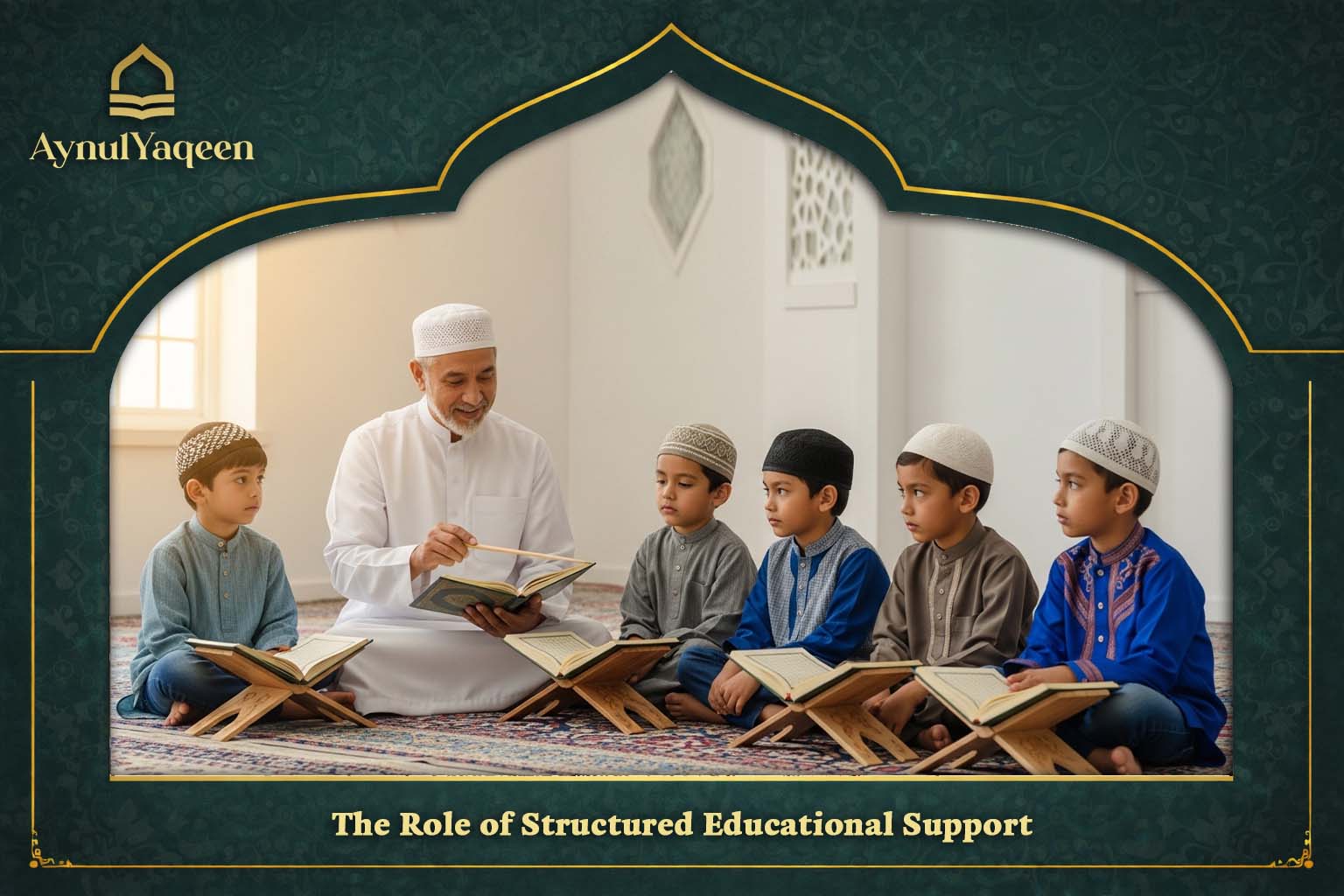
While home education is the foundation, structured learning environments help reinforce consistency and depth. Programs like Aynulyaqeen Quran academy for kids provide:
- Step-by-step Quran learning
- Structured Islamic knowledge
- Age-appropriate content
- Engaging and interactive methods
When combined with parental involvement, this creates a balanced and effective learning system.
Frequently Asked Questions (FAQs)
Islamic education can begin as early as birth through simple exposure such as hearing Quran, seeing prayer, and using basic phrases like “Bismillah.” Formal teaching usually starts around age 3, adjusted to the child’s understanding level.
2. How can I teach Islam if I don’t have strong religious knowledge?
You do not need to be an expert. Start with what you know, focus on consistency, and learn together with your child. Using structured programs like Aynulyaqeen Quran academy for kids can also help fill knowledge gaps.
3. How do I make my child love Islamic learning?
Make learning positive, interactive, and pressure-free. Use stories, activities, and real-life examples. Children naturally develop love for what feels safe, engaging, and connected to family warmth.
In conclusion, kids islamic education plays a crucial role in shaping a child’s character, faith, and overall direction in life. When Islamic teachings are introduced with patience, consistency, and simplicity, they grow naturally within the child’s heart and behavior.
This journey is not about perfection but about steady guidance and positive example from parents and educators. With supportive learning environments such as Aynulyaqeen Quran academy for kids, families can strengthen this process and ensure that children grow up with a balanced understanding of their faith, strong moral values, and a lasting connection to Allah.
Learn also:
For more on this, see our guide on online Quran memorization classes.
Families in the US can also find flexible Quran classes in the USA scheduled around local time zones.
