

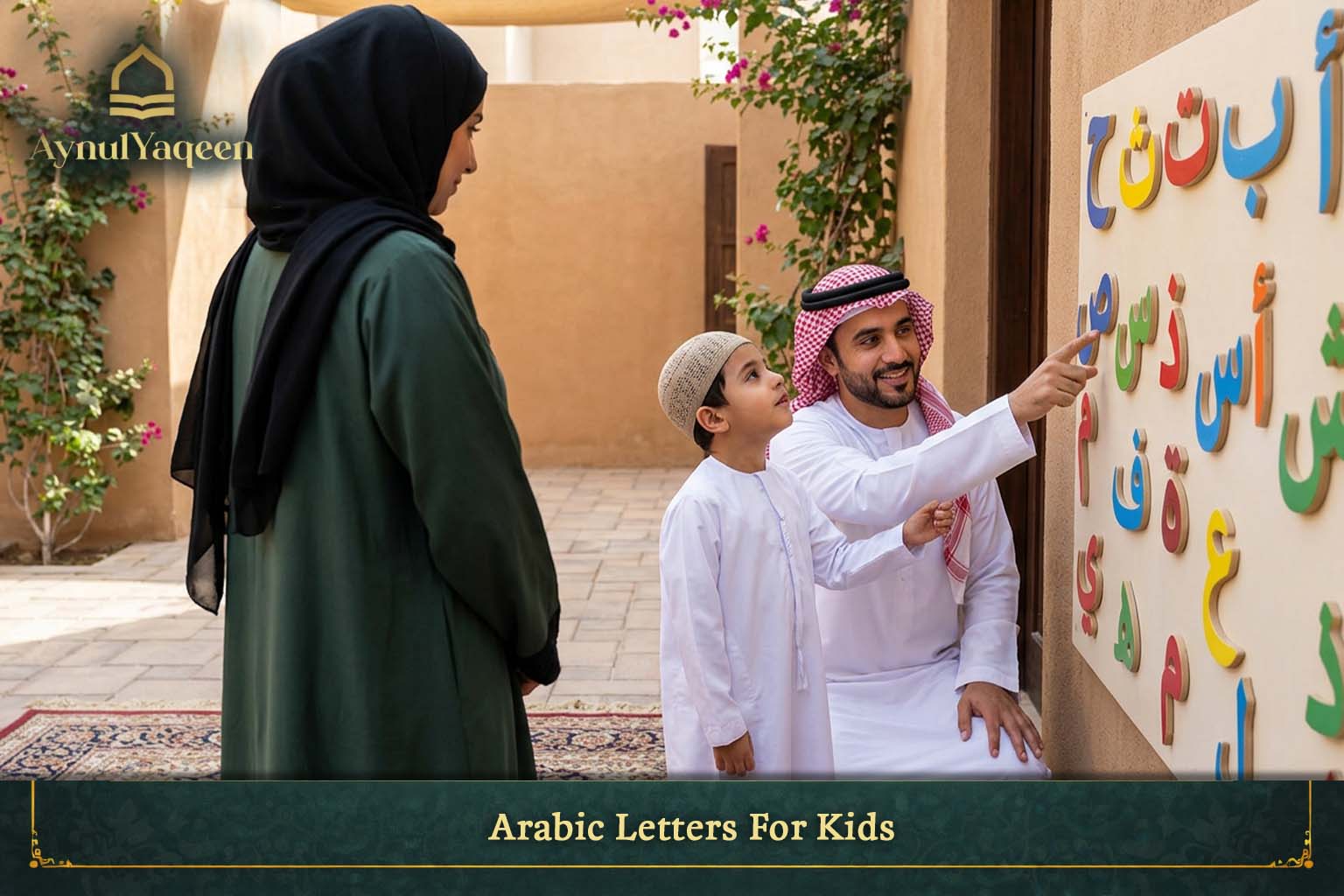
Arabic letters for kids is one of the most important learning foundations for any child beginning their journey with the Arabic language, especially when the goal is to read the Qur’an with confidence and correct pronunciation, and this approach is strongly emphasized at Aynulyaqeen Quran school.
Teaching Arabic letters to children is not just about memorization; it is about building a long-term connection with language, sound, meaning, and identity.
When the learning process is designed correctly, children feel they are playing, exploring, and discovering. At Aynulyaqeen Quran school this approach uses interactive structured methods matching each child level and pace.
Why Teaching Arabic Letters to Kids Requires a Special Method
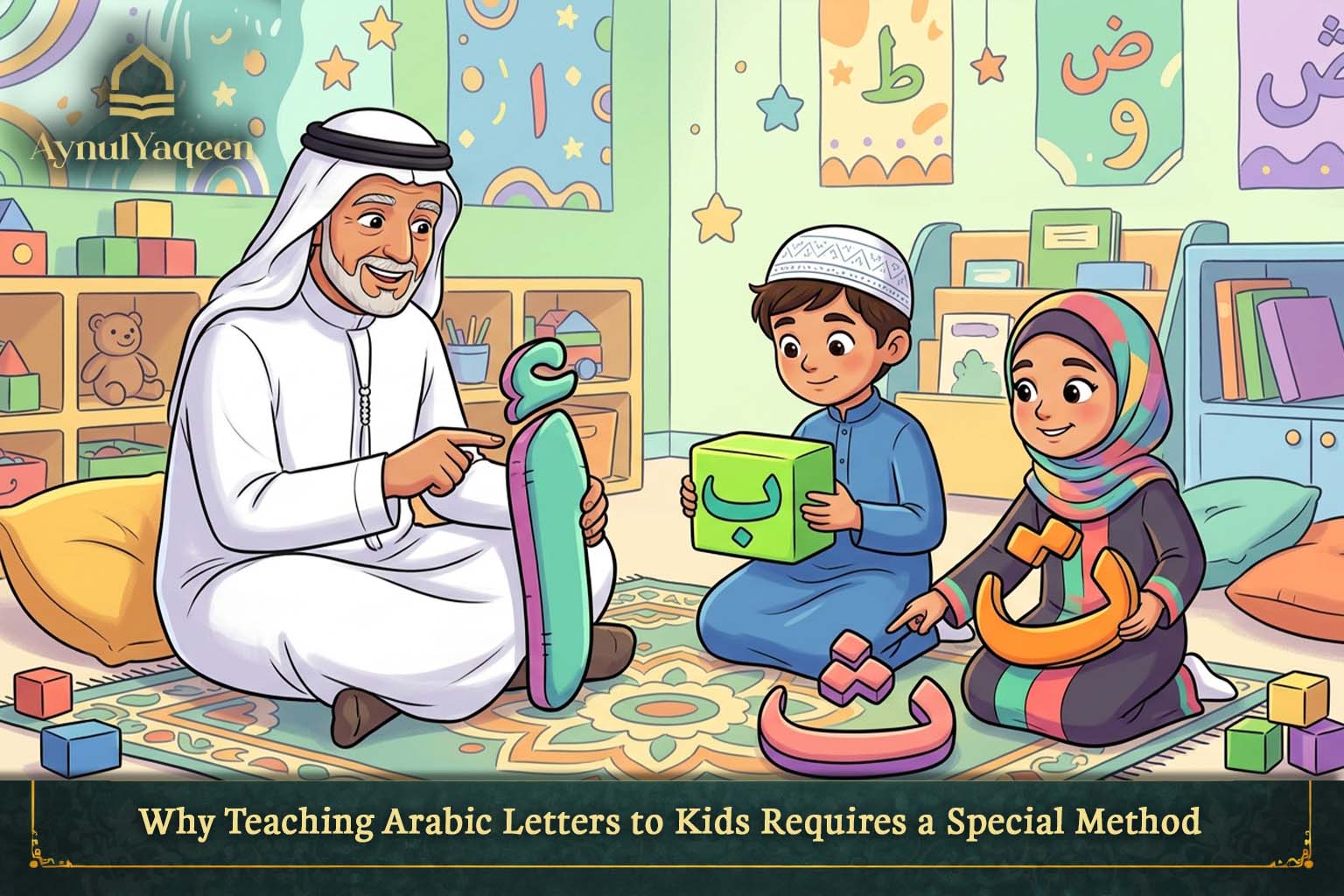
Children do not learn the same way adults do. Their attention span is shorter, their memory is still developing, and their understanding is strongly connected to visuals, sound, and movement.
This is why traditional methods-such as showing all 28 letters at once or focusing heavily on writing from the beginning-often fail.
Instead, successful learning depends on:
- Breaking information into small, manageable parts
- Using games and repetition
- Focusing on recognition before writing
- Building emotional connection with learning
At Aynulyaqeen Quran school, this principle is at the heart of all beginner programs. The teaching approach is designed specifically for children who are starting from zero, ensuring that each step feels natural and achievable.
Online Quran Academy
An Online Quran Academy provides a flexible and effective way to learn the Holy Quran from home at any time. It helps students improve their recitation, understand Tajweed rules, and build strong reading skills step by step.
Aynulyaqeen Quran school offers a structured online learning experience with qualified teachers and interactive methods that make learning easy and engaging, especially for beginners and children.
This system ensures steady progress and continuous improvement in Quran reading and understanding.

Step-by-Step Method to Teach Arabic Alphabet to Children
One of the most effective approaches divides the arabic alphabet for beginners alphabet into four structured groups. This prevents overload and helps children absorb information gradually.
Group-Based Learning System
Instead of teaching 28 letters at once, the letters are divided into four groups of seven:
- Group 1: أ ب ت ث ج ح خ
- Group 2: د ذ ر ز س ش ص ض
- Group 3: ط ظ ع غ ف ق ك
- Group 4: ل م ن ه و ي
Each group is taught over a week or more depending on the child’s pace.
Daily Learning Routine
Each letter group follows a consistent structure:
- Show the letter using a colorful visual card
- Say the letter aloud and repeat together
- Trace the letter in the air using finger movement
- Practice tracing on paper or sand
- Identify the letter in simple words or pictures
This repetition strengthens both visual and auditory memory.
At Aynulyaqeen Quran school, teachers ensure that every child masters one group before moving to the next, which significantly improves long-term retention.
Learning Through Play: The Secret to Success
Children learn best when they are enjoying the process. That is why interactive activities are essential in early Arabic education.
1. Letter Sound Game
The teacher says a letter, and the child selects the correct card from multiple options. This improves listening skills and recognition.
2. Matching Activity
Children match Arabic letters with pictures of familiar objects:
- ب → بقرة (cow)
- ت → تفاحة (apple)
- س → سمكة (fish)
3. Alphabet Song
Music helps repetition feel effortless. A consistent alphabet song can help children memorize letters without pressure.
4. Sensory Learning
Before writing, children should:
- Shape letters with clay
- Trace in sand
- Draw letters with their fingers
This creates muscle memory that supports future writing skills.
These methods are widely used in Aynulyaqeen Quran school to ensure that learning feels natural and enjoyable rather than forced.
Read also: how to get an ijazah
Teaching Similar Letters: Reducing Confusion
One of the biggest challenges in learning Arabic letters is distinguishing between similar shapes and sounds.
Similar Shape Groups
| Family | Letters | Difference |
|---|---|---|
| Ba family | ب ت ث | Number of dots |
| Jeem family | ج ح خ | Dot placement |
| Saad family | ص ض | One added dot |
| Ayn family | ع غ | Dot difference |
Similar Sound Confusion
- س vs ث
- ك vs ق
- ح vs هـ
“Detective Game” Method
A highly effective technique is turning learning into a detective game:
- Identify differences between letters
- Sort letters into groups
- Add missing dots to incomplete letters
This method strengthens attention to detail and reduces confusion dramatically.
At Aynulyaqeen Quran school, this activity is used frequently because it keeps children mentally active while reinforcing recognition skills.
From Letters to Words: Teaching Letter Joining
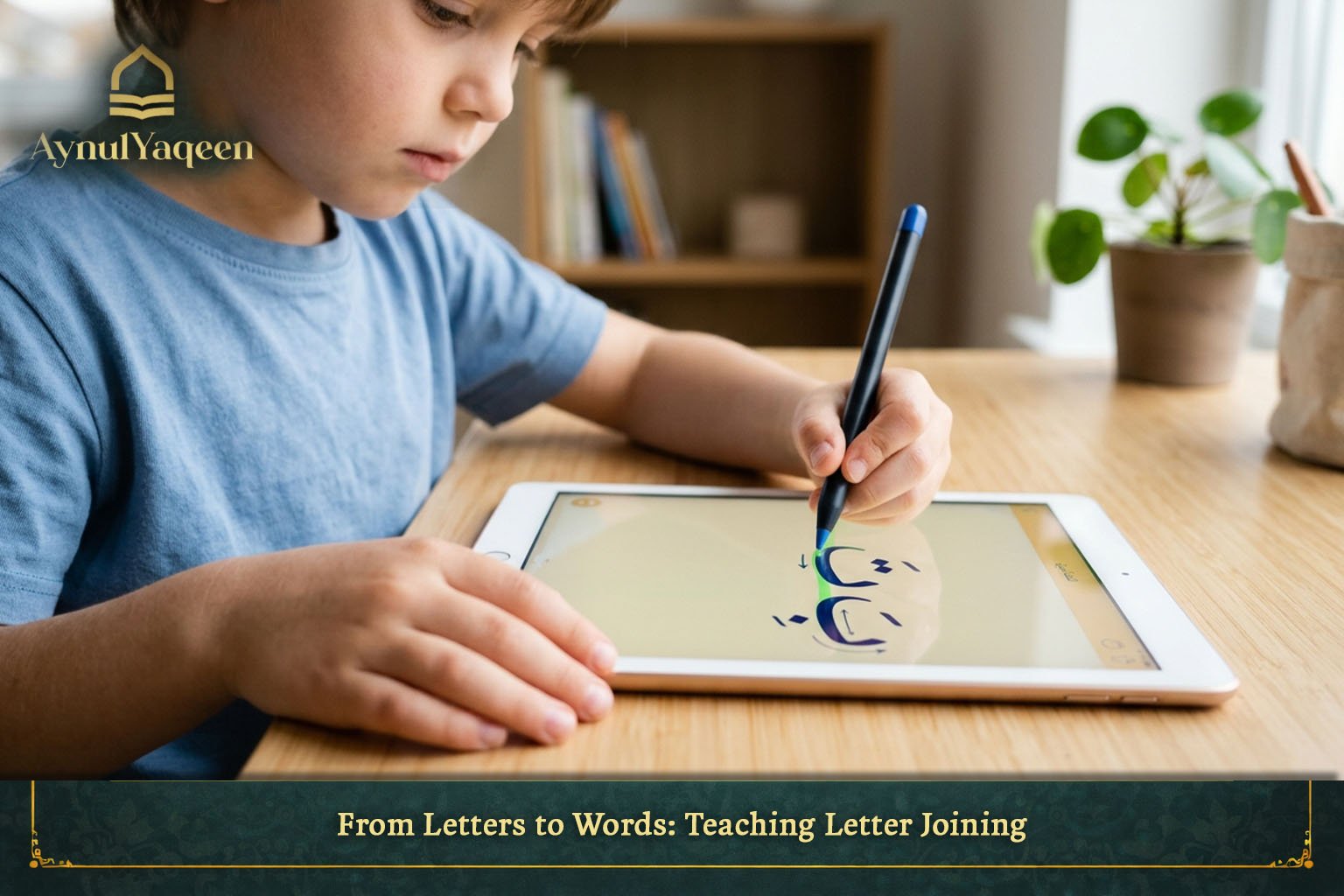
Once children recognize letters individually, the next step is learning how letters connect to form words. Arabic script is unique because letters change shape depending on their position.
Stage 1: Simple Word Recognition
Children first identify letters within words:
- باب (door) = ب + ا + ب
- ماء (water) = م + ا + ء
- شمس (sun) = ش + م + س
Stage 2: Non-Connecting Letters
Some letters do not connect to the following letter:
ا د ذ ر ز و
These must be taught clearly to avoid confusion.
Stage 3: Positional Forms
Example using the word بيت:
- ب (beginning)
- ي (middle)
- ت (end)
Children visually understand how letters change shape depending on position.
Stage 4: Word Writing Practice
Simple words are introduced:
- كتاب
- مدرسة
- أحمد
This stage marks the transition from recognition to actual reading ability.
Teaching Arabic Letters by Age Group
Teaching learn arabic online in usa letters by age group ensures children learn according to their developmental stage, starting with listening and recognition in early years, then moving gradually to tracing, reading, and writing as they grow.
Ages 2-4: Early Exposure
At this stage, children should only listen and observe:
- Alphabet songs
- Short online arabic classes for kids words in daily life
- No writing or testing
Ages 5-6: Recognition Stage
- Identify all letters
- Begin tracing
- Play matching games
Ages 7-10: Reading Stage
- Read simple words
- Understand letter positions
- Start writing sentences
This gradual progression is the foundation used in Aynulyaqeen Quran school programs for children.
Classroom Structure for Effective Learning
A well-structured lesson usually includes three parts:
1. Introduction
New letters are introduced with visuals and repetition.
2. Reading Practice
Children read simple words and sentences to reinforce recognition.
3. Writing and Dictation
Children practice writing what they have learned to strengthen memory.
This balanced structure ensures that no skill is neglected.
Common Mistakes Parents Should Avoid
Introducing all Arabic letters at once or forcing writing before recognition often causes confusion and slows a child’s progress. Inconsistent practice and removing fun from learning can turn Arabic study into pressure instead of an enjoyable experience.
1. Teaching All Letters at Once
This leads to confusion and forgetting.
2. Writing Before Recognition
Children should recognize letters before attempting to write them.
3. Lack of Consistency
Short daily practice is more effective than long weekly sessions.
4. Removing Fun from Learning
If a child is bored, learning stops effectively.
Why Choose Aynulyaqeen Quran school for Arabic Learning
Choosing the right learning environment makes a major difference in a child’s progress. Aynulyaqeen Quran school provides a structured, child-friendly system designed specifically for beginners. The approach focuses on:
- Step-by-step learning without pressure
- Interactive activities instead of memorization only
- Experienced teachers who understand child psychology
- Balanced development of reading, listening, and writing skills
One of the key strengths of Aynulyaqeen Quran school is its ability to adapt teaching methods according to each child’s pace, ensuring no student is left behind.
Parents who choose Aynulyaqeen Quran school often notice faster improvement in recognition and reading skills compared to traditional methods.
The Importance of a Supportive Learning Environment
Children learn Quranic Arabic Lessons best in a supportive environment where they feel safe and motivated to participate. When the atmosphere is positive, learning becomes easier and more effective.
- Mistakes are allowed so children feel confident to try without fear.
- Progress is celebrated to build motivation and self-confidence.
- Learning feels like play through fun activities and interaction.
- Pressure is minimized so children can learn at their own pace.
When these simple conditions are applied, Best Online Quranic Arabic Course learning becomes a natural and enjoyable part of a child’s daily life instead of a stressful task.
Why Teaching Arabic Letters Using Words Is Important
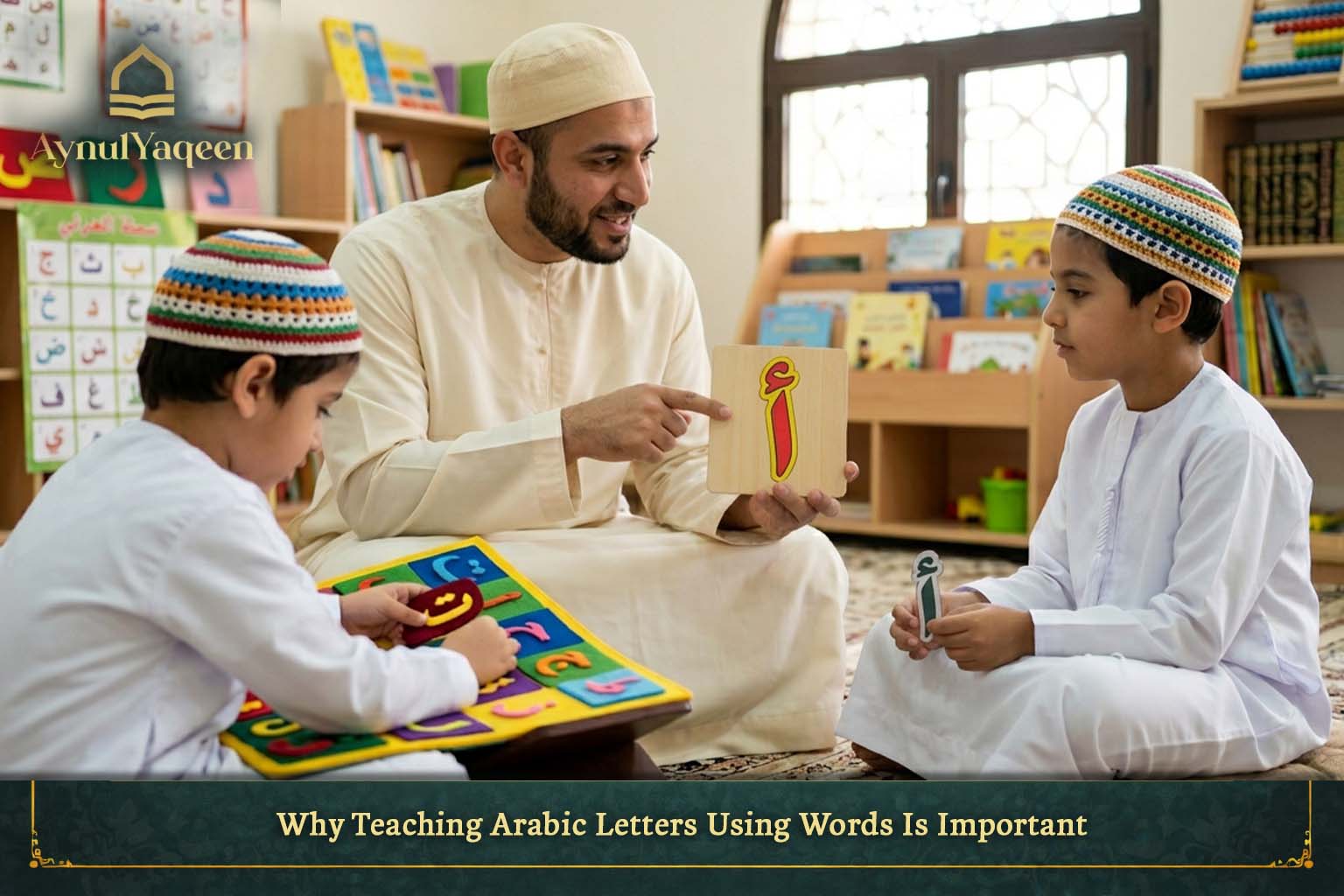
When teaching the Arabic alphabet for arabic letters for kids, many parents start with tracing and naming the 28 letters. However, learning is more effective when letters are linked to words and images, making it easier for children to understand and remember. Here is why this method is highly recommended:
Strengthening memory retention
By linking each letter to a meaningful word, children learn in context. For example, the letter “ب” with the word “باب” (door) helps the brain connect sound, shape, and meaning. This multi-sensory approach improves recall and supports faster understanding.
Expanding vocabulary early
Instead of waiting until all letters are mastered, children can start learning new words alongside letters, making progress faster and more natural.
Improving pronunciation and listening skills
Connecting letters with words helps children hear correct Arabic sounds, improving pronunciation and auditory understanding.
Ideal for home learning
This approach allows fun activities like flashcards, themed vocabulary, and word games, making Arabic learning more engaging and effective for children.
FAQ
1. What is the best age to start teaching Arabic letters to kids?
The best age is between 4 and 6 years old, when children are naturally curious and able to recognize patterns through play.
2. How long does it take for a child to learn Arabic letters?
It usually takes 4-8 weeks for basic recognition if taught consistently using structured methods.
3. Should children learn writing before reading?
No. Children should first recognize and pronounce letters before learning to write them to avoid confusion.
If you’re interested, check out our article on the best Quran hifz school near you.
If you’re interested, check out our article on Seerah for beginners.
If Arabic itself is what you’re after, we also have a dedicated program to learn Arabic online, covering both everyday and Quranic Arabic.
