
January 25, 2026


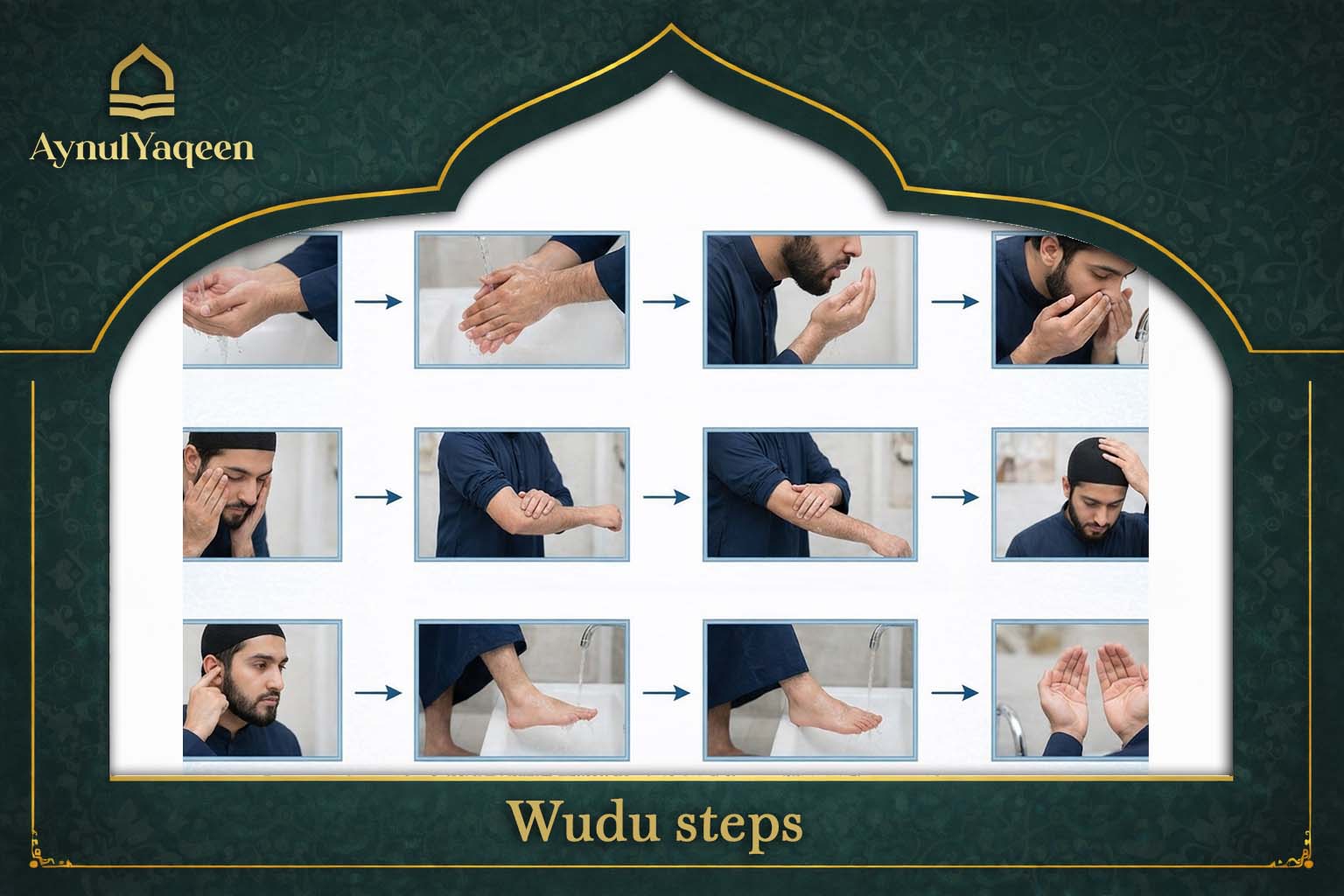
Wudu steps are essential acts of purification that connect physical cleanliness with spiritual readiness. At Aynulyaqeen Academy, we focus on teaching these steps clearly, highlighting both their legal requirements and deeper meanings. Performing the Wudu steps correctly ensures that worship, especially prayer, is valid while also promoting hygiene and mental focus. Beyond mere ritual, these steps cultivate mindfulness, discipline, and inner calm. Understanding and practicing the Wudu steps transforms daily ablution into a moment of spiritual reflection, preparing the believer’s heart and body for devotion, repentance, and connection with the Divine. What Is Wudu? To truly understand Wudu one must reflect on both its linguistic roots and its sacred meaning. The Arabic term is derived from a word that conveys brightness, purity, and radiance. This origin reflects its dual nature: an outward cleansing of the body and an inward illumination of the soul. Wudu is not merely a physical act. It represents refinement, renewal, and preparation. Just as water removes visible impurities, this sacred purification prepares the worshipper to stand in devotion with clarity and dignity. Legal Definition and Essential Practice In its formal definition, Wudu is a specific act of purification performed by washing and wiping designated parts of the body with pure water. It is a necessary condition for the validity of prayer and certain other acts of worship. The Qur’an outlines the essential elements of this purification in Surah Al-Ma’idah (5:6), mentioning the washing of the face and arms, wiping of the head, and washing of the feet. These prescribed actions form the foundation of the Wudu steps, which must be performed with intention and proper order. The Wudu steps are not random motions; they are deliberate acts of obedience rooted in revelation. Learning the correct Wudu steps ensures that one’s worship is both valid and complete. Beyond Ritual: A Spiritual Transition While the external actions are clearly defined, the meaning of Wudu extends far beyond its legal framework. Each of the Wudu steps carries spiritual depth. When the hands are washed, one reflects on the deeds performed. When the face is cleansed, it is as though the gaze and expressions are purified. When the limbs are washed, the heart is reminded to turn away from distraction. Through the Wudu steps, a person moves from worldly engagement to mindful presence. It becomes a bridge between daily life and sacred devotion—a transformation from physical readiness to spiritual awareness. Online Quran Academy At Aynulyaqeen Academy, our Online Qur’an Academy offers flexible and interactive learning for students of all ages. Through carefully structured lessons, learners can master Qur’anic recitation, Tajweed rules, and memorization at their own pace. The academy emphasizes both accuracy and understanding, ensuring that each student not only reads the Qur’an correctly but also comprehends its meanings. By combining live instruction, digital resources, and personalized guidance, Aynulyaqeen Academy makes it easy to connect with qualified teachers from anywhere in the world. This approach ensures that the study of the Qur’an is accessible, engaging, and spiritually enriching. Conditions for the Validity of Wudu For Wudu to be valid and accepted, certain essential conditions must be fulfilled before performing the Wudu steps. These conditions ensure that the act is not merely physical cleansing, but a proper act of worship carried out with awareness and correctness. 1. Intention (Niyyah) Intention is the most fundamental condition. An action does not become an act of worship unless it is accompanied by a conscious intention in the heart. The intention does not need to be spoken aloud; rather, it is the inner resolve to perform Wudu for the purpose of purification and devotion. Without intention, the Wudu steps remain ordinary washing and do not attain spiritual or legal validity. 2. Pure and Permissible Water The water used must be pure and suitable for purification. It should remain in its natural state, free from impurities that alter its essential qualities such as color, smell, or taste. Using impure or contaminated water invalidates the Wudu steps, regardless of how carefully they are performed. 3. Removal of Barriers Anything that prevents water from reaching the skin must be removed before beginning the Wudu steps. This includes non-permeable nail polish, thick substances, or any coating that blocks water from touching the required areas. The water must directly reach the skin for the purification to be valid. 4. Flowing Water Over the Limbs It is necessary that water flows over the parts that are required to be washed. A light wipe is not sufficient, except in the case of wiping the head. Proper washing ensures that the Wudu steps are completed correctly and fulfill their intended purpose. How to Perform Wudu Step by Step Wudu consists of obligatory acts and recommended practices. Performing the complete Wudu steps with care ensures both validity and spiritual excellence. The obligatory elements must be fulfilled, while the recommended actions perfect and beautify the purification. Below is the proper sequence of the Wudu steps: Follow this step-by-step guide to perform the Wudu steps correctly, ensuring both validity and spiritual mindfulness in every ablution. 1. Intention and Saying “Bismillah” Begin with the intention in the heart to perform Wudu for the sake of worship. It is recommended to say “Bismillah” (In the name of Allah) before starting. 2. Washing the Hands (Three Times) Wash both hands up to the wrists three times, ensuring that water reaches between the fingers. This prepares the hands for the rest of the Wudu steps. 3. Rinsing the Mouth (Three Times) Take water into the mouth and rinse thoroughly three times. This is a recommended act that enhances purification. 4. Rinsing the Nose (Three Times) Gently inhale water into the nose and expel it three times. This completes the cleansing of the facial area before washing the face. 5. Washing the Face (Obligatory) Wash the entire face three times, from the hairline to the chin and from ear to ear. Covering this area fully is one of the essential Wudu steps and is required for validity. 6. Washing the Arms