


How do I learn the Arabic language? It is a question many beginners ask when they decide to start learning one of the world’s most rewarding languages. Whether your goal is understanding the Quran, communicating with native speakers, traveling, or expanding your career opportunities, the right learning approach makes a significant difference.
Arabic may seem challenging at first, but with a structured plan, consistent practice, and gradual progress, anyone can develop strong language skills. Aynulyaqeen Quran Academy provides structured online Arabic lessons designed to help learners build confidence through personalized instruction, experienced teachers, and interactive learning methods.
In this guide, you’ll discover practical steps, effective study techniques, and proven strategies that make learning Arabic easier, more enjoyable, and sustainable for beginners while helping you achieve steady progress toward fluency.
How Do I Learn the Arabic Language for Beginners?
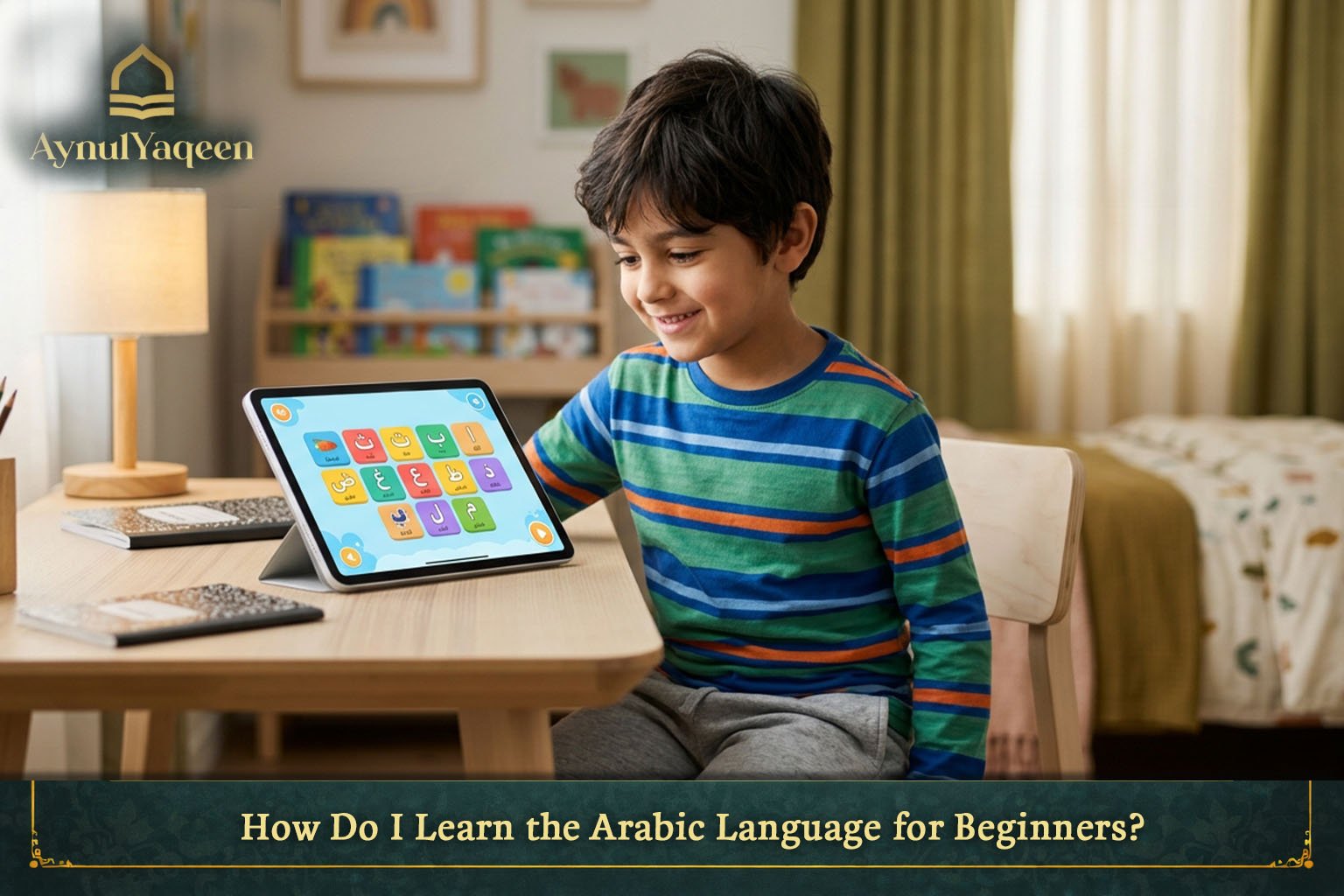
Learning Arabic is a rewarding journey that opens the door to a rich culture, meaningful communication, and a more in-depth understanding of one of the world’s most influential languages. Many beginners ask the same question: where should I start, and what is the most effective way to make steady progress?
The answer is not about finding a single shortcut. Instead, successful learners follow a structured plan that develops reading, writing, listening, speaking, and vocabulary step by step. With consistent practice, realistic goals, and guidance from experienced teachers, Arabic becomes much more approachable than many people expect.
Whether your goal is understanding the Quran, communicating with Arabic speakers, traveling, studying, or advancing your career, this guide will help you build a practical learning strategy that delivers long-term results.
Online Arabic Academy Aynulyaqeen
Selecting a trusted online Arabic academy is an important step for anyone who wants to learn Arabic in a structured and supportive environment. Aynulyaqeen Arabic Academy provides comprehensive online Arabic and Quran programs for children and adults, regardless of their experience level.
Students benefit from qualified instructors, interactive live classes, personalized learning plans, and regular progress assessments that help them develop reading, writing, speaking, and comprehension skills with confidence.
With flexible scheduling and continuous guidance, Aynulyaqeen Arabic Academy creates an engaging learning experience that allows students to advance steadily while studying from the comfort of their homes.

Why Learn Arabic?
Arabic is spoken by hundreds of millions of people across the Middle East and North Africa. It is also the language of the Holy Quran, making it especially important for Muslims who wish to understand Islamic texts directly.
Besides its religious significance, Arabic offers many personal and professional advantages. Learning the language can help you:
- Communicate with native Arabic speakers.
- Understand Arabic literature and history.
- Improve career opportunities in international organizations.
- Travel confidently across Arabic-speaking countries.
- Study Islamic sciences using sources.
- Expand your cultural knowledge.
Every learner has different motivations, but they all benefit from building a strong foundation before moving to advanced topics.
Begin with the Arabic Alphabet
The Arabic alphabet for beginners is the first milestone for every beginner. Unlike English, Arabic is written from right to left and contains 28 letters. Each letter may appear in different forms depending on whether it comes at the beginning, middle, or end of a word. At first, the script may look unfamiliar, but regular practice quickly builds recognition. A good learning routine includes:
- Learning three to five letters every day.
- Practicing handwriting.
- Listening carefully to correct pronunciation.
- Reading simple words aloud.
- Reviewing previously learned letters before adding new ones.
Instead of rushing through the alphabet, spend enough time mastering it. Reading fluently later depends on this early foundation.
Focus on Correct Pronunciation from Day One
Arabic contains several sounds that do not exist in English. Trying to pronounce them correctly from the beginning prevents bad habits that become difficult to change later.
Listening to native speakers every day helps train your ear. Repeat words several times until your pronunciation becomes more natural.
Recording yourself while reading short passages is another useful exercise. Comparing your pronunciation with native speakers allows you to notice small differences and improve steadily.
Working with qualified instructors provides immediate feedback and helps learners distinguish between similar sounds that often confuse beginners.
Build Practical Vocabulary Instead of Memorizing Long Lists

Many learners make the mistake of memorizing hundreds of isolated words. A better approach is learning vocabulary connected to everyday situations. Start with words related to:
- Greetings
- Family
- Food
- Numbers
- Colors
- Daily activities
- Time
- Places
- Shopping
- Travel
Learning words within sentences makes them easier to remember because your brain connects vocabulary with real communication. Reviewing previously learned words every day is far more effective than constantly adding new vocabulary without revision.
Learn Basic Grammar Gradually
Grammar often intimidates beginners, but Arabic grammar becomes much easier when introduced step by step. Instead of trying to master every rule immediately, focus on understanding simple sentence structure first.Learn Arabic: how Arabic forms:
- Simple nominal sentences.
- Basic verb sentences.
- Singular and plural nouns.
- Personal pronouns.
- Common verbs.
- Question words.
Each new grammar lesson should immediately be followed by reading examples and creating your own sentences. Using grammar in context is much more effective than memorizing rules alone.
How do I learn the Arabic language? Practice Reading Every Day?
One of the best answers to How do I learn Arabic online in the USA? is by making reading a daily habit. Reading improves multiple language skills at the same time, including vocabulary, grammar recognition, pronunciation, and sentence structure.
Even spending ten to fifteen minutes each day with simple Arabic texts can lead to noticeable progress over time. Beginners should start with materials that match their level, such as:
- Children’s stories.
- Short dialogues.
- Simple articles.
- Beginner readers.
- Short Quranic vocabulary exercises if your goal includes Quranic Arabic.
Reading aloud also strengthens pronunciation and helps build confidence. As your vocabulary expands, gradually move on to more challenging books and articles to continue improving your comprehension.
How do I learn the Arabic language Through Daily Listening?
If you are asking, How do I learn the Arabic language more naturally, listening is one of the most effective methods. Even if you do not understand every word, daily exposure helps your brain recognize pronunciation patterns, sentence rhythm, and frequently used expressions. Useful listening resources include:
- Educational podcasts.
- Beginner Arabic conversations.
- Children’s educational videos.
- Arabic news for intermediate learners.
- Short lectures with subtitles.
Consistency matters more than the amount of time you study. Listening for twenty minutes every day usually delivers better long-term results than studying for several hours only once a week.
Create a Daily Learning Routine
Another practical answer to How do I learn the Arabic language? Is to establish a realistic study routine. Many learners stop improving because they study irregularly. A balanced daily schedule helps you build knowledge steadily without feeling overwhelmed. A simple routine may include:
- 15 minutes reviewing vocabulary.
- 20 minutes of reading.
- 15 minutes of listening practice.
- 15 minutes of speaking.
- 15 minutes of writing.
Maintaining this schedule over several months leads to continuous improvement, and small daily achievements eventually become significant language skills.
Learn with Qualified Teachers
Many students wonder, How do I learn the Arabic language correctly without developing bad habits. While self-study is helpful, learning with experienced teachers provides structured lessons, accurate pronunciation, and personalized feedback that accelerate progress.
Professional instructors know how to organize lessons according to each student’s level and learning objectives. Students receive continuous encouragement, regular assessments, and guidance throughout every stage of their learning journey.
Aynulyaqeen Quran Academy offers online Arabic lessons for learners of all ages and proficiency levels. Through personalized instruction, interactive classes, and an experienced female Arabic tutor online, beginners can build confidence while progressing at a comfortable pace.
Set Realistic Goals
A common question is, How do I learn the Arabic language without becoming discouraged?. The answer is to set realistic and achievable goals instead of expecting fluency within a short period.
Focus on milestones such as:
- Reading the Arabic alphabet confidently.
- Learning one hundred useful words.
- Holding a simple conversation.
- Reading a short story independently.
- Writing short paragraphs.
Each achievement builds motivation and prepares you for the next stage of learning. Rather than comparing yourself with others, measure your progress against where you started. Consistent improvement is always more valuable than trying to learn too much too quickly.
Practice Speaking Without Waiting for Perfection
Many beginners delay speaking because they worry about making mistakes. In reality, mistakes are a natural part of learning any language. The sooner you begin using Arabic letters for kids in conversations, the faster your confidence and fluency will grow.
Start with short, practical sentences that you can use every day. Introduce yourself, describe your daily routine, ask simple questions, and respond to common greetings. Repeating these conversations regularly helps transform vocabulary into active language skills.
If you do not have Arabic-speaking classes nearby, online lessons with qualified teachers provide an excellent opportunity to practice in a supportive environment. Speaking consistently is far more valuable than memorizing hundreds of words that are never used.
Improve Your Writing Step by Step
Writing strengthens grammar, vocabulary, and sentence structure. Even simple writing exercises help reinforce everything you learn during reading and listening practice. Begin with short tasks such as:
- Write five new words each day.
- Create simple sentences.
- Keep a daily journal.
- Describing pictures.
- Write short paragraphs about familiar topics.
As your confidence increases, your writing will naturally become more accurate and detailed. Review your work regularly and correct mistakes instead of trying to avoid them. Every correction is an opportunity to improve.
Learn Arabic Through Real-Life Situations

One of the fastest ways to remember new vocabulary is by connecting it to situations you experience every day. For example, while preparing food, practice naming kitchen items in Arabic. When shopping, recall numbers, colors, and common expressions. During your daily routine, try describing your activities using simple Arabic sentences.
Learning through daily experiences makes vocabulary easier to remember because your brain associates words with real actions instead of isolated memorization. This practical approach also prepares you for genuine conversations rather than textbook exercises alone.
Use Technology to Support Your Learning
Modern technology provides countless opportunities to practice Arabic outside the classroom. Useful learning tools include:
- Digital flashcards.
- Vocabulary review applications.
- Online dictionaries.
- Interactive grammar exercises.
- Pronunciation practice tools.
- Audio lessons.
- Language exchange communities.
These resources should support your learning plan rather than replace structured study. The most successful learners combine technology with regular practice and guidance from experienced teachers.
Avoid Common Mistakes That Slow Progress
Many beginners become frustrated because they unknowingly develop habits that delay improvement. Some of the most common mistakes include:
Trying to Learn Everything at Once
Arabic is a rich language. Attempting to master grammar, vocabulary, reading, and conversation simultaneously often leads to confusion. Focus on one skill at a time while reviewing previous lessons regularly.
Ignoring Revision
Learning new material is only half of the process. Without regular review, much of what you study will be forgotten. Schedule weekly revision sessions to strengthen long-term memory.
Translating Every Sentence
Constantly translating from English prevents natural thinking in Arabic. Instead, try understanding simple Arabic phrases directly without mentally converting every word.
Being Afraid of Mistakes
Every fluent speaker once made beginner mistakes. Treat errors as part of the learning process rather than signs of failure.
The Importance of Learning with a Structured Curriculum
A well-organized curriculum saves time and keeps learners focused on the right topics at the right stage.
Instead of jumping randomly between grammar videos, vocabulary lists, and unrelated lessons, follow a sequence that gradually develops your skills. A structured program typically includes:
- Alphabet and pronunciation.
- Reading practice.
- Core vocabulary.
- Basic grammar.
- Listening exercises.
- Conversation practice.
- Writing activities.
- Regular assessments.
This balanced approach helps students improve all language skills together instead of developing one skill while neglecting others.
Aynulyaqeen Quran Academy follows a gradual learning approach that allows beginners to progress confidently through each stage while receiving continuous feedback from qualified instructors.
Stay Motivated Throughout Your Arabic Journey
Learning Arabic takes dedication, but maintaining motivation becomes much easier when you celebrate small achievements. Keep track of your progress by recording goals such as:
- Completing a beginner textbook.
- Learning fifty new words each month.
- Reading your first short Arabic story.
- Holding a short conversation.
- Understanding simple audio without subtitles.
Looking back at your earlier abilities reminds you how much progress you have already made. Remember that consistency always produces better results than occasional intensive study sessions.
Why Personalized Learning Makes a Difference?
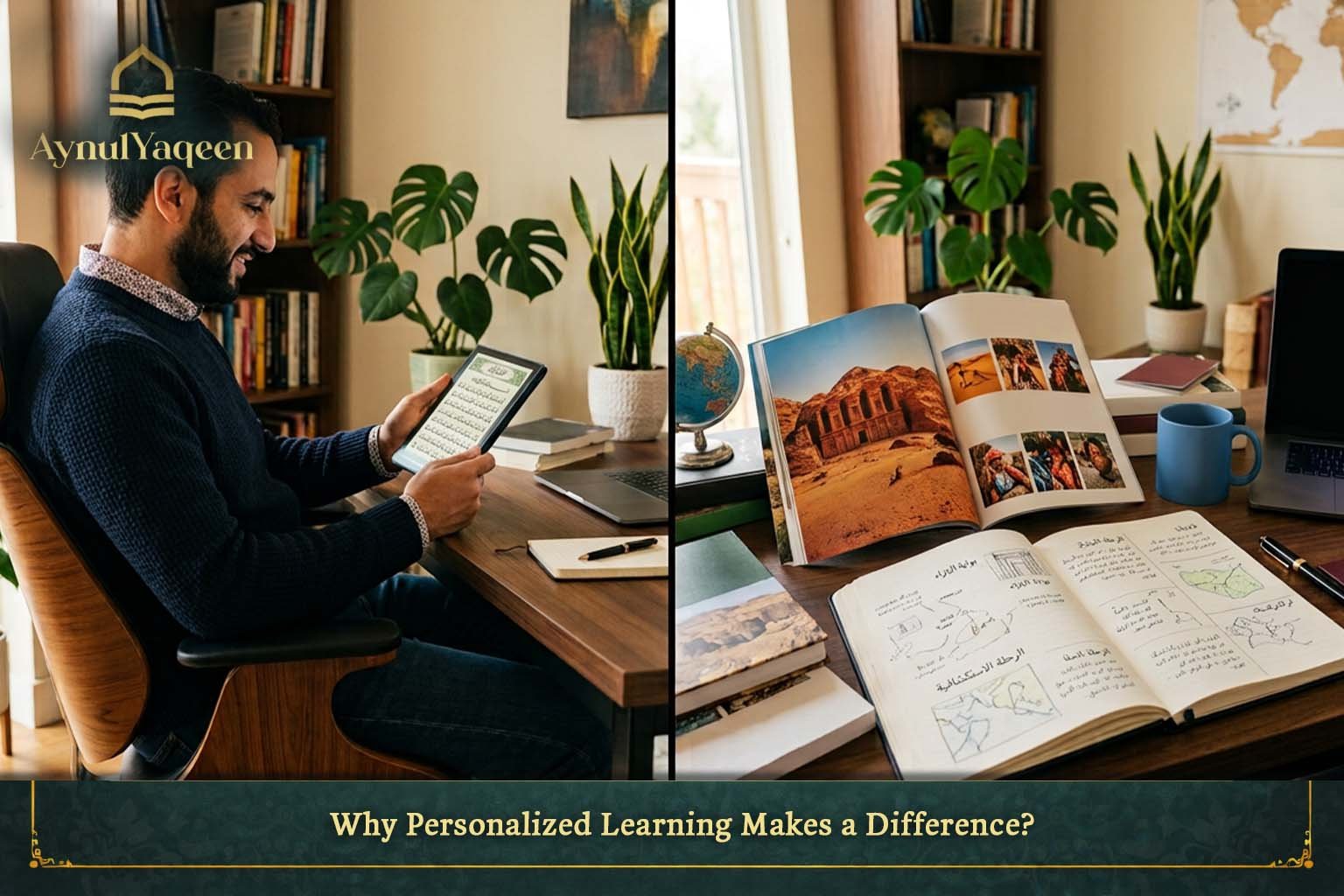
Every learner begins with different goals. Some students want to communicate confidently while traveling. Others focus on reading classical Arabic, understanding Islamic texts, or improving professional communication.
Because of this, teachers can adjust lesson speed, vocabulary topics, grammar explanations, and conversation practice according to each learner’s needs. With different objectives, personalized instruction often produces faster progress than one-size-fits-all courses.
Aynulyaqeen Quran Academy offers personalized online Arabic lessons that help students build strong language skills through interactive instruction, practical exercises, and continuous support from experienced teachers.
Frequently Asked Questions
Here are answers to some of the most common questions learners have before starting their Arabic learning journey.
Is Arabic difficult for English speakers?
Arabic is different from English in its writing system and grammar, but it becomes much easier when learned gradually through consistent daily practice and structured lessons.
How long does it usually take to learn Arabic?
The timeline depends on your study routine, learning goals, and practice frequency. Learners who study each week consistently generally make noticeable progress within a few months, while fluency requires longer-term commitment. Have more questions? Don’t hesitate to contact us. We also have a helpful resource on online Arabic classes for adults worth checking out.
Should I learn Modern Standard Arabic or a dialect first?
For most beginners, Modern Standard Arabic is the best starting point because it is widely understood across the Arab world and forms the foundation for reading, writing, education, and many formal situations. Once you have built a strong foundation, learning a regional dialect becomes much easier.
In conclusion, learning Arabic becomes much more manageable when you follow a clear plan and remain consistent in your daily practice. Building a strong foundation in reading, writing, listening, and speaking will help you gain confidence and elevate your skills over time.
Every lesson and every new word brings you one step closer to your language goals. Aynulyaqeen Quran Academy offers structured online Arabic lessons with experienced instructors who guide learners through every stage of the learning process.
Whether you would like to learn Arabic for religious, academic, professional, or personal reasons, staying committed and using the right learning resources will help you achieve long-term success.
You may also find our guide to the best online Quran teacher helpful.
If you’re starting from scratch in the US, our getting-started guide to learn Quran online from the USA covers exactly what to expect.
