

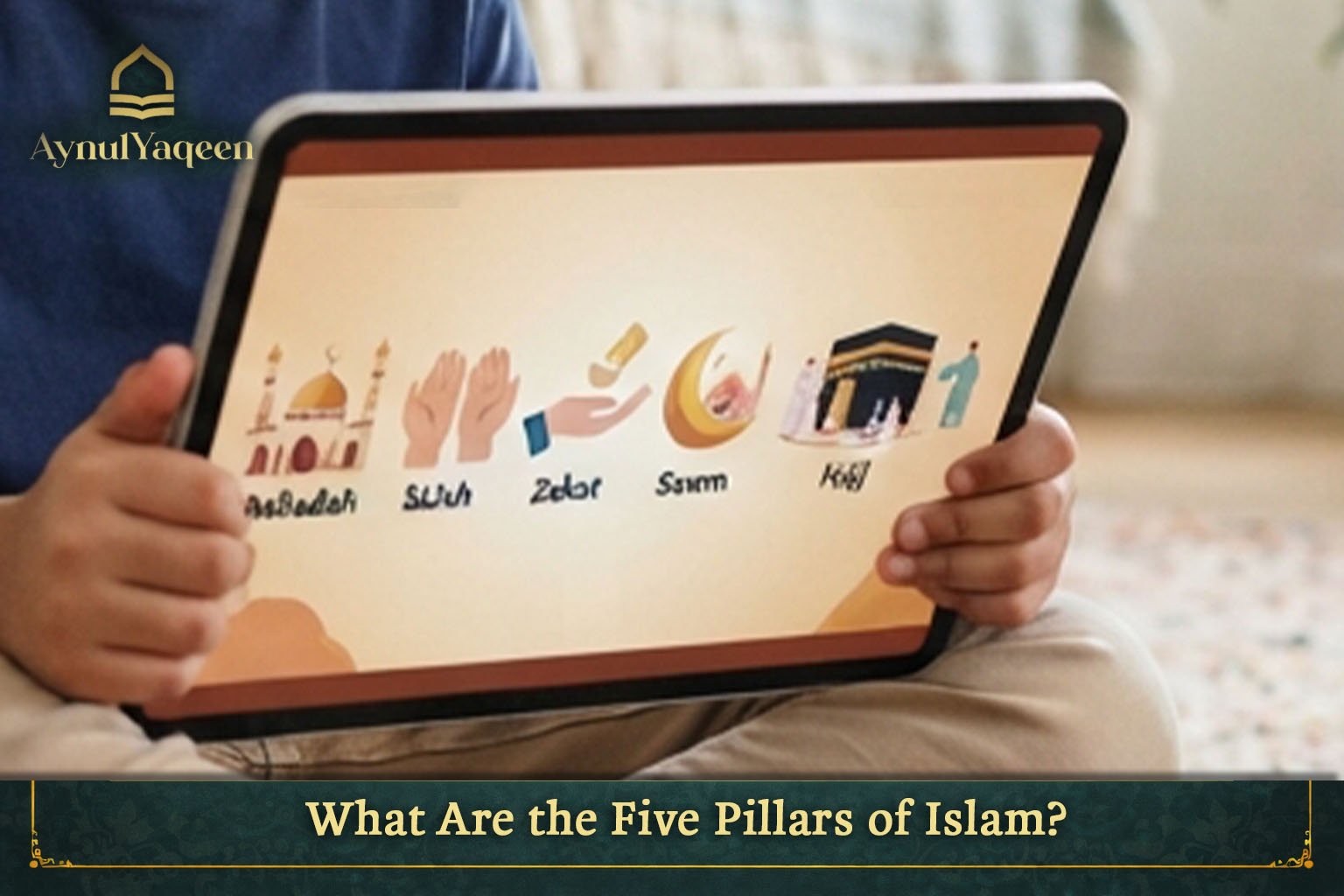
What are the Five Pillars of Islam? is one of the most important questions for anyone beginning to learn about Islam. The answer introduces the five fundamental acts of worship that form the foundation of Muslim religious practice: Shahadah, Salah, Zakat, Sawm, and Hajj. Each pillar has a specific meaning and purpose, yet all five work together to shape a Muslim’s faith, character, worship, and relationship with the wider community.
For beginners, knowing what the Five Pillars of Islam are is not simply about memorizing five names. Each pillar carries a deeper meaning and teaches important values such as devotion to Allah, discipline, generosity, responsibility, and spiritual commitment. Learning these principles correctly can also provide a stronger foundation for understanding other aspects of Islamic teachings.
At Aynulyaqeen Quran Academy, learners can explore essential Islamic concepts in a clear and structured way. The academy supports students who want to understand the Quran and Islamic teachings while developing their knowledge step by step. By learning what the Five Pillars of Islam are, students can gain a clearer picture of the practices that shape a Muslim’s relationship with Allah and the wider community.
What are the Five Pillars of Islam and Why Are They Important?
The Five Pillars are the five essential practices upon which the religious life of a Muslim is built. They are:
- Shahadah – the testimony of faith.
- Salah – the five daily prayers.
- Zakat – obligatory charity on qualifying wealth.
- Sawm – fasting during Ramadan.
- Hajj – pilgrimage to Makkah for those who are able.
These practices are called pillars because they form the foundation of Islamic worship. The Prophet Muhammad ﷺ described Islam as being built upon five: Shahadah, Salah, Zakat, Hajj, and fasting in Ramadan.
The Five Pillars are central to Muslim worship, but they do not represent every Islamic teaching. Islam also emphasizes honesty, justice, kindness, good manners, family responsibilities, and helping others. Thus, the pillars provide a foundation for faith and practice within a broader system of beliefs and values.
Learn Online with Aynulyaqeen Quran Academy
Choosing the right online Quran academy can make a significant difference in your learning journey. Aynulyaqeen Quran Academy provides structured Quran courses for beginners and advanced learners, focusing on accurate Quran reading, Tajweed, memorisation, and Islamic studies.
With qualified teachers, flexible class schedules, and personalised one-on-one lessons, students of all ages can learn at their own pace while building confidence in reciting and understanding the Holy Quran from anywhere in the world.

What are the Five Pillars of Islam in Simple Terms?
For someone encountering the subject for the first time, the pillars can be remembered through five simple ideas:
- Shahadah means believing and testifying.
- A Muslim declares belief in the oneness of Allah and accepts Muhammad ﷺ as His Messenger.
- Salah means praying.
- A Muslim performs five obligatory prayers during the day and night.
- Zakat means giving.
- A Muslim who meets the relevant financial conditions gives a prescribed portion of qualifying wealth to eligible recipients.
- Sawm means fasting.
- Muslims fast during Ramadan, abstaining from food and drink from dawn until sunset while seeking greater self-discipline and awareness of Allah.
- Hajj means pilgrimage.
- A Muslim who has the physical and financial ability performs the pilgrimage to Makkah once in a lifetime, subject to the applicable conditions.
This simple explanation makes the pillars easy to remember, but each one deserves deeper study because it contains important spiritual and practical lessons.
The First Pillar: Shahadah and the Foundation of Faith
The Shahadah is the first pillar of Islam and the foundation upon which the other pillars rest. Its well-known wording is:
أشهد أن لا إله إلا الله وأشهد أن محمدًا رسول الله
Ashhadu an la ilaha illa Allah, wa ashhadu anna Muhammadan rasul Allah.
It means:
“I bear witness that there is no deity worthy of worship except Allah, and I bear witness that Muhammad is the Messenger of Allah.”
The Shahadah contains two fundamental beliefs. The first is belief in the absolute oneness of Allah. Muslims believe that Allah alone deserves worship and that He has no partner.
The second is belief that Muhammad ﷺ is the Messenger of Allah. Muslims accept his message and follow his example in understanding and practicing Islam.
Understanding Tawhid
The concept of Tawhid, or the oneness of Allah, is at the heart of Islamic belief. Muslims believe that Allah is the Creator, Sustainer, and Lord of everything. Worship is therefore directed to Him alone.
The Shahadah is not intended to be an empty phrase. It expresses a commitment that affects how a Muslim views life, worship, morality, and personal responsibility.
A person who truly understands the Shahadah recognizes that worship is not merely a collection of ceremonies. It is a relationship with Allah based on faith, obedience, love, hope, and reverence.
Why Is Shahadah More Than a Statement?
The declaration of faith has consequences for a Muslim’s daily choices. When Muslims believe that Allah knows their actions and intentions, they have a reason to pursue honesty even when nobody else is watching. They are encouraged to avoid injustice, fulfill responsibilities, seek forgiveness after mistakes, and remember that worldly success is not the only measure of a meaningful life.
The Shahadah therefore establishes a spiritual direction. It tells the believer whom they worship and whose guidance they seek to follow.
For a new Muslim, learning the meaning of the Shahadah should come before rushing into complicated details. Understanding its foundation makes the other pillars easier to appreciate.
The Second Pillar: Salah and the Five Daily Prayers
Salah, or the formal Islamic prayer, is the second pillar. Muslims perform five obligatory prayers each day:
- Fajr – before sunrise.
- Dhuhr – after midday begins.
- Asr – in the afternoon.
- Maghrib – after sunset.
- Isha – at night.
The exact prayer times vary throughout the year depending on location and the sun’s movement.
Salah gives Muslims repeated opportunities to stop their ordinary activities and turn their attention toward Allah.
A person may spend several hours working, studying, traveling, or taking care of family responsibilities. Prayer creates a regular interruption in that routine and reminds the believer that spiritual responsibilities remain important.
Why Is Salah So Important?
Prayer is one of the most visible forms of Islamic worship for beginners. It includes Quranic recitation, remembrance of Allah, supplication, standing, bowing, and prostration. These movements are not performed simply as exercise. They express submission and humility before Allah.
The position of prostration is particularly meaningful. The worshipper places their forehead on the ground while recognizing the greatness of Allah.
Prayer can also provide a moment of calm during a stressful day. Instead of allowing worries to dominate every thought, a Muslim turns toward Allah and asks for guidance, forgiveness, mercy, and help.
Learning Salah Correctly
A beginner needs to learn several basic elements before becoming comfortable with prayer. These include purification, prayer times, the direction of prayer, essential recitations, physical movements, and the general structure of each prayer.
Learning the meaning of what is islamic fiqh recited can make prayer much more meaningful. A person who understands the words of Al-Fatihah, for example, can reflect on the praise, worship, and request for guidance contained within it.
Quranic pronunciation also matters. Students who want to improve their recitation can study basic Tajweed and articulation points so that they pronounce Quranic words correctly.
For learners who prefer structured online education, Aynulyaqeen Quran Academy can be considered as one option for studying Quran recitation and related Islamic courses for beginners from home.
Salah and Daily Discipline
One of the practical benefits of regular prayer is the development of discipline. Five daily prayers require a Muslim to organize part of the day around worship. Over time, this can make remembrance of Allah a consistent habit rather than an occasional activity.
The objective is not merely to complete the movements. The deeper goal is to establish sincere worship and maintain awareness of Allah.
What are the Five Pillars of Islam and How Does Salah Fit Into Them?
Salah demonstrates how one of the pillars can influence the entire day. The Shahadah establishes faith, but Salah gives that faith a repeated practical expression. Instead of thinking about religious belief only once in a while, a Muslim returns to prayer throughout the day.
This repeated connection can encourage mindfulness and humility. The prayer schedule also teaches that worldly responsibilities and spiritual responsibilities can exist together. A person can work, study, raise children, run a business, or perform other duties while maintaining regular worship.
For this reason, Salah is not intended to separate Muslims from normal life. Rather, it helps them approach normal life with greater awareness of their responsibilities before Allah.Parents looking for suitable Quran learning options for their daughters can explore How can a girl child learn Quran online for practical guidance on learning the Quran online.
The Third Pillar: Zakat and Responsibility Toward Wealth
Zakat is the third pillar. It is an obligatory form of charity that applies to Muslims who meet the relevant conditions concerning qualifying wealth. The rules of Zakat vary according to the type of wealth, so calculating it accurately can sometimes require detailed knowledge.
For certain forms of monetary wealth, the commonly applied rate is 2.5%, provided the relevant conditions are fulfilled.
Zakat should not be confused with ordinary voluntary charity. A Muslim can give voluntary charity at any time, but Zakat is a specific religious obligation with its own rules.
What Does Zakat Mean?
The Arabic term Zakat is associated with meanings such as purification and growth. The concept reflects the Islamic understanding that wealth is a trust from Allah.
A person may work hard to earn money and may legitimately own property and possessions. However, wealth does not remove social responsibility.
Zakat encourages Muslims to recognize the needs of others and to avoid excessive attachment to material possessions.
Who Can Receive Zakat?
The Quran identifies categories of people who may receive Zakat. These include those experiencing poverty or financial hardship and other categories specified in Islamic teachings.
Because Zakat has specific rules, Muslims should avoid treating every charitable donation as Zakat.
For complicated financial situations involving savings, investments, business assets, debts, or other forms of wealth, seeking advice from a knowledgeable and trustworthy Islamic scholar can help ensure that the calculation is appropriate.
Zakat and Character Development
Zakat has a financial purpose, but its benefits extend beyond wealth and material possessions. Understanding What Are the Five Pillars of Islam are also means recognizing how Zakat can influence a Muslim’s character and relationship with others.
Giving a portion of one’s qualifying wealth can develop generosity, gratitude, and social responsibility. It reminds believers that wealth is a blessing from Allah and that possessions should not become the central purpose of life. Learning what the Five Pillars of Islam are, therefore, includes understanding the responsibility that accompanies financial blessings.
A person who regularly considers the needs of eligible recipients may develop greater compassion and awareness of social responsibilities. In this sense, Zakat connects worship with concern for the wider community and demonstrates one practical answer to What Are the Five Pillars of Islam.
Children can also learn valuable lessons by observing charitable behavior at home. Parents can explain that helping others is not limited to giving money. It also involves respecting human dignity, appreciating blessings, and using what Allah has provided responsibly. These lessons make What Are the Five Pillars of Islam easier for young learners to understand in practical terms.
The Fourth Pillar: Sawm and Fasting During Ramadan
Sawm, especially the obligatory fasting of Ramadan, is the fourth pillar. Anyone studying What the Five Pillars of Islam Are should understand that fasting involves both physical restraint and spiritual discipline.
During Ramadan, adult Muslims who are able to fast and do not have a valid exemption abstain from food and drink from dawn until sunset. Fasting is also accompanied by an effort to control speech, behavior, desires, and harmful actions while increasing worship.
The purpose of Sawm is not simply to experience hunger and thirst. The Quran explains that fasting was prescribed so that believers may develop Taqwa, commonly understood as greater consciousness and awareness of Allah.
This spiritual purpose is an essential part of understanding what the Five Pillars of Islam are, because each pillar has both an outward practice and deeper objectives.
What Happens During Ramadan?
Before dawn, Muslims may eat Suhoor, the pre-dawn meal. Once the fasting period begins, they refrain from food and drink until sunset.
At sunset, Muslims break the fast during Iftar. Many increase their Quran recitation, prayer, charity, remembrance of Allah, and supplication throughout Ramadan.
Some Muslims also attend Taraweeh prayers during the evening. These practices show why learning what the Five Pillars of Islam are should include the spiritual atmosphere surrounding each pillar rather than focusing only on basic definitions.
Ramadan therefore combines physical restraint with increased worship, reflection, gratitude, and self-discipline.
What Does Fasting Teach?
Fasting can develop several important qualities that help explain the wider meaning of What Are the Five Pillars of Islam.
- Patience: A fasting person learns to tolerate hunger, thirst, and discomfort while remaining committed to worship.
- Self-control: Sawm teaches Muslims that desires do not always need to be acted upon immediately.
- Gratitude: Experiencing hunger can increase appreciation for food, health, and other blessings.
- Compassion: Fasting can remind Muslims of people who experience hunger and hardship.
- Spiritual awareness: Increased worship can encourage believers to remember Allah and seek His forgiveness.
For these reasons, Ramadan is much more than a temporary change in eating habits. It demonstrates how What Are the Five Pillars of Islam can be connected with personal growth and improved character.
Who May Be Exempt From Fasting?
Islam recognizes circumstances in which fasting may not be required or may be postponed. Depending on the circumstances and applicable Islamic rulings, concessions can apply to people who are ill, traveling, elderly, pregnant, breastfeeding, menstruating, or otherwise unable to fast safely.
The specific ruling depends on the individual’s circumstances. Therefore, anyone uncertain about their fasting obligation should seek appropriate guidance from a qualified Islamic scholar.
Understanding these conditions is also important when studying What Are the Five Pillars of Islam, because Islamic obligations are applied according to established conditions rather than in the same way for every person.
What are the Five Pillars of Islam and Why Is Fasting More Than Hunger?
Sawm provides a clear example of why What Are the Five Pillars of Islam cannot be understood through memorization alone. The outward act of fasting has an important inner purpose that should influence behavior.
A person may avoid food and drink while continuing to engage in harmful speech, arguments, dishonesty, or other sinful behavior. Such conduct conflicts with the spiritual objectives of fasting.
Ramadan encourages believers to control not only the stomach but also the tongue, eyes, behavior, emotions, and desires. This broader discipline helps explain what the Five Pillars of Islam are as a system of worship that can influence everyday character.
A successful fast should encourage positive changes in conduct. Many Muslims therefore use Ramadan to establish habits that can continue after the month ends.
They may aim to read more Quran, maintain regular prayer, reduce harmful speech, forgive others, give more charity, or strengthen family relationships. These practical outcomes show how What Are the Five Pillars of Islam can shape both worship and personal development.
The Fifth Pillar: Hajj and the Pilgrimage to Makkah
Hajj is the fifth pillar of Islam. It is the pilgrimage to Makkah that becomes obligatory once in a lifetime for a Muslim who has the necessary physical and financial ability and meets the relevant conditions.
Understanding What is Hajj in Islam essential when asking What Are the Five Pillars of Islam, because the pilgrimage combines worship, sacrifice, remembrance, obedience, and unity.
Hajj takes place during specific days of Dhul-Hijjah, the final month of the Islamic calendar. It is one of the largest acts of worship in Islam and brings together pilgrims from many countries and cultures.
The global nature of Hajj provides a powerful example of how What Are the Five Pillars of Islam connect individual worship with a worldwide Muslim community.
Major Rites of Hajj
The pilgrimage includes several important rites, including:
- Entering the state of Ihram.
- Performing Tawaf around the Kaaba.
- Performing Sa’i between Safa and Marwah.
- Standing at Arafah.
- Spending time at Muzdalifah.
- Staying in Mina.
- Performing the stoning rites.
- Completing the required sacrifice where applicable.
- Performing Tawaf al-Ifadah.
- Completing the Farewell Tawaf when applicable.
The sequence and specific rulings can vary according to the type of Hajj being performed. Therefore, anyone preparing for pilgrimage should study the rites carefully and seek qualified guidance before traveling.
Learning these practices adds practical depth to What Are the Five Pillars of Islam, especially for Muslims preparing to perform Hajj.
What Does Hajj Represent?
Hajj carries profound spiritual meanings. Pilgrims leave behind many ordinary comforts and gather together for worship. They come from different countries, cultures, and linguistic backgrounds while participating in the same fundamental rites.
This creates a powerful sense of unity and humility. Hajj also reminds Muslims of the legacy of Prophet Ibrahim and his family and their devotion to Allah.
The simple appearance of Ihram clothing further emphasizes humility. Wealth, nationality, occupation, and social status do not determine a person’s spiritual worth.
These lessons help demonstrate why What Are the Five Pillars of Islam is a question about more than religious terminology. The pillars also communicate important principles that can shape a Muslim’s understanding of worship and life.
Is Hajj Required for Everyone?
Hajj is not required of a person who genuinely lacks the necessary ability. The Quran describes pilgrimage to the House as an obligation upon those who can find a way to it.
Therefore, someone who cannot afford the journey or lacks the physical ability under the applicable circumstances is not expected to perform Hajj beyond their capacity.
Understanding this principle is important when learning What Are the Five Pillars of Islam are, because Hajj is connected to the condition of ability.
Islamic rulings concerning representation in Hajj and other detailed circumstances can vary according to individual situations. Anyone facing a specific question should discuss it with a qualified scholar.
Taken together, Zakat, Sawm, and Hajj demonstrate the broader meaning of What Are the Five Pillars of Islam. Zakat develops generosity and responsibility, Sawm strengthens patience and self-control, and Hajj teaches devotion, sacrifice, humility, and unity
What are the Five Pillars of Islam and What Do They Teach About Character?
Understanding what the Five Pillars of Islam are requires more than memorizing five names. These pillars are essential acts of worship that also help Muslims develop strong personal and social qualities. Each pillar has a specific purpose, and together they encourage sincerity, discipline, patience, generosity, responsibility, and devotion to Allah.
The Shahadah establishes sincere faith and reminds Muslims that worship belongs to Allah alone and that Muhammad is His Messenger. Salah develops discipline because Muslims organize part of their daily routine around prayer. Zakat encourages generosity and reminds Muslims that wealth carries responsibilities toward eligible recipients.
Sawm teaches patience and self-control during Ramadan. Hajj develops sacrifice, cooperation, equality, and submission through the pilgrimage to Makkah. Therefore, asking What Are the Five Pillars of Islam also opens the door to understanding how worship can influence a Muslim’s character.
A meaningful understanding of What Are the Five Pillars of Islam should therefore include both the outward practice and the qualities that these acts are intended to develop.
Prayer should encourage better conduct, fasting should strengthen patience, and charity should increase compassion. Faith should also influence honesty, responsibility, humility, and concern for others.
The Five Pillars provide Muslims with regular opportunities for spiritual and personal development. They are not isolated religious practices but important parts of a broader way of life.
The Relationship Between the Five Pillars and the Quran
When learning what the Five Pillars of Islam are, it is important to understand their connection with the Quran. The Quran is central to Islamic belief, worship, guidance, and moral development. Several of the Five Pillars are directly connected with Quranic teachings.
The Quran commands believers to establish Salah and give Zakat. It also explains the obligation and purpose of fasting during Ramadan and discusses the pilgrimage for those who are physically and financially able to undertake it.
Studying the Quran can therefore deepen a Muslim’s understanding of what the Five Pillars of Islam are and explain why these practices hold such an important position in Islamic life.
For example, learning Quranic teachings about fasting helps Muslims recognize that Ramadan is not simply an annual period of avoiding food and drink. It is a time intended to develop Taqwa, patience, self-control, gratitude, and obedience to Allah.
Similarly, studying Quranic guidance about Zakat and charity helps believers understand the importance of generosity and social responsibility. Quran study can also improve Salah because Muslims recite portions of the Quran during their prayers.
Anyone researching What Are the Five Pillars of Islam are can benefit from studying both the practices themselves and the Quranic guidance connected with them.
For beginners, combining Quran education with Islamic studies for kids can provide a more complete understanding of worship and faith. Aynulyaqeen Quran Academy may be an option for learners researching structured online Quran and Islamic education.
The Difference Between Islamic Beliefs and the Five Pillars
A common question that follows What the Five Pillars of Islam Are ” is how the Five Pillars differ from the Six Articles of Faith.
The Five Pillars mainly describe essential acts of worship and practice. The Six Articles of Faith, on the other hand, describe fundamental beliefs that Muslims accept as part of their faith.
The Six Articles of Faith include belief in:
- Allah.
- The angels.
- The revealed books.
- The messengers.
- The Last Day.
- Divine decree.
Understanding what the Five Pillars of Islam are becomes easier when these two categories are kept distinct. Faith provides the foundation, while worship demonstrates that faith through action.
For example, belief in Allah motivates Muslims to worship Him through Salah. Belief in the Last Day encourages accountability and good deeds. Belief in divine revelation encourages Muslims to follow the guidance of the Quran and authentic Sunnah.
Therefore, anyone studying What the Five Pillars of Islam Are should also recognize that Islamic belief and Islamic practice are closely connected.
A complete introduction to Islam should explain both what Muslims believe and how those beliefs influence worship and everyday behavior.
How Can Children Learn the Five Pillars?
Parents and teachers often ask What Are the Five Pillars of Islam when looking for a simple way to introduce Islamic teachings to children.
Young learners usually benefit from short explanations, repetition, stories, practical examples, and age-appropriate activities. Rather than beginning with complicated details, teachers can first introduce the five names and their basic meanings.
A simple learning pattern is:
- Shahadah: The testimony of faith.
- Salah: The five daily prayers.
- Zakat: Obligatory charity for Muslims who meet the required conditions.
- Sawm: Fasting during Ramadan.
- Hajj: Pilgrimage to Makkah for Muslims who are able to perform it.
When children first learn what the Five Pillars of Islam are, the goal should be understanding rather than memorizing unfamiliar terminology without context.
As children grow older, they can gradually study the details of each pillar. They can learn the names and times of prayers, the purpose of Ramadan, the basic principles of Zakat, and the major stages of Hajj.
Stories and practical examples can make the subject easier to remember. For example, parents can explain how families prepare for Ramadan or how Muslims around the world gather for Hajj.
This gradual approach makes learning What Are the Five Pillars of Islam more engaging and easier for children to understand.
Learning the Five Pillars as a New Muslim
A person who has recently accepted Islam may initially feel overwhelmed by the amount of information available. Learning what the Five Pillars of Islam are provides an important starting point, but new Muslims do not need to master every Islamic subject immediately.
A gradual approach is usually more practical. A new Muslim can begin by understanding the meaning of the Shahadah and learning the basic beliefs of Islam. The next priority can be Salah because it becomes part of everyday life.
After becoming more comfortable with prayer, the learner can study subjects such as purification, Quran recitation, Ramadan, Zakat, Islamic manners, and other essential teachings.
Learning what the Five Pillars of Islam are should be viewed as a process rather than a single lesson. Some concepts require repeated study and practical application.
New Muslims should also understand that mistakes can occur during the learning process. Developing confidence in worship takes time, and asking qualified teachers for guidance can make the journey easier.
Structured online lessons can be useful because students have an opportunity to ask questions and receive organized instruction. Aynulyaqeen Quran Academy may be considered by learners comparing online Quran and Islamic education programs.
What are the Five Pillars of Islam for Beginners?
For beginners, What Are the Five Pillars of Islam is a straightforward question with an important answer: the Five Pillars are Shahadah, Salah, Zakat, Sawm, and Hajj.
The Shahadah establishes the foundation of Islamic faith. Salah provides regular daily worship. Zakat establishes financial responsibility toward eligible recipients. Sawm develops self-control and Taqwa during Ramadan. Hajj represents devotion, sacrifice, unity, and submission through pilgrimage.
A beginner asking what the Five Pillars of Islam are does not necessarily need to study every detailed ruling immediately. The first goal is to understand what each pillar means and why it matters.
Once these foundations are clear, learners can explore more advanced subjects, including conditions, practical requirements, differences in jurisprudential details, and the spiritual lessons associated with each pillar.
This approach is especially useful for children, new Muslims, and anyone exploring Islam for the first time.
How the Five Pillars Shape Everyday Muslim Life
The answer to What Are the Five Pillars of Islam becomes more meaningful when their influence on everyday life is considered.
Salah affects the daily schedule because Muslims perform five obligatory prayers at appointed times. Zakat influences financial responsibility and encourages Muslims to support eligible people in need.
Sawm changes the daily routine during Ramadan and creates opportunities for increased worship, Quran reading, patience, gratitude, and charity. Hajj can become a major spiritual journey that requires physical, financial, and emotional preparation.
The Shahadah also influences how Muslims understand their purpose, relationship with Allah, and commitment to Islamic teachings.
The Five Pillars can influence family life as well. Families may pray together, prepare meals during Ramadan, share Iftar, teach children about charity, and study the Quran.
Consequently, understanding What Are the Five Pillars of Islam are involves recognizing their individual and communal dimensions.
These acts are performed by individuals, but they can also create shared experiences that strengthen families and Muslim communities.
Common Mistakes When Learning the Five Pillars
People researching what the Five Pillars of Islam are may sometimes focus only on memorizing the names and overlook their meanings.
One common mistake is learning the five names without understanding what each pillar represents. Another mistake is assuming that every pillar has identical conditions for every Muslim.
Islamic obligations can have specific requirements, conditions, exemptions, or concessions depending on a person’s circumstances. For this reason, detailed questions should be studied through reliable Islamic educational sources or qualified scholars.
Another misconception is treating the pillars as completely separate from character. Worship should have an influence on a person’s behavior. Prayer, fasting, charity, and pilgrimage should not be viewed as disconnected from honesty, kindness, patience, humility, and responsibility.
Someone learning what the Five Pillars of Islam are should therefore study both the practical requirements and the spiritual objectives.
Reliable information is especially important when learners move beyond the basic definition and begin studying detailed religious rulings.
How to Build a Practical Study Plan
A structured study plan can make learning What Are the Five Pillars of Islam easier and more organized.
Step One: Learn the Five Names
Begin by memorizing Shahadah, Salah, Zakat, Sawm, and Hajj. Knowing the names provides a simple foundation for further study.
Step Two: Understand the Purpose
Do not stop with definitions. Ask what each pillar means, why it is important, and what qualities it can develop in a Muslim.
Step Three: Learn Practical Requirements
After understanding what the Five Pillars of Islam are, study the essential conditions and practical requirements associated with each pillar.
Step Four: Practice Gradually
Learning should move from theory to practice. For Salah, for example, students can learn purification, prayer movements, and essential recitations step by step.
Step Five: Connect the Pillars With Quran Study
Reading Quranic passages related to worship can help learners understand the broader context of the Five Pillars.
Step Six: Ask Qualified Questions
If a religious ruling is unclear, ask a qualified teacher or scholar rather than depending on random comments or unverified social media posts.
This organized method allows students to learn what the Five Pillars of Islam are without feeling overwhelmed by too much information at once.
What are the Five Pillars of Islam in Relation to Community Life?
The question What Are the Five Pillars of Islam also has an important community dimension. Salah can bring Muslims together in congregational prayer. Zakat can provide support for eligible members of society. Ramadan encourages shared meals, charity, Quran recitation, and communal worship.
Hajj provides one of the clearest demonstrations of Muslim unity. People from different countries, languages, cultures, and backgrounds gather in Makkah to perform the pilgrimage.
Even the Shahadah creates a shared foundation of faith among Muslims around the world.
Therefore, studying what the Five Pillars of Islam are should include an understanding of how worship can connect individuals with the wider Muslim community.
The pillars combine personal devotion with social responsibility. They remind Muslims that faith is not limited to private spiritual experiences but can also influence how people treat and support others.
Why Is Understanding the Five Pillars Important?
A person can memorize the answer to What Are the Five Pillars of Islam within a few minutes, but understanding their meanings and practical implications can take considerably longer. The importance of learning the pillars comes from recognizing how they work together within Islamic life.
Faith provides the foundation for worship. Prayer provides regular connection with Allah. Zakat teaches responsibility toward wealth and society. Fasting develops self-control and Taqwa. Hajj demonstrates sacrifice, unity, and devotion.
For this reason, What Are the Five Pillars of Islam is not merely a memorization question. It is also an opportunity to understand fundamental aspects of Muslim worship.
Prayer without concentration may become routine. Fasting without self-control may remain limited to physical hunger. Charity without sincerity can lose its spiritual purpose. Pilgrimage without preparation can become physically demanding and spiritually confusing.
Knowledge, therefore, helps Muslims approach worship with greater understanding and sincerity.
How Does Quran Education Support Understanding of Islamic Worship?
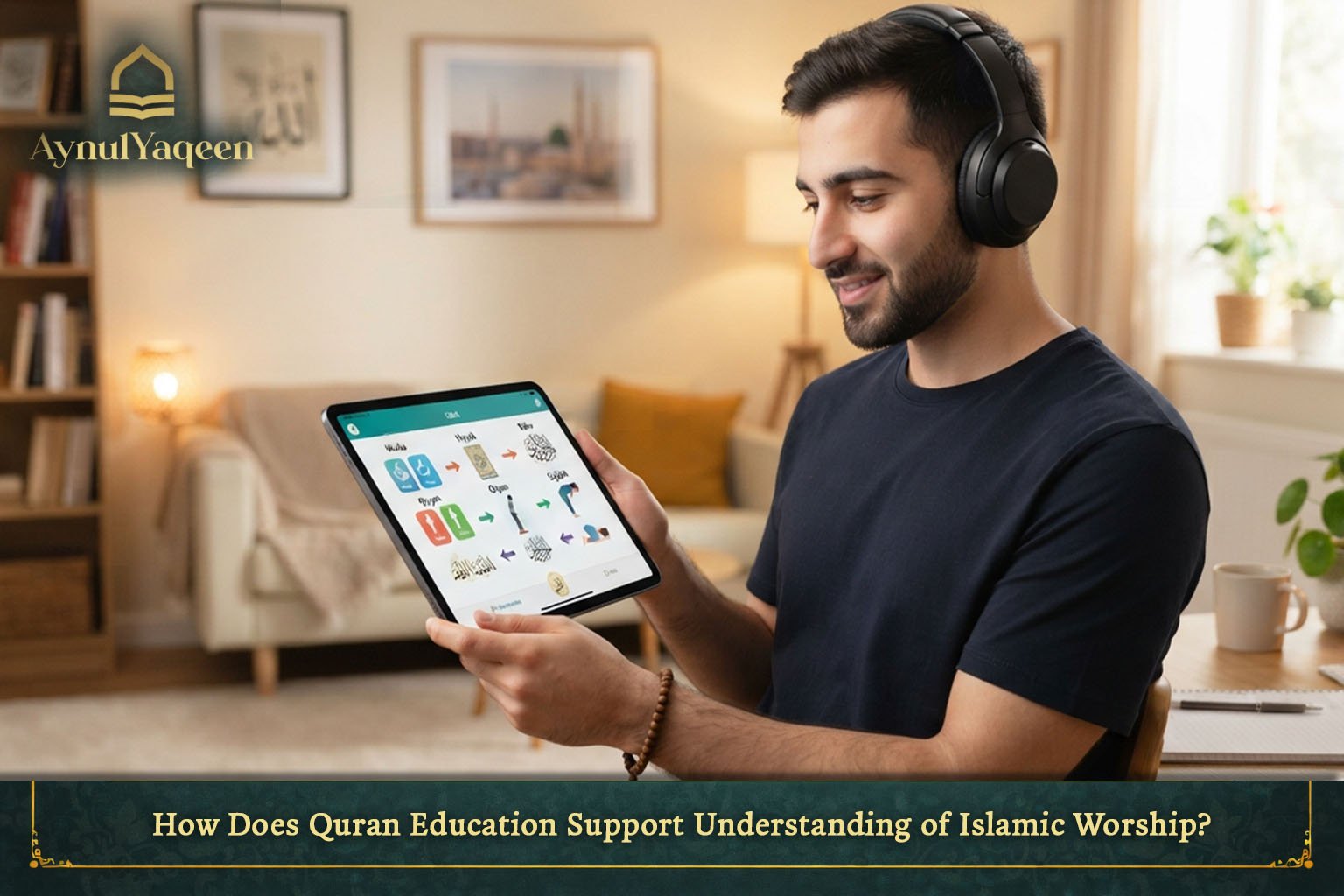
Quran education can strengthen a learner’s understanding of What Are the Five Pillars of Islam by connecting Islamic practices with Quranic guidance.
Learning Quran recitation can improve Salah because Muslims recite Quranic passages during prayer. Studying meanings can also help believers understand what they are reciting when they stand before Allah.
Tajweed lessons can improve pronunciation and recitation, while Tafsir can introduce learners to the meanings and context of Quranic verses.
Islamic studies can then connect Quranic teachings with practical subjects such as prayer, fasting, charity, Islamic manners, and pilgrimage.
A learner who searches for What Are the Five Pillars of Islam may therefore benefit from studying the topic alongside Quran and Islamic studies rather than treating it as an isolated lesson.
For students who prefer remote education, Aynulyaqeen Quran Academy is one online option to investigate when comparing structured Quran and Islamic studies programs.
Frequently Asked Questions
provide clear answers to common questions beginners may have about Islamic faith, worship, and daily practice.
Can the Five Pillars Be Learned Without Studying Arabic?
Yes. Beginners can understand What Are the Five Pillars of Islam through reliable translations and explanations in their native language. Learning Arabic can later support deeper Quran study.
What Should a Beginner Study After Learning the Five Pillars?
After learning what the Five Pillars of Islam are, beginners can study Islamic beliefs, purification, Salah, Quran recitation, Islamic manners, and short Quranic chapters.
Do Muslims Have to Perform Hajj Immediately After Becoming Muslim?
No. Learning what the Five Pillars of Islam are does not mean performing every pillar immediately. Hajj becomes obligatory when its required conditions, including the necessary ability, are met.
Is Zakat Paid Only During Ramadan?
No. Zakat is not limited to Ramadan. Understanding What Are the Five Pillars of Islam are includes learning that Zakat has specific conditions and timing based on the individual’s circumstances.
Why Are the Five Pillars Taught to Children Early?
Teaching what the Five Pillars of Islam are to children early helps them understand the basic structure of Islamic worship. Simple explanations can be introduced first, followed by more detailed lessons as children grow.
In conclusion, understanding what the Five Pillars of Islam are provides an essential foundation for learning about Muslim faith and worship. The Five Pillars—Shahadah, Salah, Zakat, Sawm, and Hajj—connect belief with daily practice and spiritual development.
Learning What Are the Five Pillars of Islam helps beginners understand how Muslims express devotion to Allah through faith, prayer, charity, fasting, and pilgrimage. Each pillar also teaches important qualities such as sincerity, discipline, patience, generosity, humility, and responsibility.
A clear understanding of what the Five Pillars of Islam are can also encourage further study of the Quran, Sunnah, Islamic manners, and religious obligations. For children and new Muslims, learning these principles gradually can make Islamic education easier and more meaningful.
Ultimately, What Are the Five Pillars of Islam is more than a simple question. It introduces the core practices that help shape Muslim spiritual and everyday life.
