January 25, 2026


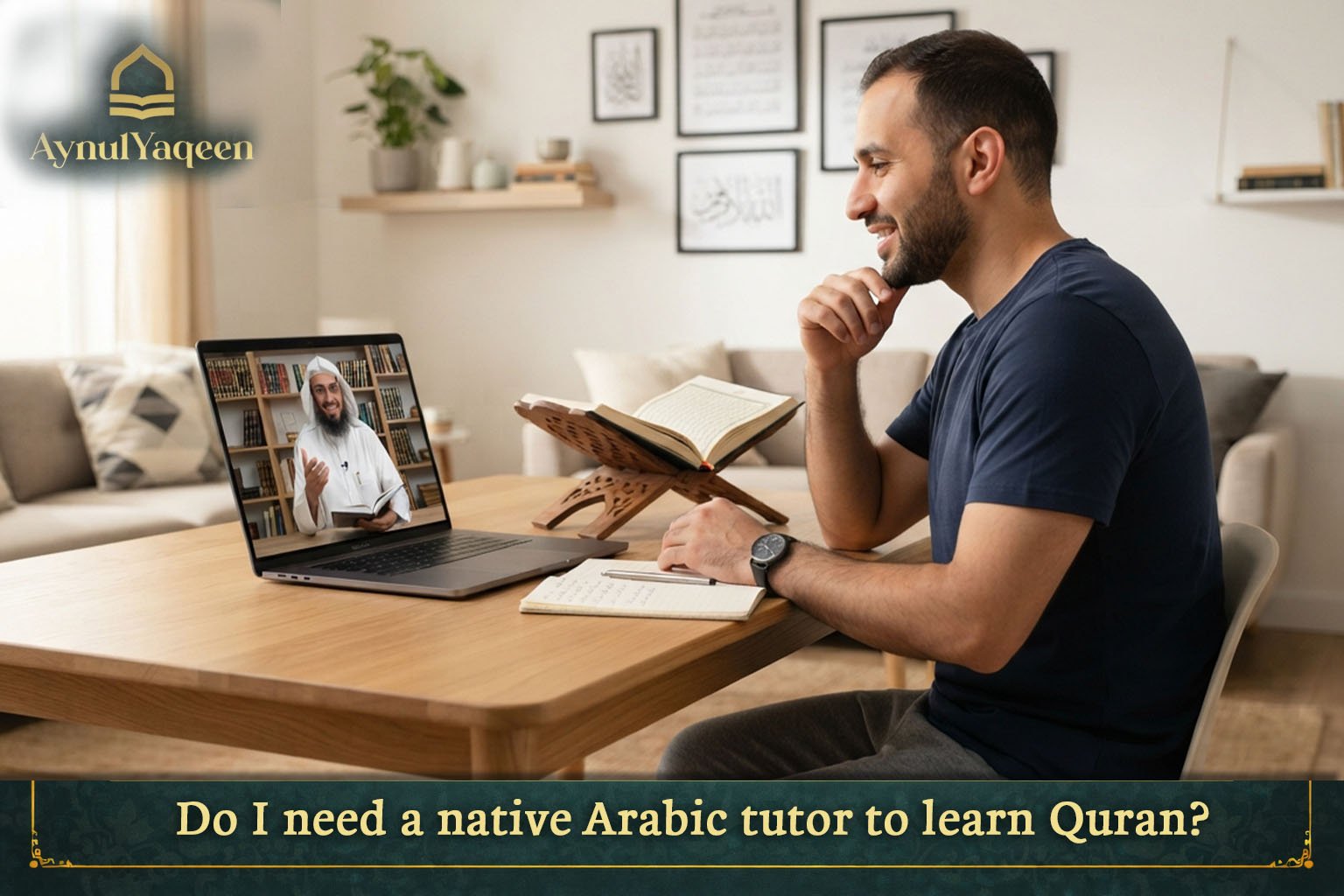
Do I need a native Arabic tutor to learn the Quran is one of the most common questions asked by Muslims who want to improve their Quran recitation, understand the meaning of verses, and build a stronger connection with the Holy Quran. Learning the Quran requires more than memorizing words; it requires understanding pronunciation, Arabic sounds, Tajweed rules, and the correct way of reciting Allah’s words. Many learners wonder whether studying with a native Arabic tutor is necessary or whether they can learn the Quran through books, videos, and self-study resources. The answer depends on the learner’s goals, current level, and desire to achieve accurate Quran reading. A qualified tutor can provide guidance, correct mistakes, and help students progress through a structured learning method. Today, online Quran education has made it easier for students worldwide to access experienced teachers from their homes. Through platforms such as Aynulyaqeen Quran Academy, learners can receive personalized lessons that focus on their individual needs, whether they are beginners, children, or adults seeking advanced Quranic knowledge. Do I need a native Arabic tutor to learn Quran correctly? Do I need a native Arabic tutor to learn Quran correctly? Many beginners ask this question because Arabic is a unique language with sounds and pronunciation rules that may not exist in other languages. While it is possible to start learning Quran independently, having a knowledgeable tutor can make the learning process faster and more accurate. The Quran was revealed in Arabic, and correct pronunciation is an essential part of proper recitation. Some Arabic letters have specific articulation points known as Makharij al-Huruf. Without proper guidance, learners may pronounce certain letters incorrectly, which can affect the meaning of words. A native Arabic tutor who understands Quranic Arabic can help students recognize the differences between similar sounds, improve their pronunciation, and apply Tajweed rules correctly. This personal correction is difficult to achieve through recorded lessons alone. However, being a native Arabic speaker is not the only important factor. A successful Quran teacher should also have knowledge of Tajweed, teaching experience, patience, and the ability to explain concepts clearly. Learn Online with Aynulyaqeen Quran Academy Choosing the right online Quran academy can make a significant difference in your learning journey. Aynulyaqeen Quran Academy provides structured Quran courses for beginners and advanced learners, focusing on accurate Quran reading, Tajweed, memorisation, and Islamic studies. With qualified teachers, flexible class schedules, and personalised one-on-one lessons, students of all ages can learn at their own pace while building confidence in reciting and understanding the Holy Quran from anywhere in the world. Why do I need a native Arabic tutor to learn Quran with proper pronunciation? Do I need a native Arabic tutor to learn Quran if I already know some Arabic letters? Knowing the Arabic alphabet is an excellent first step, but Quran learning requires greater skills. Reading the Quran correctly involves understanding vowel sounds, elongation rules, stopping signs, and pronunciation methods. A native Arabic tutor can listen carefully to the student’s recitation and identify mistakes immediately. This allows learners to correct errors before they become habits. For example, some Arabic letters for kids may appear similar to beginners, but their pronunciation comes from different areas of the mouth and throat. A teacher can demonstrate the correct method and provide practical exercises until the student becomes comfortable. At Aynulyaqeen Quran Academy, students can benefit from structured Quran lessons designed to improve reading skills gradually. The learning process focuses on building a strong foundation before moving to more advanced Quran studies. Do I need a native Arabic tutor to learn Quran and understand Quranic Arabic? Do I need a native Arabic tutor to learn Quran and understand its meanings? Many students do not only want to read the Quran but also wish to understand the message behind the verses. Quranic Arabic is different from everyday Arabic because it contains classical vocabulary, expressions, and linguistic structures. A qualified Arabic Quran tutor can introduce students to important Quranic vocabulary and explain basic meanings in a simple way. This helps learners develop a deeper relationship with the Quran instead of only reading words without understanding. Understanding Quranic Arabic also helps students appreciate the beauty of the Quran’s language. Learners can recognize the importance of word choices, sentence structures, and expressions used in the revelation. For students who want a complete learning experience, working with a professional teacher provides both reading improvement and better comprehension. Do I need a native Arabic tutor to learn Quran as a beginner? Do I need a native Arabic tutor to learn Quran if I have never studied Arabic before? Beginners often feel worried about starting Quran lessons because the Arabic alphabet for beginners may seem difficult at first. However, with the right teaching approach, anyone can learn step by step. A beginner-friendly Quran tutor starts with basic skills such as: Learning Arabic letters and their sounds. Understanding how letters connect. Practicing short Quranic words. Learning basic Tajweed rules. Reading simple verses gradually. A good teacher understands that every student learns at a different pace. Some learners may progress quickly, while others need additional practice and repetition. Online Quran programs offered by Aynulyaqeen Quran Academy provide a flexible learning environment where students can study according to their schedules and receive continuous guidance throughout their journey. Benefits of learning Quran with a native Arabic tutor Many learners search for answers to the question: Do I need a native Arabic tutor to learn Quran? They want to know the real benefits of having professional guidance. A tutor can provide several advantages that make Quran learning more effective. Correcting pronunciation mistakes One of the biggest benefits of learning with a teacher is immediate correction. Students may not notice their own pronunciation mistakes when studying alone. A female Arabic tutor online can identify errors and explain how to fix them. Learning Tajweed properly Tajweed is the science of Quran pronunciation. It includes rules related to elongation, stopping, merging letters, and correct articulation. Learning Tajweed requires practice and feedback. A teacher
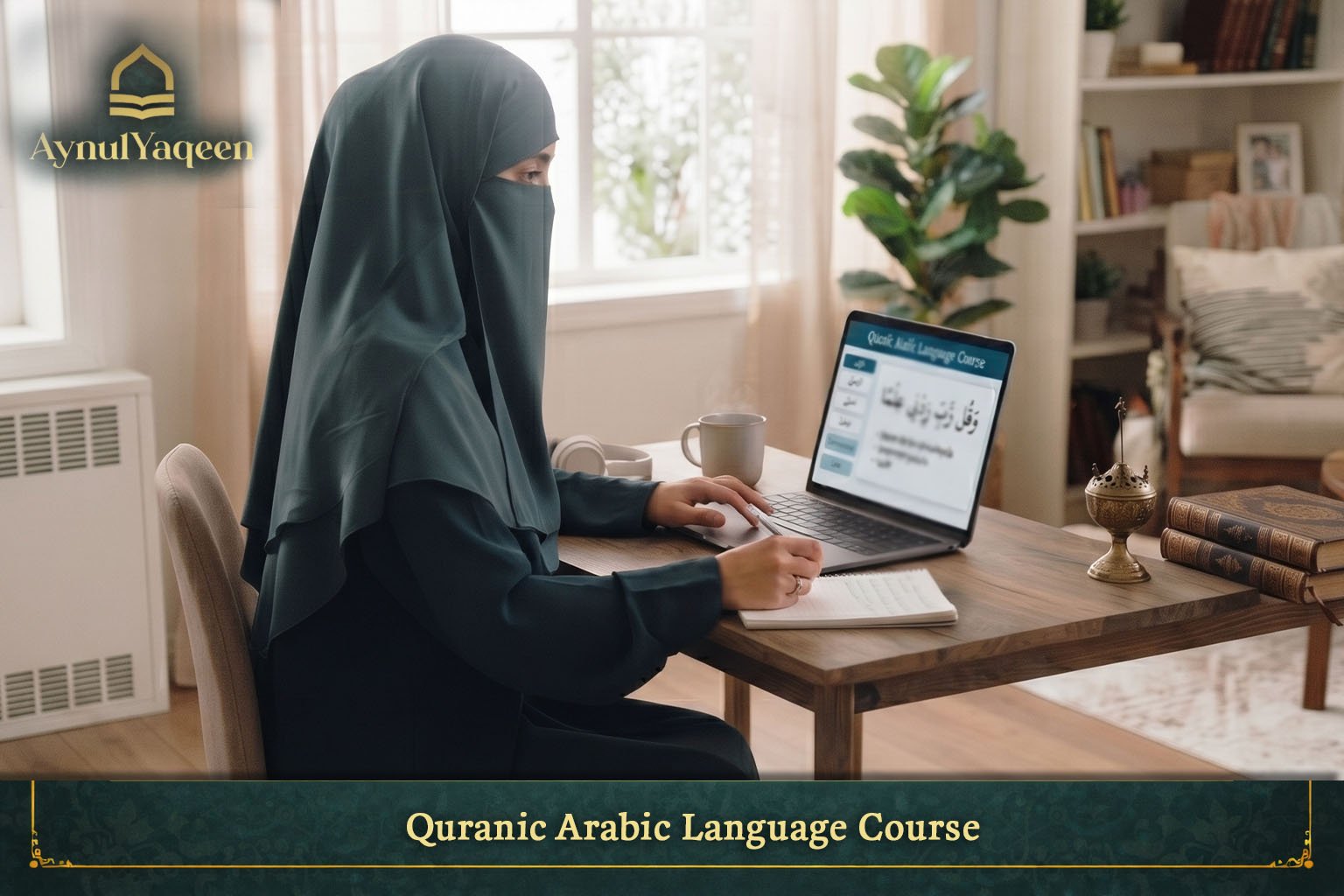
Quranic Arabic language course provides a structured learning path for Muslims who want to understand the Quran through its original language. This Quranic Arabic language course helps students recognize important vocabulary, understand sentence structures, and explore the deeper meanings of Quranic verses. At Aynulyaqeen Quran Academy, learners study with qualified teachers through organized lessons designed for different levels, from beginners to advanced students. The program focuses on building strong Arabic foundations while connecting language skills directly to the Quran through practical examples and guided learning. Through interactive classes, exercises, and continuous support, students can improve their reading, comprehension, and reflection on the Quran. Whether you want to understand daily recitation, prepare for Islamic studies, or develop a stronger relationship with the Book of Allah, this Quranic Arabic language course offers an effective way to achieve your goals. With consistent practice and expert guidance, learners can enjoy a more meaningful Quran learning experience. Why Should You Enroll in a Quranic Arabic Language Course? Many Muslims spend years reading the Quran beautifully without fully understanding its message. Although translations are helpful, they cannot always convey the precise meanings, grammar, rhetorical beauty, and spiritual depth found in the original Arabic. A structured Quranic Arabic language course allows students to gradually understand the Quran directly from its original language. Instead of relying on translated interpretations, learners begin recognizing vocabulary, sentence structures, verb patterns, and expressions that appear repeatedly throughout the Quran. This ability transforms the entire learning experience. Every prayer, recitation, and reflection becomes more meaningful because the words are no longer unfamiliar sounds—they become messages that the learner can personally understand. Students who study Quranic Arabic often notice improvements in several areas, including: Better concentration during Salah. Easier memorization of Quranic verses. Stronger understanding of Tafsir. Greater appreciation of Arabic grammar. Increased Islamic knowledge. More confidence when reading the Quran independently. Unlike Modern Standard Arabic, Quranic Arabic focuses specifically on the vocabulary and grammar used in the Quran, making it a more direct path for Muslims whose primary objective is understanding the Book of Allah. Learn Online with Aynulyaqeen Quran Academy Choosing the right online Quran academy can make a significant difference in your learning journey. Aynulyaqeen Quran Academy provides structured Quran courses for beginners and advanced learners, focusing on accurate Quran reading, Tajweed, memorisation, and Islamic studies. With qualified teachers, flexible class schedules, and personalised one-on-one lessons, students of all ages can learn at their own pace while building confidence in reciting and understanding the Holy Quran from anywhere in the world. What Makes a Great Quranic Arabic Language Course? Not every Arabic program is designed for Quran learners. Some focus mainly on conversational Arabic, while others emphasize academic grammar without connecting it to Quranic verses. A high-quality Quranic Arabic language course should combine language learning with Quranic application. Instead of teaching grammar in isolation, students learn Arabic for beginners with Egyptian teachers how grammatical rules appear inside actual verses from the Quran. The best courses usually include: Mastery of the Arabic alphabet for beginners. Correct pronunciation of Arabic letters. Quranic vocabulary taught by frequency. Essential Nahw (Arabic grammar). Sarf (word formation and morphology). Practical sentence analysis. Reading exercises directly from the Quran. Listening and speaking practice where appropriate. Regular revision sessions. Continuous progress assessments. Learning becomes much easier when every lesson immediately connects new grammar and vocabulary to authentic Quranic examples. Rather than memorizing complicated rules, students begin noticing recurring language patterns that appear throughout different Surahs. This practical approach significantly improves both understanding and long-term retention. Benefits of Learning Quranic Arabic Instead of Relying Only on Translation Translations are valuable educational tools, but every translation represents the translator’s understanding of the original text. Certain Arabic words contain multiple meanings, rhetorical devices, and grammatical subtleties that cannot always be expressed in another language. Learning Quranic Arabic gives students direct access to these meanings. Some of the most important benefits include: A Deeper Spiritual Connection Understanding every verse while listening to or reciting the Quran creates a completely different spiritual experience. The heart interacts with the message immediately without waiting for an external explanation. Better Quran Memorization When students understand what they memorize, recalling verses becomes much easier. Meanings naturally reinforce memory, reducing dependence on repetition alone. Recognition of Repeated Vocabulary The Quran contains many frequently repeated words. Learning only a few hundred common Quranic words enables students to recognize a large percentage of Quranic vocabulary during recitation. Improved Understanding of Tafsir Studying Tafsir becomes far more rewarding when learners already understand the grammatical structure and vocabulary of the verses being explained. Stronger Confidence During Worship Whether reading during Salah, listening to Taraweeh, or reflecting on daily recitation, understanding Arabic increases focus and mindfulness throughout acts of worship. These benefits explain why so many Muslims choose to study Quranic Arabic before pursuing more advanced Islamic sciences. Who Can Join a Quranic Arabic Program? One of the greatest misconceptions is that Quranic Arabic is only suitable for advanced students. In reality, modern online programs are designed for learners with completely different educational backgrounds. A beginner who cannot recognize Arabic letters for kids can start with foundational lessons before gradually moving into vocabulary and grammar. Children benefit from interactive learning methods that combine games, visual exercises, and simplified explanations. Adults often appreciate flexible schedules that fit around work and family responsibilities. Even students who already speak Arabic can gain tremendous value because Quranic Arabic differs in vocabulary, style, and linguistic richness from everyday spoken Arabic. For this reason, successful programs typically divide learners into multiple levels: Complete beginners. Elementary learners. Intermediate students. Advanced Quran students. Hifz students. Islamic studies learners. This structured progression allows every learner to advance comfortably without feeling overwhelmed. Learn with Qualified Teachers Who Understand Your Goals The quality of the instructor often determines the quality of the learning experience.An experienced Quranic Arabic teacher does much more than explain grammar rules. They connect vocabulary with Quranic context, simplify complex concepts, answer students’ questions patiently, and adapt lessons according to individual progress. At Aynulyaqeen Quran Academy,
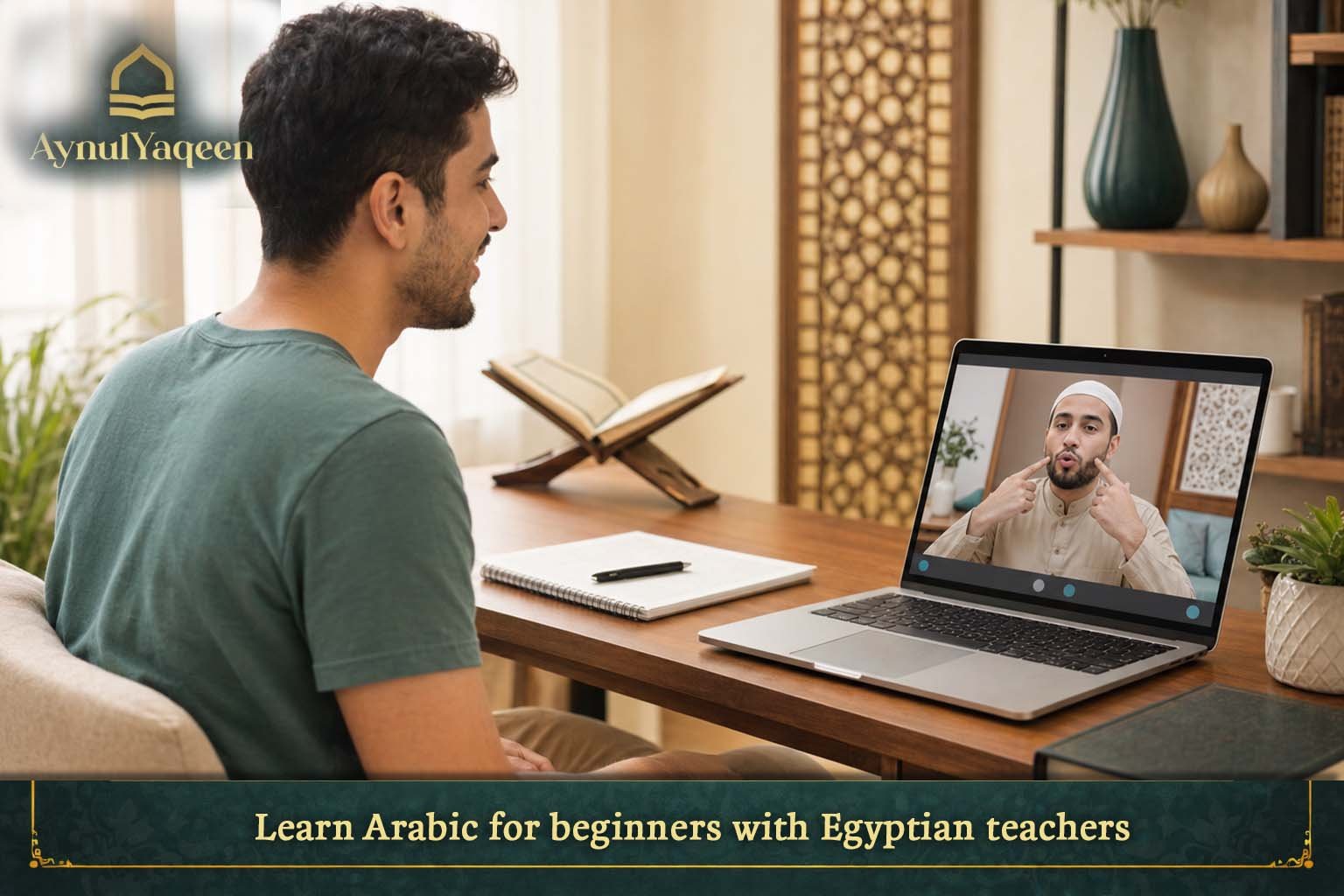
Learn Arabic for beginners with Egyptian teachers is one of the most effective ways to build a strong foundation in the language. Starting Arabic can feel challenging, especially when the alphabet, pronunciation, grammar, and spoken dialects are completely new. However, the learning process becomes much clearer when lessons follow a practical, step-by-step approach and every concept is explained by experienced native instructors. Through live online classes, beginners develop their reading, speaking, listening, and writing skills while also gaining valuable insight into Arabic culture, making each lesson more engaging, practical, and easier to apply in real-life situations. At Aynulyaqeen Quran Academy, beginner Arabic programs can be adapted to the learner’s age, background, schedule, and purpose, whether the goal is daily conversation, travel, family communication, professional development, reading Arabic texts, or preparing for deeper study of Quranic Arabic. Why Are Egyptian Teachers Ideal for Arabic Beginners? The teacher a student chooses can shape pronunciation, motivation, and learning habits for many months, so beginners benefit from instructors who understand both the Arabic language for kids and the typical difficulties faced by English speakers, including unfamiliar sounds, connected letters, sentence order, gender agreement, and the difference between formal and spoken Arabic. Egyptian teachers bring native pronunciation, practical conversation experience, and broad cultural knowledge to every lesson; they can explain how people actually speak in daily situations, clarify when formal Arabic is more appropriate, and show learners how expressions change according to context, relationship, and level of politeness. Students who learn Arabic for beginners with Egyptian teachers receive more than vocabulary lists, because they practice real pronunciation, hear natural rhythm, ask questions immediately, and receive examples that match their personal goals, which creates a more efficient path than studying alone with random videos or disconnected worksheets. This approach helps students learn Arabic for beginners with Egyptian teachers confidently. Learn Online with Aynulyaqeen Quran Academy Choosing the right online Quran academy can make a significant difference in your learning journey. Aynulyaqeen Quran Academy provides structured Quran courses for beginners and advanced learners, focusing on accurate Quran reading, Tajweed, memorization, and Islamic studies. With qualified teachers, flexible class schedules, and personalized one-on-one lessons, students of all ages can learn at their own pace while building confidence in reciting and understanding the Holy Quran from anywhere in the world. Native Pronunciation and Clear Sound Training Arabic contains sounds such as ع, ح, خ, ق, and غ, which do not have exact English equivalents, and beginners often need visual explanation, slow repetition, and direct correction before they can pronounce these sounds comfortably. Practical Egyptian Arabic for Real Conversations Modern Standard Arabic is valuable for reading, education, news, formal writing, and communication across the Arab world, yet daily conversations in Egypt normally use Egyptian Arabic, so a balanced course should explain the role of each form without confusing the student. Egyptian Arabic helps learners communicate in shops, restaurants, taxis, homes, workplaces, and social settings; it also gives them access to a large amount of popular media, including films, television, music, interviews, and online content that is widely understood across the region. When beginners learn Arabic for beginners with Egyptian teachers, they can practice phrases that sound natural in everyday life while still developing the formal reading foundation needed for broader Arabic-speaking classes and study. Egyptian Arabic and Modern Standard Arabic One of the first decisions for any beginner is whether to focus on Egyptian Arabic, Modern Standard Arabic, or a carefully organized combination of both, and the right choice depends on the learner’s purpose rather than on a single answer that suits everyone. When Should Modern Standard Arabic Come First? MSA is especially useful for learners who want to read Arabic letters for kids confidently, understand formal content, work with written documents, study grammar, prepare for academic goals, or create a foundation for Quranic and classical Arabic. When Should Egyptian Arabic Come First? Egyptian Arabic is often the best quran teachers online starting point for students who want to travel to Egypt, speak with Egyptian relatives, understand films, interact with local communities, or become comfortable in everyday conversation. Learners can quickly use greetings, introductions, requests, directions, numbers, prices, and common responses, which creates early success and strengthens motivation. A course designed to learn Arabic for beginners with Egyptian teachers can begin with practical spoken phrases, then connect those phrases to reading and formal structures as the learner becomes more confident. Why Does a Combined Approach Work? For example, a teacher can explain that ماذا means what in formal Arabic while إيه is common in Egyptian conversation, and that كيف حالك is formal while إزيك is widely used in Egypt. What Complete Beginners Should Learn First? At Aynulyaqeen Quran Academy, lessons can be organised around clear outcomes, so students know what they are learning, why it matters, and how do i learn the Arabic language to review it between classes. The Arabic Alphabet Arabic has twenty-eight basic letters and is written from right to left, with most letters changing shape according to their position at the beginning, middle, or end of a word. Students who learn Arabic for beginners with Egyptian teachers also benefit from immediate handwriting feedback, because correct letter formation supports reading recognition and prevents confusion later. Short Vowels and Accurate Reading Beginner Arabic materials often use short vowel marks such as fatḥah, kasrah, and ḍammah to show pronunciation, and learners should also meet sukūn, shaddah, and tanwīn gradually. Useful Vocabulary in Context Vocabulary becomes easier to remember when it appears inside meaningful phrases, questions, and situations, rather than as isolated words without context. Instead of learning only the word for water, beginners can practice I want water, Where is the water, and can I have water, which teaches pronunciation, grammar, and usage together. Simple Sentence Patterns Beginners can start with patterns such as I am a student, This is my book, I live in Cairo, I like coffee, and I want to study Arabic. Teachers can then show how pronouns, adjectives, gender, negation, verbs, and question words change these models,
How do I learn the Arabic language? It is a question many beginners ask when they decide to start learning one of the world’s most rewarding languages. Whether your goal is understanding the Quran, communicating with native speakers, traveling, or expanding your career opportunities, the right learning approach makes a significant difference. Arabic may seem challenging at first, but with a structured plan, consistent practice, and gradual progress, anyone can develop strong language skills. Aynulyaqeen Quran Academy provides structured online Arabic lessons designed to help learners build confidence through personalized instruction, experienced teachers, and interactive learning methods. In this guide, you’ll discover practical steps, effective study techniques, and proven strategies that make learning Arabic easier, more enjoyable, and sustainable for beginners while helping you achieve steady progress toward fluency. How Do I Learn the Arabic Language for Beginners? Learning Arabic is a rewarding journey that opens the door to a rich culture, meaningful communication, and a more in-depth understanding of one of the world’s most influential languages. Many beginners ask the same question: where should I start, and what is the most effective way to make steady progress? The answer is not about finding a single shortcut. Instead, successful learners follow a structured plan that develops reading, writing, listening, speaking, and vocabulary step by step. With consistent practice, realistic goals, and guidance from experienced teachers, Arabic becomes much more approachable than many people expect. Whether your goal is understanding the Quran, communicating with Arabic speakers, traveling, studying, or advancing your career, this guide will help you build a practical learning strategy that delivers long-term results. Online Arabic Academy Aynulyaqeen Selecting a trusted online Arabic academy is an important step for anyone who wants to learn Arabic in a structured and supportive environment. Aynulyaqeen Arabic Academy provides comprehensive online Arabic and Quran programs for children and adults, regardless of their experience level. Students benefit from qualified instructors, interactive live classes, personalized learning plans, and regular progress assessments that help them develop reading, writing, speaking, and comprehension skills with confidence. With flexible scheduling and continuous guidance, Aynulyaqeen Arabic Academy creates an engaging learning experience that allows students to advance steadily while studying from the comfort of their homes. Why Learn Arabic? Arabic is spoken by hundreds of millions of people across the Middle East and North Africa. It is also the language of the Holy Quran, making it especially important for Muslims who wish to understand Islamic texts directly. Besides its religious significance, Arabic offers many personal and professional advantages. Learning the language can help you: Communicate with native Arabic speakers. Understand Arabic literature and history. Improve career opportunities in international organizations. Travel confidently across Arabic-speaking countries. Study Islamic sciences using sources. Expand your cultural knowledge. Every learner has different motivations, but they all benefit from building a strong foundation before moving to advanced topics. Begin with the Arabic Alphabet The Arabic alphabet for beginners is the first milestone for every beginner. Unlike English, Arabic is written from right to left and contains 28 letters. Each letter may appear in different forms depending on whether it comes at the beginning, middle, or end of a word. At first, the script may look unfamiliar, but regular practice quickly builds recognition. A good learning routine includes: Learning three to five letters every day. Practicing handwriting. Listening carefully to correct pronunciation. Reading simple words aloud. Reviewing previously learned letters before adding new ones. Instead of rushing through the alphabet, spend enough time mastering it. Reading fluently later depends on this early foundation. Focus on Correct Pronunciation from Day One Arabic contains several sounds that do not exist in English. Trying to pronounce them correctly from the beginning prevents bad habits that become difficult to change later. Listening to native speakers every day helps train your ear. Repeat words several times until your pronunciation becomes more natural. Recording yourself while reading short passages is another useful exercise. Comparing your pronunciation with native speakers allows you to notice small differences and improve steadily. Working with qualified instructors provides immediate feedback and helps learners distinguish between similar sounds that often confuse beginners. Build Practical Vocabulary Instead of Memorizing Long Lists Many learners make the mistake of memorizing hundreds of isolated words. A better approach is learning vocabulary connected to everyday situations. Start with words related to: Greetings Family Food Numbers Colors Daily activities Time Places Shopping Travel Learning words within sentences makes them easier to remember because your brain connects vocabulary with real communication. Reviewing previously learned words every day is far more effective than constantly adding new vocabulary without revision. Learn Basic Grammar Gradually Grammar often intimidates beginners, but Arabic grammar becomes much easier when introduced step by step. Instead of trying to master every rule immediately, focus on understanding simple sentence structure first.Learn Arabic: how Arabic forms: Simple nominal sentences. Basic verb sentences. Singular and plural nouns. Personal pronouns. Common verbs. Question words. Each new grammar lesson should immediately be followed by reading examples and creating your own sentences. Using grammar in context is much more effective than memorizing rules alone. How do I learn the Arabic language? Practice Reading Every Day? One of the best answers to How do I learn Arabic online in the USA? is by making reading a daily habit. Reading improves multiple language skills at the same time, including vocabulary, grammar recognition, pronunciation, and sentence structure. Even spending ten to fifteen minutes each day with simple Arabic texts can lead to noticeable progress over time. Beginners should start with materials that match their level, such as: Children’s stories. Short dialogues. Simple articles. Beginner readers. Short Quranic vocabulary exercises if your goal includes Quranic Arabic. Reading aloud also strengthens pronunciation and helps build confidence. As your vocabulary expands, gradually move on to more challenging books and articles to continue improving your comprehension. How do I learn the Arabic language Through Daily Listening? If you are asking, How do I learn the Arabic language more naturally, listening is one of the most effective methods. Even
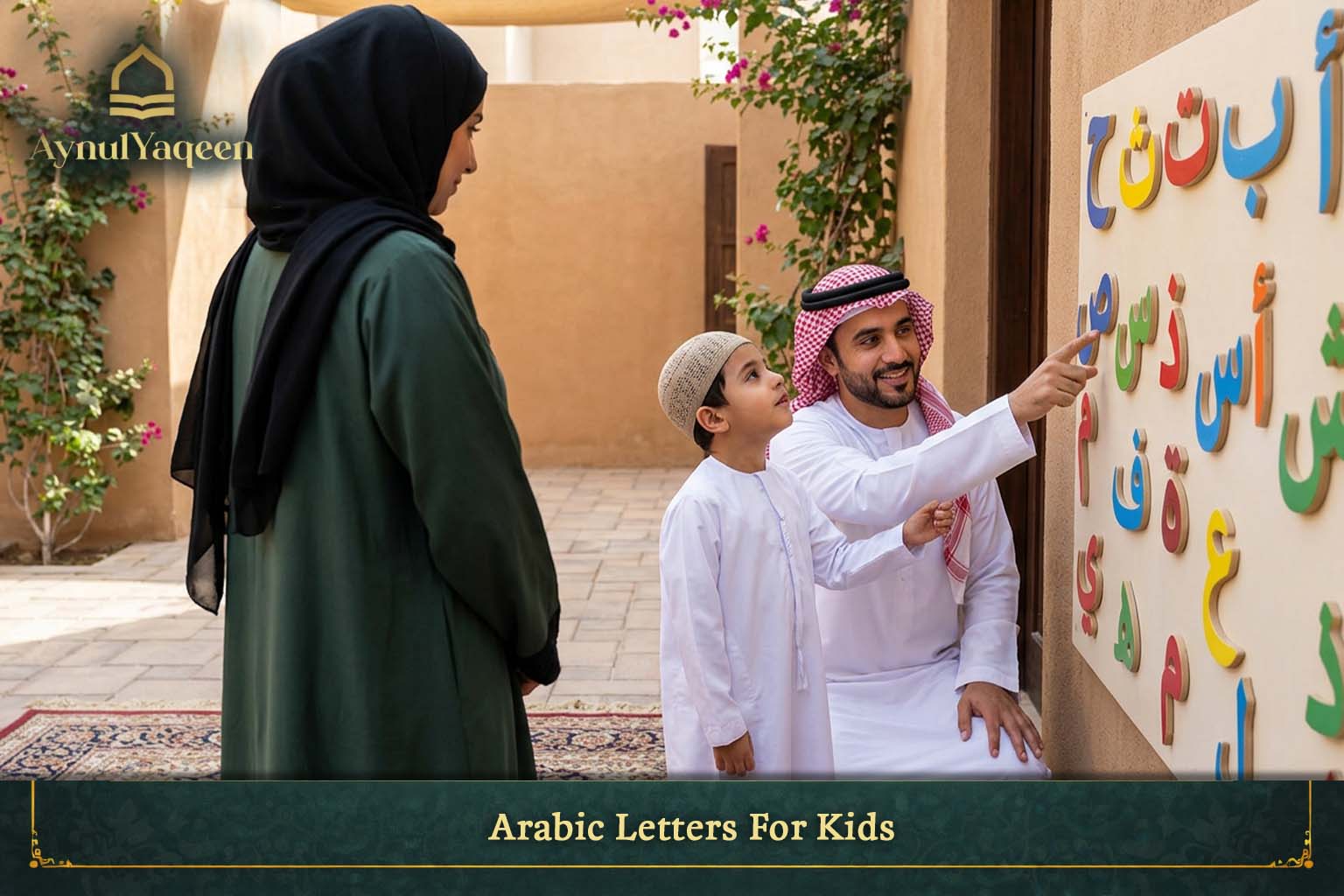
Arabic letters for kids is one of the most important learning foundations for any child beginning their journey with the Arabic language, especially when the goal is to read the Qur’an with confidence and correct pronunciation, and this approach is strongly emphasized at Aynulyaqeen Quran school. Teaching Arabic letters to children is not just about memorization; it is about building a long-term connection with language, sound, meaning, and identity. When the learning process is designed correctly, children feel they are playing, exploring, and discovering. At Aynulyaqeen Quran school this approach uses interactive structured methods matching each child level and pace. Why Teaching Arabic Letters to Kids Requires a Special Method Arabic Letters For Kids Children do not learn the same way adults do. Their attention span is shorter, their memory is still developing, and their understanding is strongly connected to visuals, sound, and movement. This is why traditional methods-such as showing all 28 letters at once or focusing heavily on writing from the beginning-often fail. Instead, successful learning depends on: Breaking information into small, manageable parts Using games and repetition Focusing on recognition before writing Building emotional connection with learning At Aynulyaqeen Quran school, this principle is at the heart of all beginner programs. The teaching approach is designed specifically for children who are starting from zero, ensuring that each step feels natural and achievable. Online Quran Academy An Online Quran Academy provides a flexible and effective way to learn the Holy Quran from home at any time. It helps students improve their recitation, understand Tajweed rules, and build strong reading skills step by step. Aynulyaqeen Quran school offers a structured online learning experience with qualified teachers and interactive methods that make learning easy and engaging, especially for beginners and children. This system ensures steady progress and continuous improvement in Quran reading and understanding. Arabic Letters For Kids Step-by-Step Method to Teach Arabic Alphabet to Children One of the most effective approaches divides the arabic alphabet for beginners alphabet into four structured groups. This prevents overload and helps children absorb information gradually. Group-Based Learning System Instead of teaching 28 letters at once, the letters are divided into four groups of seven: Group 1: أ ب ت ث ج ح خ Group 2: د ذ ر ز س ش ص ض Group 3: ط ظ ع غ ف ق ك Group 4: ل م ن ه و ي Each group is taught over a week or more depending on the child’s pace. Daily Learning Routine Each letter group follows a consistent structure: Show the letter using a colorful visual card Say the letter aloud and repeat together Trace the letter in the air using finger movement Practice tracing on paper or sand Identify the letter in simple words or pictures This repetition strengthens both visual and auditory memory. At Aynulyaqeen Quran school, teachers ensure that every child masters one group before moving to the next, which significantly improves long-term retention. Learning Through Play: The Secret to Success Children learn best when they are enjoying the process. That is why interactive activities are essential in early Arabic education. 1. Letter Sound Game The teacher says a letter, and the child selects the correct card from multiple options. This improves listening skills and recognition. 2. Matching Activity Children match Arabic letters with pictures of familiar objects: ب → بقرة (cow) ت → تفاحة (apple) س → سمكة (fish) 3. Alphabet Song Music helps repetition feel effortless. A consistent alphabet song can help children memorize letters without pressure. 4. Sensory Learning Before writing, children should: Shape letters with clay Trace in sand Draw letters with their fingers This creates muscle memory that supports future writing skills. These methods are widely used in Aynulyaqeen Quran school to ensure that learning feels natural and enjoyable rather than forced. Read also: how to get an ijazah Teaching Similar Letters: Reducing Confusion One of the biggest challenges in learning Arabic letters is distinguishing between similar shapes and sounds. Similar Shape Groups Family Letters Difference Ba family ب ت ث Number of dots Jeem family ج ح خ Dot placement Saad family ص ض One added dot Ayn family ع غ Dot difference Similar Sound Confusion س vs ث ك vs ق ح vs هـ “Detective Game” Method A highly effective technique is turning learning into a detective game: Identify differences between letters Sort letters into groups Add missing dots to incomplete letters This method strengthens attention to detail and reduces confusion dramatically. At Aynulyaqeen Quran school, this activity is used frequently because it keeps children mentally active while reinforcing recognition skills. From Letters to Words: Teaching Letter Joining Arabic Letters For Kids Once children recognize letters individually, the next step is learning how letters connect to form words. Arabic script is unique because letters change shape depending on their position. Stage 1: Simple Word Recognition Children first identify letters within words: باب (door) = ب + ا + ب ماء (water) = م + ا + ء شمس (sun) = ش + م + س Stage 2: Non-Connecting Letters Some letters do not connect to the following letter: ا د ذ ر ز و These must be taught clearly to avoid confusion. Stage 3: Positional Forms Example using the word بيت: ب (beginning) ي (middle) ت (end) Children visually understand how letters change shape depending on position. Stage 4: Word Writing Practice Simple words are introduced: كتاب مدرسة أحمد This stage marks the transition from recognition to actual reading ability. Teaching Arabic Letters by Age Group Teaching learn arabic online in usa letters by age group ensures children learn according to their developmental stage, starting with listening and recognition in early years, then moving gradually to tracing, reading, and writing as they grow. Ages 2-4: Early Exposure At this stage, children should only listen and observe: Alphabet songs Short online arabic classes for kids words in daily life No writing or testing Ages 5-6: Recognition Stage Identify all letters Begin tracing Play matching games Ages 7-10: Reading
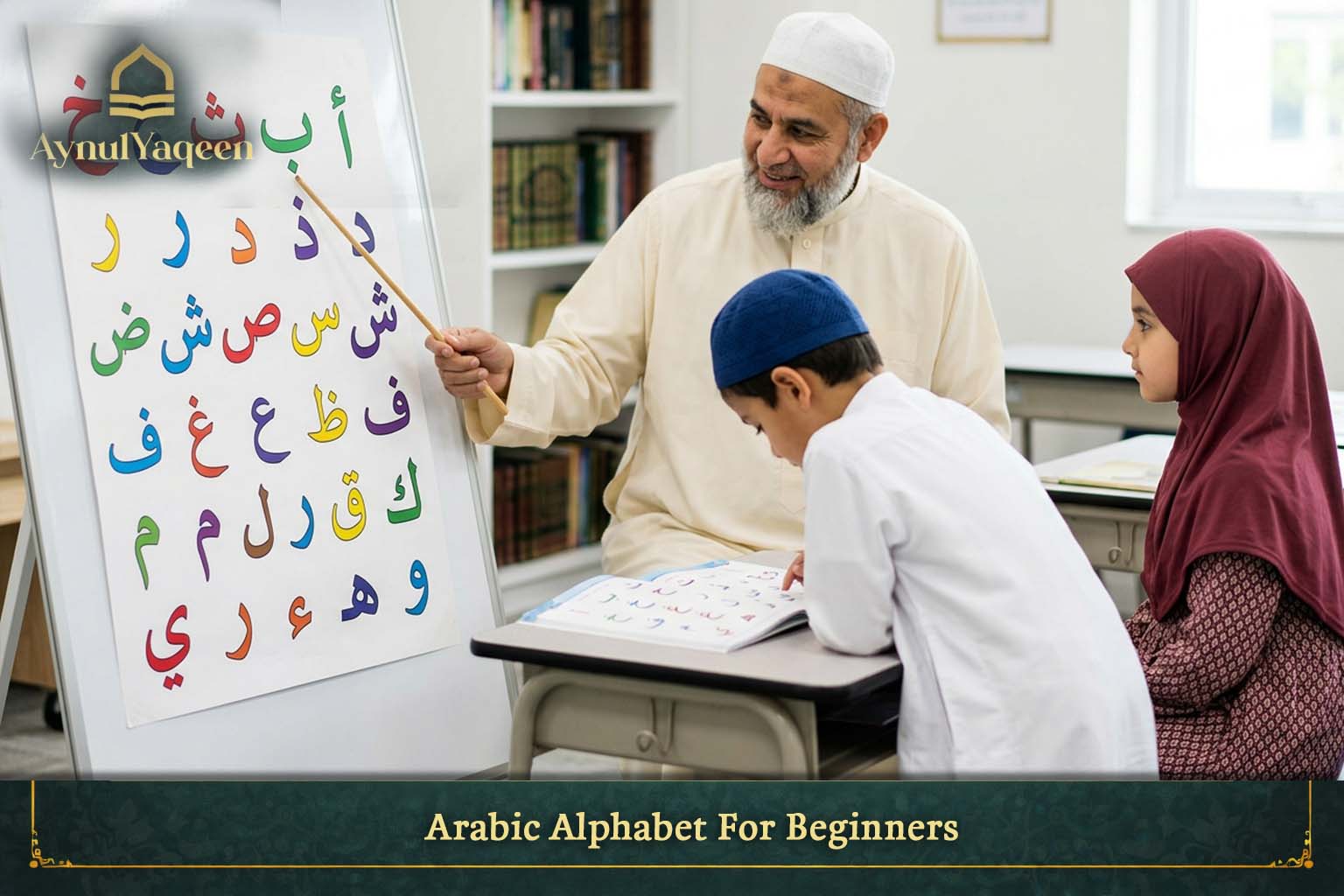
Arabic alphabet for beginners Learning with Aynulyaqeen Arabic academy is the essential first step for anyone who wants to start learning the Arabic language in a correct and structured way. The Arabic alphabet forms the foundation of reading, writing, and pronunciation, making it impossible to progress without mastering it first. At this early stage, beginners learn how each letter sounds, how it changes shape in words, and how to pronounce it properly. With consistent practice and the right guidance, learners can quickly build confidence and avoid common mistakes. Understanding the Arabic alphabet also makes future learning easier, smoother, and more enjoyable, as it opens the door to reading real Arabic words and sentences effectively. Building Confidence Through Arabic Learning Practice Building confidence in learning comes through continuous repetition, patience, and real experience. Every learner begins their journey with mistakes, and this is completely normal. In fact, mistakes are an important part of the learning process because they help identify areas that need improvement and guide the learner toward better understanding over time. As learners continue practicing, they gradually notice improvement in their skills, pronunciation, and understanding. This progress builds motivation and encourages them to keep going. The key to success is not perfection from the beginning, but consistency in effort every day. With time and regular practice, confidence naturally grows, and learning becomes easier, more enjoyable, and more effective. Final Tips for Beginners Do not try to learn everything at once Focus on letters first Listen more than you read in the beginning Practice speaking daily Do not fear mistakes Why Arabic Alphabet for Beginners is Essential Arabic Alphabet For Beginners Mastering the arabic alphabet for beginners is the most important step in starting your journey to learn Arabic successfully. Once learners understand the online arabic tutor for kids letters, they can easily move on to reading words, forming sentences, and gradually improving their overall language skills with confidence. This stage is not just a basic introduction, but the real foundation of the entire learning process. Without it, learners may struggle with pronunciation, reading accuracy, and comprehension. However, when the alphabet is mastered correctly, everything else in the language becomes clearer, simpler, and more enjoyable.That is why this step should never be skipped or rushed. FAQs provide clear answers to the most common questions learners may have, helping them understand key points quickly and easily without confusion. 1. How long does it take to learn Arabic letters? Usually between two weeks and one month depending on daily practice. 2.Can I learn Arabic letters without a teacher? Yes, but having a teacher or platform helps correct mistakes faster. 3. What is the best way to memorize Arabic letters? Repetition, listening, and speaking out loud while connecting letters with simple words. In conclusion, learning Arabic letters is the true starting point for anyone who wants to master the Arabic language. With consistent daily practice, effective learning techniques, and proper guidance, learners can make strong and steady progress in a relatively short time. Following a clear and structured study plan helps remove confusion and builds a solid foundation for reading, writing, and pronunciation. Using supportive educational platforms such as Aynulyaqeen Arabic academy can further enhance the learning experience by making it more organized, interactive, and efficient. This combination of discipline and guidance ultimately leads to greater confidence and long-term success in using the Arabic language effectively. Our resource on Quran for children breaks this down into simple, fun steps. For more on this, see our guide on the best Quran academy. If you’re interested, check out our article on a Quran tutor for beginners. If Arabic itself is what you’re after, we also have a dedicated program to learn Arabic online, covering both everyday and Quranic Arabic.

Online Arabic academy for adults offers a comprehensive learning experience for adults interested in mastering Arabic. With flexible schedules and expert instructors, it provides a tailored approach to help adult learners of all levels. Online Quran Academy Aynulyaqeen specifically focuses on Quranic Arabic, enabling students to understand not only the language but also its spiritual and cultural significance. Whether you’re a beginner or looking to advance your skills, these platforms ensure that you learn at your own pace, with interactive lessons and personalized guidance every step of the way. The Importance of Arabic in the Modern World Arabic is one of the most widely spoken languages globally, with millions of speakers, ranking as the fifth most spoken language in the world. It is the official language in many countries and one of the six official languages of the United Nations. Mastery of Arabic is highly valuable in professional fields such as diplomacy, international relations, business, and beyond. Global Significance: The widespread use of Arabic makes it a critical language in multiple international contexts, enhancing its value in diplomatic and commercial efforts. Learning Arabic through platforms like Online Arabic academy for adults provides learners with the tools to engage confidently on a global scale. Cultural Enrichment: Beyond practical applications, studying Arabic offers deep insight into the rich history, literature, and traditions of the Arab world. Using Online Arabic academy for adults enables learners to connect meaningfully with diverse cultures and broaden their worldview. Global Career Opportunities: In an increasingly interconnected world, there is a growing demand for professionals proficient in Arabic. Mastering the language not only boosts career prospects but also distinguishes individuals in competitive job markets. Programs like Online Quran Academy Aynulyaqeen offer unique opportunities to learn Arabic in a scholarly and spiritual context, combining linguistic excellence with cultural understanding. The importance of learning Arabic online goes far beyond language acquisition. Platforms such as Online Arabic academy for adults and Online Quran Academy Aynulyaqeen serve as gateways to global communication, cultural understanding, and enhanced professional opportunities in today’s dynamic world. By leveraging Online Arabic academy for adults, learners gain a competitive edge while fully embracing the richness of Arabic language and culture. Online Quran Academy Online Quran Academy Aynulyaqeen offers a unique and flexible learning experience for adults who wish to study the Quran and Arabic language online. With expert instructors and a structured curriculum, the academy provides personalized lessons tailored to your pace and level. Whether you’re looking to improve your Quranic Arabic, understand the Quran’s deeper meanings, or simply want to learn how to read it fluently, Online Quran Academy Aynulyaqeen ensures a supportive and enriching environment for every student. The academy’s online platform makes learning accessible, allowing you to study anytime, anywhere, while enhancing your understanding of the Quran and Arabic. Challenges Adults Face and How Online Learning Can Solve Them Learning a new language as an adult can be daunting. Many adult learners worry about balancing a busy schedule, keeping up with younger students, or starting from scratch. Fortunately, Arabic courses for adults offered online are designed to overcome these challenges and make the learning experience enjoyable. 1. Limited Time Adults often juggle work, family, and other responsibilities, leaving little time for study. Online courses provide the flexibility to learn at your own pace whether in the morning, evening, or on weekends. Platforms like Online Arabic academy for adults allow learners to fit Arabic studies seamlessly into their busy lives. 2. Fear of Starting Late It is natural for adults to feel apprehensive when starting a new language. Online courses cater to all learners, with content structured progressively to build confidence. Using Online Arabic academy for adults, beginners can start from the basics without feeling overwhelmed. 3. Lack of Resources Finding suitable materials and qualified instructors can be challenging. Online Arabic courses offer diverse learning resources such as worksheets, interactive activities, and guidance from expert teachers. Programs like Online Quran Academy Aynulyaqeen provide high-quality instruction specifically designed for adult learners. 4. Balancing Learning Styles Every adult has a unique learning style. Online courses combine videos, live sessions, quizzes, and hands-on exercises to meet the needs of different learners. Online Arabic academy for adults ensures that every student can engage with the material in the way that suits them best. 5. Maintaining Motivation Staying motivated is easier with organized lessons and consistent feedback. Online platforms track progress, provide personalized guidance, and offer teacher support to keep learners on track toward their goals. These solutions empower adults to overcome obstacles and enjoy learning Arabic without disrupting their daily commitments. By leveraging Online Arabic academy for adults and Online Quran Academy Aynulyaqeen, adult learners gain both flexibility and structured guidance for success. Read also: learn islam online in usa Why Online Quran Academy Aynulyaqeen Works for Adults Making the right choice is crucial for adult learners, and Online Quran Academy Aynulyaqeen offers programs specifically designed to meet the needs of non-Arabic speaking adults interested in learning the language. These courses stand out in several ways: 1. Experienced Teachers Specialized in Adult Learning All instructors are native Arabic speakers with extensive experience teaching adults. They understand the unique challenges adult learners face, provide step-by-step guidance, and tailor lessons to each student’s pace. 2. Flexible Learning Options Courses are designed to accommodate busy schedules, whether learners prefer one-on-one instruction or small group sessions. Online Quran Academy Aynulyaqeen allows adults to balance learning with work and personal responsibilities effectively. 3. Beginner-Friendly Curriculum The program starts with Arabic basics, including letters, pronunciation, and essential vocabulary, gradually advancing to reading, writing, and understanding practical Arabic for everyday situations. 4. Interactive and Engaging Lessons Learning Arabic online is made enjoyable with interactive exercises, real-life discussions, and practical examples that help students retain knowledge and gain confidence in speaking. 5. Supportive Learning Environment The courses foster a positive atmosphere where learners feel comfortable asking questions and progressing at their own pace. 6. Comprehensive Learning Materials Students receive supplementary resources such as worksheets, recordings, and hands-on
online Arabic academy for beginners is the perfect choice for anyone looking to start learning Arabic in a structured and effective way. At Online Quran Academy Aynulyaqeen, students gain access to expert native Arabic teachers, interactive lessons, and modern digital resources designed to make learning engaging and efficient. Whether your goal is mastering the alphabet, building vocabulary, improving pronunciation, or developing reading and writing skills, the academy provides personalized support to help each learner progress confidently. With tailored courses and a student-centered approach, online Arabic academy for beginners ensures a complete and enjoyable journey toward Arabic fluency. Why Choose Online Arabic Academy for Beginners? When searching for the best options to learn Arabic online, Online Arabic Academy for Beginners stands out as an ideal choice for learners at all levels. The academy provides a comprehensive learning environment that combines expert instruction with flexible study plans to meet each student’s unique needs. Expert Teachers and Engaging Lessons At Online Quran Academy Aynulyaqeen, the teaching staff consists of qualified native Arabic speakers. Their expertise and passion for teaching ensure that students receive lessons that are not only comprehensive but also highly engaging. Whether you are a complete beginner or looking to improve your skills, the academy’s instructors tailor the sessions to maximize understanding and retention. Flexible Learning Options Students at online quran course enjoy the freedom to choose courses and schedules that fit their lifestyles. Options include one-on-one lessons or group classes, allowing learners to study at their own pace. The academy’s flexible approach makes it easy for busy individuals to integrate Arabic learning into their daily routines without feeling overwhelmed. Innovative and Interactive Teaching Methods The academy employs innovative teaching techniques and modern tools to create an interactive learning experience. Lessons are designed to help students grasp concepts more effectively while making the process enjoyable. Additionally, cultural elements are incorporated into the curriculum, offering a deeper understanding of Arabic-speaking countries and their traditions. Personalized Learning and Progress Tracking Online Arabic Academy for Beginners offers personalized learning plans that cater to each student’s needs, ensuring steady progress at a pace that suits them. Access to a variety of learning resources, including interactive exercises, multimedia content, and a supportive online community, enhances the educational experience. Regular assessments and feedback allow students to monitor their progress and refine their learning strategies for optimal results. Online Quran Academy Online Quran Academy Aynulyaqeen offers a unique and comprehensive online learning experience for studying the Quran. The program focuses on correct recitation, tajweed, and memorization of verses, guided by qualified native Arabic teachers. Interactive lessons are designed to suit all ages and skill levels, ensuring an engaging and effective learning journey. With flexible online access, students can learn from anywhere at any time, making Quran study convenient and enjoyable. Personalized support is provided to each student, helping them progress confidently and achieve their spiritual and educational goals. How Our Students Achieve Fluency Students achieve fluency in Arabic through a structured and engaging learning process. Beginners start with the basics, including the Arabic alphabet, pronunciation, and foundational vocabulary. Then, they gradually progress to reading short surahs, learning tajweed rules, and understanding the meanings of the verses. Moreover, this method emphasizes regular practice, interactive lessons, and personalized feedback, which helps learners correct mistakes and build confidence steadily. Additionally, combining listening to skilled reciters with practical reading exercises strengthens pronunciation, rhythm, and comprehension. Students are also encouraged to memorize selected verses while reflecting on their meanings, which enhances both fluency and spiritual connection. By following this systematic approach, learners gradually become proficient in Quranic Arabic. Consequently, learning the Quran in Arabic becomes not only achievable but also enjoyable and spiritually rewarding for students of all ages. Two Core Learning Paths We offer two main paths: the Foundation Course for Beginners and the Comprehensive General Arabic Track for those seeking deeper understanding. Foundation Course Details The foundation course is designed for students with no prior knowledge of Arabic. Your journey begins with mastering the alphabet using our specially designed workbook, followed by progressing to the renowned Noor Al-Bayan book. Our unique teaching methods cater to all students, particularly non-native speakers, ensuring a strong and clear start. By the end of the foundation course at an online Arabic academy, students can read Arabic texts with greater confidence. Although full comprehension may still take time, this stage gives learners a strong base for future Arabic study. Comprehensive Track After completing the foundation course, students advance to the intensive comprehensive track. This program covers a wide range of topics, including grammar, conversation, syntax, and vocabulary building. Achieving Real Fluency Upon completing the full track, students can hold extended conversations, read more complex texts, and gradually expand their vocabulary. This approach ensures learners gain the fluency and confidence to use Arabic confidently in daily life. By studying at Online Quran Academy Aynulyaqeen and learn quran online , learners experience a complete journey from basic reading skills to full conversational fluency, guided by expert instructors and a structured curriculum tailored to their needs. Learn also: online quran classes for kids Benefits of Learning Arabic for Beginners Joining beginner Arabic lessons offers numerous advantages that go beyond simply learning a new language. At Online Arabic Academy for Beginners, learners gain practical skills, cultural insights, and personal development opportunities. Better Understanding of the Quran and Islam For Muslims, learning Arabic is essential to understand the Quran accurately and perform religious practices correctly. Courses at Online Quran Academy Aynulyaqeen provide focused instruction on Arabic reading and pronunciation, helping students connect deeply with Islamic texts. Speak a Widely Spoken Language Arabic is spoken by over 400 million people across 24 countries. Learning this language opens doors to cultural, educational, and professional opportunities around the world. online arabic academy for kids equips learners with the skills to communicate confidently in both daily and formal contexts. Boost Mental Abilities Learning a new language strengthens memory, problem-solving skills, and multitasking abilities. Engaging in Arabic lessons improves cognitive flexibility while enhancing overall brain function.