
January 25, 2026


Ramadan fasting rules explain the main principles Muslims should understand before and during the sacred month of Ramadan. Fasting is one of the Five Pillars of Islam, and it is an important act of worship that teaches patience, self-discipline, gratitude, and mindfulness of Allah. However, observing the fast correctly involves more than simply avoiding food and drink during the day. Muslims also need to understand what can invalidate the fast, what behaviors should be avoided, when they can eat and drink, and which people may be excused from fasting. Therefore, learning the basic rules before Ramadan can help a person worship with greater confidence and avoid common mistakes. For beginners and families seeking structured Islamic education, Aynulyaqeen Quran Academy can also provide an environment where students learn about Quranic and Islamic principles under appropriate guidance. Understanding the purpose behind each rule makes fasting more meaningful because it connects the physical act of abstaining with spiritual growth and sincere worship. What Are the Main Ramadan Fasting Rules? The central principle of fasting is to abstain from food, drink, and other actions that invalidate the fast from true dawn until sunset, while maintaining sincere intention to worship Allah. These hours are not simply a period of hunger or thirst. Instead, fasting is intended to develop taqwa, patience, self-control, and obedience. Consequently, Muslims should approach Ramadan as a complete spiritual experience rather than focusing only on meals. The fasting person is encouraged to protect their speech, behavior, thoughts, and actions from anything sinful. The essential principles include: Beginning the fast at the correct time of dawn. Abstaining from food and drink during fasting hours. Ending the fast after sunset. Avoiding sexual relations during the fasting period. Staying away from sinful behavior. Maintaining sincere worship and good character. Understanding personal circumstances that may affect the obligation to fast. These principles form the foundation of Ramadan fasting rules and help Muslims distinguish between the physical requirements of fasting and the broader spiritual goals of Ramadan. Learn Online with Aynulyaqeen Quran Academy Choosing the right online Quran academy can make a significant difference in your learning journey. Aynulyaqeen Quran Academy provides structured Quran courses for beginners and advanced learners, focusing on accurate Quran reading, Tajweed, memorisation, and Islamic studies. With qualified teachers, flexible class schedules, and personalised one-on-one lessons, students of all ages can learn at their own pace while building confidence in reciting and understanding the Holy Quran from anywhere in the world. Ramadan Fasting Rules and the Spiritual Purpose of Fasting Fasting has a deeper purpose than temporarily giving up food and water. Ramadan gives Muslims an opportunity to strengthen their relationship with Allah through prayer, Quran recitation, remembrance, charity, repentance, and good deeds. Moreover, hunger and thirst can remind believers of their dependence on Allah and encourage compassion toward people who experience hardship. A successful Ramadan therefore combines physical discipline with spiritual awareness. The fasting person should make an effort to: Guard their tongue from insults and harmful speech. Avoid unnecessary arguments and hostility. Stay away from lying and deliberate deception. Increase acts of worship. Give charity according to their ability. Recite and reflect upon the Quran. Ask Allah for forgiveness and guidance. Treat family members and other people with kindness. In this way, Ramadan fasting rules are not merely restrictions. They help create a framework for developing better habits and becoming more conscious of one’s actions throughout the month. What Should Muslims Avoid During Ramadan? Knowing what not to do is an important part of understanding Ramadan fasting rules. Although eating and drinking are among the most obvious restrictions, Ramadan also calls Muslims to control harmful behavior. For example, a person who spends the fasting day insulting others or deliberately creating conflicts may technically be avoiding food and drink, but such conduct contradicts the spiritual objectives of fasting. Therefore, believers should make an effort to avoid environments and situations that encourage sinful behavior. During Ramadan, Muslims should particularly try to avoid: Lying or deliberately spreading false information. Insulting, cursing, or using offensive language. Fighting and unnecessary arguments. Backbiting and harmful gossip. Deliberately engaging in sinful activities. Sexual relations during the fasting hours. Actions that undermine the purpose of spiritual self-discipline. However, avoiding these behaviors should not be limited to Ramadan. The month provides an opportunity to develop habits that continue after Eid. Ramadan Fasting Rules: When Does the Fast Begin? One of the most important practical aspects of Ramadan fasting rules is understanding when fasting begins. The daily fast starts at true dawn, known in Islamic terminology as Fajr. From that point until sunset, the fasting person abstains from the things that invalidate the fast. This means the beginning of fasting is connected to the actual dawn time rather than simply sunrise. Therefore, Muslims should rely on a reliable local prayer timetable when determining when to stop eating and drinking. Before dawn, many Muslims eat Suhoor. This meal provides an opportunity to eat and drink before the fasting period begins. It is also an important part of the daily Ramadan routine and can help a person prepare physically for the coming hours. Families learning about Ramadan fasting rules should teach children the difference between Fajr, sunrise, sunset, and the Maghrib prayer so that they understand how the daily fasting schedule works. When Can You Eat and Drink During Ramadan? Muslims can eat and drink during the nighttime period between sunset and the following dawn. Once the sun has set and the fasting day has ended, the person may break the fast with Iftar. The daily cycle therefore includes two familiar meals: Suhoor: The meal eaten before dawn. Iftar: The meal eaten after sunset when the fast ends. After Iftar, Muslims may eat and drink throughout the night until the arrival of true dawn. At that point, the next fasting period begins. Understanding this cycle is essential because one of the most common practical questions about Ramadan fasting rules concerns exactly when eating and drinking are permitted. Checking accurate local prayer
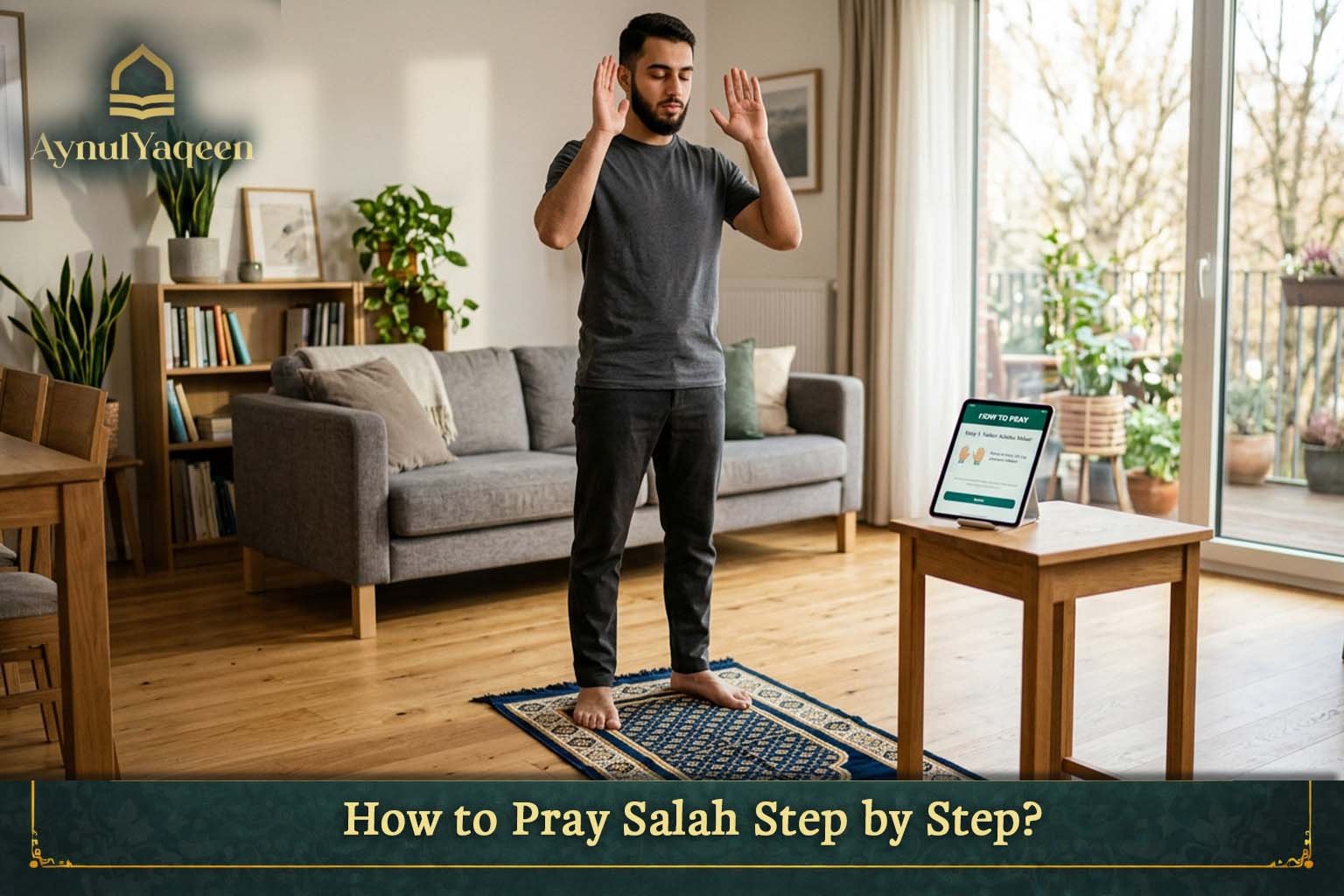
How to pray Salah step by step is one of the most important questions asked by Muslims who are beginning to learn the daily prayer or trying to improve their understanding of its movements and recitations. Salah is not simply a sequence of physical positions. Rather, it is a direct act of worship that combines intention, remembrance of Allah, Quranic recitation, bowing, prostration, and supplication. For a beginner, learning all of these elements at once may initially feel difficult. However, the process becomes much easier when the prayer is divided into clear stages. At Aynulyaqeen Quran Academy, learners can approach Salah gradually, focusing on one movement and one recitation at a time before combining everything into a complete prayer. This guide explains how to pray Salah step by step in a simple and organized way. It covers the basic structure of a rakah, the positions performed during prayer, important recitations, the differences between the five daily prayers, and the way a prayer is completed. It also highlights practical points that can help beginners develop confidence while learning. How to pray Salah step by step before beginning the prayer? Before asking how to pray Salah step by step, a beginner should understand that preparation comes before the first takbir. Prayer has conditions and etiquette that help the worshipper enter Salah with physical and spiritual readiness. The preparation normally includes: Performing wudu when purification is required. Making sure the body, clothes, and prayer place are clean. Covering the parts of the body that must be covered during Salah. Facing the Qiblah. Ensuring that the prayer time has begun. Forming the intention to perform the specific prayer. These points create the foundation for learning how to pray Salah step by step correctly. A person does not need to memorize everything in one sitting. Instead, learning can happen progressively, especially for someone who is new to Islam or has only recently started praying. At Aynulyaqeen Quran Academy, beginners can benefit from learning the movements and recitations in an ordered sequence. This approach reduces confusion because every part of the prayer has a specific place. Learn Online with Aynulyaqeen Quran Academy Choosing the right online Quran academy can make a significant difference in your learning journey. Aynulyaqeen Quran Academy provides structured Quran courses for beginners and advanced learners, focusing on accurate Quran reading, Tajweed, memorisation, and Islamic studies. With qualified teachers, flexible class schedules, and personalised one-on-one lessons, students of all ages can learn at their own pace while building confidence in reciting and understanding the Holy Quran from anywhere in the world. How to pray Salah step by step: Understanding the rakah? The easiest way to understand how to pray Salah step by step is to first understand what a rakah means. A rakah is one complete unit of prayer containing a specific sequence of standing, recitation, bowing, standing again, prostration, sitting, and another prostration. The five obligatory daily prayers contain different numbers of rakahs: Fajr: 2 obligatory rakahs. Dhuhr: 4 obligatory rakahs. Asr: 4 obligatory rakahs. Maghrib: 3 obligatory rakahs. Isha: 4 obligatory rakahs. Although the number of rakahs changes, the fundamental movements remain recognizable. Therefore, a beginner who understands one rakah has already learned an important part of how to pray Salah step by step. The main movements include standing, reciting, ruku, rising from ruku, sujud, sitting between the prostrations, and completing the prayer with tashahhud and tasleem. How to pray Salah step by step: Make the intention? The first practical point in How to pray Salah step by step is the intention, known as niyyah. The intention belongs to the heart. A Muslim intends to perform the particular prayer for the sake of Allah. For example, a person preparing to perform Fajr knows internally that they are praying the obligatory Fajr prayer. The same principle applies to Dhuhr, Asr, Maghrib, and Isha. There is no need to make the intention complicated. The essential point is knowing which prayer you are performing and intending to worship Allah through it. This step is especially important for beginners because it establishes the purpose of the worship before the physical movements begin. How to pray Salah step by step with the opening Takbir? After forming the intention, the prayer begins with Takbirat al-Ihram, when the worshipper says: Allahu Akbar The phrase means that Allah is greater. With this opening takbir, the person formally enters Salah and begins focusing on the worship. When learning how to pray Salah step by step, beginners should understand that this is more than a phrase said automatically. It marks the transition from ordinary activities into prayer. The hands are raised according to the established practice being followed, and then the hands are placed while standing. The exact placement can vary according to recognized schools of Islamic jurisprudence, so beginners should avoid becoming distracted by minor differences. What matters most at this stage is learning the sequence correctly and developing concentration. How to pray Salah step by step while standing? Standing, or qiyam, is an essential part of the obligatory prayer for someone who is physically able to stand. While standing, the worshipper maintains a calm posture and prepares for Quranic recitation. The eyes are generally directed toward the place of prostration rather than wandering around the room. Learning how to pray Salah step by step requires more than memorizing movements. The worshipper should also learn how to remain composed. Excessive movement can make it harder to maintain concentration. A useful beginner approach is to focus on three things: Keep the body stable. Listen carefully to the recitation. Remember that you are standing before Allah. The physical position should therefore support khushu rather than become a source of unnecessary anxiety. How to pray Salah step by step with Surah Al-Fatihah? One of the central parts of how to pray Salah step by step is Quranic recitation. Surah Al-Fatihah occupies a fundamental position in Salah. The worshipper begins the recitation according to the established prayer practice, including seeking refuge in
Why Muslims fast during Ramadan is a question many people ask when they first learn about Islam or encounter Ramadan through Muslim friends, colleagues, or communities. At first glance, fasting may appear to be simply an act of avoiding food and drink from dawn until sunset. However, this view does not explain the deeper meaning of Ramadan. For Muslims, fasting is an act of worship commanded by Allah. It is one of the Five Pillars of Islam and represents a period of spiritual training, self-discipline, gratitude, patience, charity, repentance, and reflection. Ramadan changes the daily routine of Muslims and encourages them to focus more intentionally on their relationship with Allah and their responsibilities toward other people. The fast is physical, but its purpose goes far beyond the body. Muslims are encouraged to control their speech, behavior, emotions, desires, and actions while fasting. They are also encouraged to pray more, read the Quran, give charity, remember Allah, make dua, and seek forgiveness. Understanding Ramadan therefore requires looking at fasting as a complete spiritual experience rather than a temporary change in eating habits. The following guide explores the religious, personal, social, and spiritual reasons behind Ramadan fasting and explains how its lessons can continue throughout the year. Why Do Muslims Fast During Ramadan? Islamic Foundation Why Muslims fast during Ramadan is a question that deserves more than a short answer. Muslims fast because Allah has commanded fasting, but Ramadan also carries deep spiritual, moral, personal, and social meanings. The fast teaches believers obedience, patience, self-control, gratitude, compassion, generosity, and awareness of Allah. The Quran clearly establishes the obligation of fasting. Allah says: “O you who have believed, decreed upon you is fasting as it was decreed upon those before you that you may become righteous.” This verse from Surah Al-Baqarah connects fasting with taqwa, or God-consciousness. Therefore, why Muslims fast during Ramadan can first be understood through the purpose of developing greater awareness of Allah. Learn Online with Aynulyaqeen Quran Academy Choosing the right online Quran academy can make a significant difference in your learning journey. Aynulyaqeen Quran Academy provides structured Quran courses for beginners and advanced learners, focusing on accurate Quran reading, Tajweed, memorisation, and Islamic studies. With qualified teachers, flexible class schedules, and personalised one-on-one lessons, students of all ages can learn at their own pace while building confidence in reciting and understanding the Holy Quran from anywhere in the world. Why do Muslims fast during Ramadan according to Islam? The most direct answer is that Muslims fast because fasting during Ramadan is an act of worship commanded by Allah. A Muslim does not fast simply because fasting is an old tradition or because other family members fast. The believer fasts as an expression of faith and obedience. During daylight hours, Muslims refrain from eating, drinking, and other actions that invalidate the fast. They then break the fast after sunset. This daily pattern creates a clear connection between ordinary activities and worship. The question of why Muslims fast during Ramadan therefore begins with submission. Muslims believe that Allah knows what is best for His servants, and following His commands is part of their relationship with Him. Fasting also creates a private form of worship. Other people may not know whether someone has secretly eaten or drunk, but Allah knows. This encourages sincerity because the fasting person continues to obey Allah even when nobody else is watching. Read Also:quran recitation mistakes Ramadan fasting is one of the Five Pillars of Islam To understand why Muslims fast during Ramadan, it is important to understand the position of fasting within Islam. Fasting in Ramadan is one of the Five Pillars of Islam, alongside the testimony of faith, prayer, zakat, and Hajj for those who are able. This means fasting is not simply a cultural practice. For Muslims who are required and able to fast, it is a major religious obligation. The Five Pillars demonstrate that Islam combines belief with action. Muslims express their faith through worship, charity, prayer, fasting, and other acts of obedience. Fasting is particularly distinctive because it requires physical restraint. A person may have food and water available but chooses not to consume them during the fasting period because Allah has commanded the fast. This is one reason why Muslims fast during Ramadan has an answer rooted in both faith and daily practice. Learn Also: Quranic Arabic language course The connection between fasting and taqwa One of the clearest answers to why Muslims fast during Ramadan is found in the concept of taqwa. Taqwa can be understood as God-consciousness, piety, or awareness of Allah. A person with taqwa tries to remember Allah when making decisions. This awareness encourages obedience, discourages wrongdoing, and motivates sincere repentance after mistakes. Fasting gives Muslims repeated opportunities to practice this awareness. Imagine that someone becomes extremely thirsty shortly before sunset. A bottle of water may be close by, and nobody else may be present. Nevertheless, the fasting person waits until the appropriate time because Allah knows what they do. That private decision is an example of taqwa. The lesson can then extend beyond fasting. A person may become more careful about lying, cheating, gossiping, breaking promises, or treating others unfairly. Therefore, why Muslims fast during Ramadan is connected to developing a conscience that remains aware of Allah throughout everyday life. Read Also: wudu step by step Why do Muslims fast during Ramadan to develop self-discipline? Self-discipline is another important reason. Human beings naturally have desires and physical needs. Islam does not teach that having desires is inherently wrong. Instead, Muslims are encouraged to control their desires and use them responsibly. Fasting creates daily opportunities to practice restraint. A fasting person becomes hungry but waits. The person becomes thirsty but waits. Someone may feel tired but still wakes for Suhoor and prayer. Someone may become irritated but tries to respond with patience. These repeated decisions can strengthen self-control. Modern life often encourages immediate satisfaction. Food can be ordered quickly, entertainment is available constantly, and many
What are the Five Pillars of Islam? is one of the most important questions for anyone beginning to learn about Islam. The answer introduces the five fundamental acts of worship that form the foundation of Muslim religious practice: Shahadah, Salah, Zakat, Sawm, and Hajj. Each pillar has a specific meaning and purpose, yet all five work together to shape a Muslim’s faith, character, worship, and relationship with the wider community. For beginners, knowing what the Five Pillars of Islam are is not simply about memorizing five names. Each pillar carries a deeper meaning and teaches important values such as devotion to Allah, discipline, generosity, responsibility, and spiritual commitment. Learning these principles correctly can also provide a stronger foundation for understanding other aspects of Islamic teachings. At Aynulyaqeen Quran Academy, learners can explore essential Islamic concepts in a clear and structured way. The academy supports students who want to understand the Quran and Islamic teachings while developing their knowledge step by step. By learning what the Five Pillars of Islam are, students can gain a clearer picture of the practices that shape a Muslim’s relationship with Allah and the wider community. What are the Five Pillars of Islam and Why Are They Important? The Five Pillars are the five essential practices upon which the religious life of a Muslim is built. They are: Shahadah – the testimony of faith. Salah – the five daily prayers. Zakat – obligatory charity on qualifying wealth. Sawm – fasting during Ramadan. Hajj – pilgrimage to Makkah for those who are able. These practices are called pillars because they form the foundation of Islamic worship. The Prophet Muhammad ﷺ described Islam as being built upon five: Shahadah, Salah, Zakat, Hajj, and fasting in Ramadan. The Five Pillars are central to Muslim worship, but they do not represent every Islamic teaching. Islam also emphasizes honesty, justice, kindness, good manners, family responsibilities, and helping others. Thus, the pillars provide a foundation for faith and practice within a broader system of beliefs and values. Learn Online with Aynulyaqeen Quran Academy Choosing the right online Quran academy can make a significant difference in your learning journey. Aynulyaqeen Quran Academy provides structured Quran courses for beginners and advanced learners, focusing on accurate Quran reading, Tajweed, memorisation, and Islamic studies. With qualified teachers, flexible class schedules, and personalised one-on-one lessons, students of all ages can learn at their own pace while building confidence in reciting and understanding the Holy Quran from anywhere in the world. What are the Five Pillars of Islam in Simple Terms? For someone encountering the subject for the first time, the pillars can be remembered through five simple ideas: Shahadah means believing and testifying. A Muslim declares belief in the oneness of Allah and accepts Muhammad ﷺ as His Messenger. Salah means praying. A Muslim performs five obligatory prayers during the day and night. Zakat means giving. A Muslim who meets the relevant financial conditions gives a prescribed portion of qualifying wealth to eligible recipients. Sawm means fasting. Muslims fast during Ramadan, abstaining from food and drink from dawn until sunset while seeking greater self-discipline and awareness of Allah. Hajj means pilgrimage. A Muslim who has the physical and financial ability performs the pilgrimage to Makkah once in a lifetime, subject to the applicable conditions. This simple explanation makes the pillars easy to remember, but each one deserves deeper study because it contains important spiritual and practical lessons. The First Pillar: Shahadah and the Foundation of Faith The Shahadah is the first pillar of Islam and the foundation upon which the other pillars rest. Its well-known wording is: أشهد أن لا إله إلا الله وأشهد أن محمدًا رسول الله Ashhadu an la ilaha illa Allah, wa ashhadu anna Muhammadan rasul Allah. It means: “I bear witness that there is no deity worthy of worship except Allah, and I bear witness that Muhammad is the Messenger of Allah.” The Shahadah contains two fundamental beliefs. The first is belief in the absolute oneness of Allah. Muslims believe that Allah alone deserves worship and that He has no partner. The second is belief that Muhammad ﷺ is the Messenger of Allah. Muslims accept his message and follow his example in understanding and practicing Islam. Understanding Tawhid The concept of Tawhid, or the oneness of Allah, is at the heart of Islamic belief. Muslims believe that Allah is the Creator, Sustainer, and Lord of everything. Worship is therefore directed to Him alone. The Shahadah is not intended to be an empty phrase. It expresses a commitment that affects how a Muslim views life, worship, morality, and personal responsibility. A person who truly understands the Shahadah recognizes that worship is not merely a collection of ceremonies. It is a relationship with Allah based on faith, obedience, love, hope, and reverence. Why Is Shahadah More Than a Statement? The declaration of faith has consequences for a Muslim’s daily choices. When Muslims believe that Allah knows their actions and intentions, they have a reason to pursue honesty even when nobody else is watching. They are encouraged to avoid injustice, fulfill responsibilities, seek forgiveness after mistakes, and remember that worldly success is not the only measure of a meaningful life. The Shahadah therefore establishes a spiritual direction. It tells the believer whom they worship and whose guidance they seek to follow. For a new Muslim, learning the meaning of the Shahadah should come before rushing into complicated details. Understanding its foundation makes the other pillars easier to appreciate. The Second Pillar: Salah and the Five Daily Prayers Salah, or the formal Islamic prayer, is the second pillar. Muslims perform five obligatory prayers each day: Fajr – before sunrise. Dhuhr – after midday begins. Asr – in the afternoon. Maghrib – after sunset. Isha – at night. The exact prayer times vary throughout the year depending on location and the sun’s movement. Salah gives Muslims repeated opportunities to stop their ordinary activities and turn their attention toward Allah. A person may spend several hours working, studying, traveling,
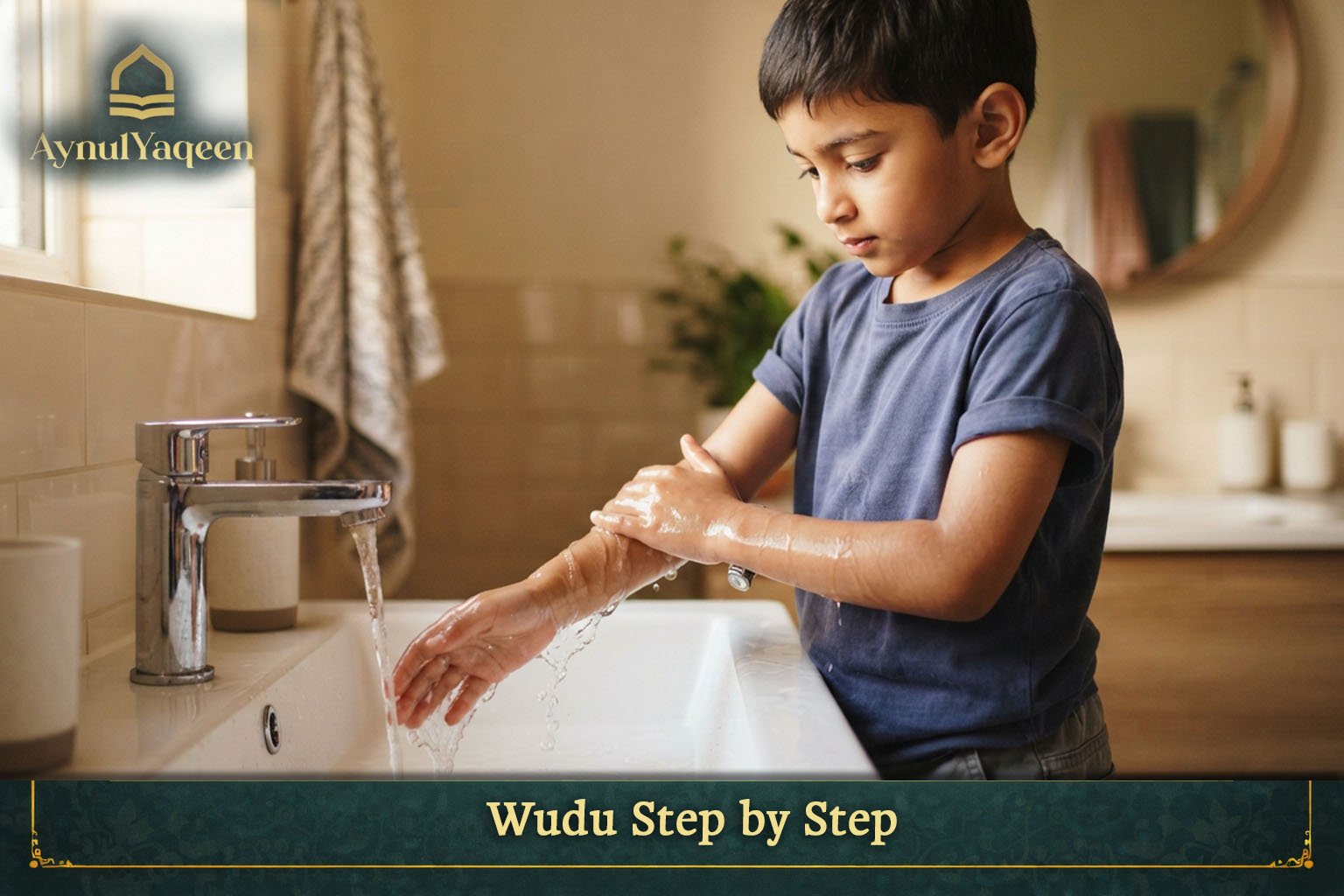
Wudu step by step is one of the first acts of worship every Muslim learns. Since prayer is not valid without proper purification, understanding wudu step by step correctly is essential for every believer. Although many Muslims perform wudu step by step several times every day, some details are often overlooked, which may affect the completeness or even the validity of ablution. This comprehensive guide explains wudu step by step in a simple and practical way while highlighting the most common mistakes, the rulings related to purification, and the spiritual benefits behind this beautiful act of worship. Whether you are a new Muslim, teaching your child, refreshing your knowledge, or simply looking for an accurate reference, this article will help you master the wudu process with confidence. To gain a deeper understanding of purification and other essential Islamic practices, many students choose Aynulyaqeen Quran Academy, where qualified teachers provide step-by-step guidance on wudu, prayer, Quran recitation, Tajweed, and core Islamic studies. Through structured lessons and personalized instruction, Aynulyaqeen Quran Academy helps children, adults, and new Muslims build confidence in practicing their faith correctly while developing a stronger connection with Allah. Why Learning wudu step by step Matters? Learning Wudu steps by step correctly is far more important than memorizing a sequence of actions. Wudu step by step is essential because wudu is a condition for many acts of worship, especially the five daily prayers. Without performing the wudu process correctly, salah is not accepted. Allah says in the Quran: “O you who believe! When you rise to pray, wash your faces and your hands up to the elbows, wipe your heads, and wash your feet up to the ankles.” This verse establishes the foundation of Islamic purification and demonstrates that every required part of wudu step by step, has been clearly prescribed. The Messenger of Allah (peace be upon him) also explained that sins leave the believer with every drop of water used during wudu, step by step, until a person becomes spiritually purified as well as physically clean. Because Muslims perform wudu step by step several times each day, small improvements in the way it is performed can have a lifelong impact on the quality of worship. Learn Online with Aynulyaqeen Quran Academy Choosing the right online Quran academy can make a significant difference in your learning journey. Aynulyaqeen Quran Academy provides structured Quran courses for beginners and advanced learners, focusing on accurate Quran reading, Tajweed, memorisation, and Islamic studies. With qualified teachers, flexible class schedules, and personalised one-on-one lessons, students of all ages can learn at their own pace while building confidence in reciting and understanding the Holy Quran from anywhere in the world. What Is Wudu? Wudu is the ritual purification required before certain acts of worship. Learning the wudu process prepares both the body and the heart for standing before Allah in prayer. Besides being required for salah, the wudu process is generally necessary before: Performing Tawaf around the Ka’bah. Touching the Mushaf according to the majority of scholars. Many Muslims also prefer to maintain the wudu process while reciting the Quran, making dhikr, or attending Islamic lessons. Students studying Islamic sciences through Aynulyaqeen Quran Academy often begin by learning Unlike ordinary washing, the wudu process follows a specific order established by the Quran and the authentic Sunnah. Benefits of Performing wudu step by step The wisdom behind the wudu process extends far beyond physical cleanliness. Some of its greatest benefits include: Preparing the heart for worship. Removing minor sins. Encouraging personal hygiene throughout the day. Increasing mindfulness before every prayer. Developing discipline through repeated acts of obedience. Creating a peaceful state of mind. Strengthening the connection between the servant and Allah. Modern health experts also acknowledge that regularly washing exposed parts of the body during wudu step by step helps reduce dirt and germs, making wudu step by step beneficial from both a spiritual and hygienic perspective. Before Performing wudu step by step Before beginning wudu step by step, several important conditions should be fulfilled to ensure its validity. Use Pure Water The water used for wudu step by step should be clean and suitable for purification. Tap water, rainwater, river water, and well water are all generally acceptable for wudu step by step as long as they remain pure. Remove Anything That Blocks Water Water must reach every required part of the body during the wudu process. Therefore, remove anything that creates a barrier, including: Nail polish Thick paint Wax coatings Heavy glue Dough residue Anything waterproof covering the skin Light creams that allow water to reach the skin generally do not invalidate wudu step by step. Make the Intention The intention (niyyah) is made in the heart before the wudu process. There is no authentic requirement to verbally announce it. Simply intending to perform wudu step by step for the sake of Allah before beginning is sufficient. Say Bismillah It is Sunnah to begin wudu step by step by saying: Bismillah Many scholars strongly recommend beginning the wudu process by mentioning Allah’s name. Wudu step by step: Step 1 – Wash Both Hands The first action in the wudu process is washing both hands up to the wrists three times. This prepares the hands before they touch the other parts of the body during the wudu process. Begin with the right hand, then wash the left hand. Make sure water reaches: Between every finger. Around the fingernails. The palms. The back of the hands. Around the thumbs. Many people rush this part of wudu step by step without paying attention to the spaces between the fingers, even though these areas are commonly missed. Taking a few extra moments helps ensure that the wudu process is performed correctly and completely. Wudu step by step: Step 2 – Rinse the Mouth The second stage of the wudu process is rinsing the mouth thoroughly. Take a small amount of water into your mouth, move it around carefully, and then spit it out. Make sure the water reaches: The tongue. The teeth.
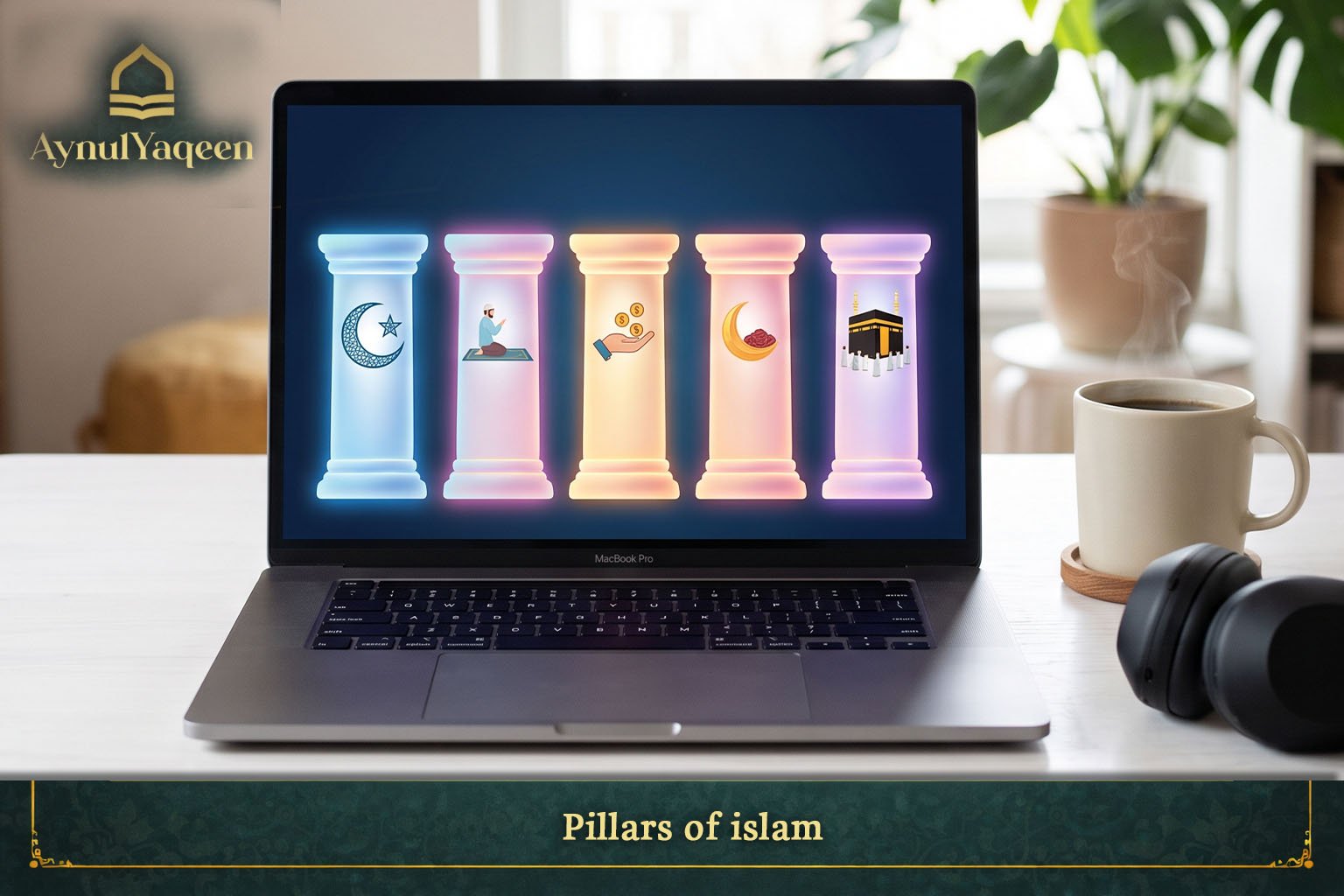
pillars of Islam are the foundation of every Muslim’s faith, worship, and daily life. They represent the five essential acts of devotion that guide believers in developing a strong connection with Allah and following the teachings of the Quran and Sunnah. Understanding these pillars helps Muslims recognize the importance of faith, prayer, charity, fasting, and pilgrimage as key elements of Islamic practice. The pillars of Islam are more than religious obligations; they shape a believer’s character by encouraging sincerity, discipline, patience, gratitude, and compassion toward others. Each pillar carries valuable spiritual lessons that influence both personal growth and community relationships. For anyone seeking authentic Islamic education, Aynulyaqeen Quran Academy provides structured lessons designed to explain these important foundations simply and practically. Through qualified teachers and organized courses, students can learn Islam, the meanings, benefits, and correct practices of the pillars of Islam while strengthening their understanding of Islamic teachings. This guide explores each pillar and its role in building a balanced Muslim life. What Are the Pillars of Islam? The pillars of Islam are the five mandatory acts of worship that form the core of Islamic practice. They were established by Allah and taught by the Prophet Muhammad (peace be upon him) as the foundation upon which every Muslim builds their religious life. These five pillars are: Shahada (Declaration of Faith) Salah (Daily Prayer) Zakat (Obligatory Charity) Sawm (Fasting During Ramadan) Hajj (Pilgrimage to Makkah) Each pillar teaches a unique lesson while complementing the others. Together, they encourage Muslims to worship Allah sincerely, care for others, control personal desires, and remain conscious of their Creator throughout every stage of life. The pillars of Islam are not optional recommendations. They are essential obligations for Muslims who meet the required conditions. However, Islam also recognizes personal circumstances, offering exemptions or alternatives when illness, financial hardship, or other valid reasons prevent someone from fulfilling certain acts of worship. Learn Online with Aynulyaqeen Quran Academy Choosing the right online Quran academy can make a significant difference in your learning journey. Aynulyaqeen Quran Academy provides structured Quran courses for beginners and advanced learners, focusing on accurate Quran reading, Tajweed, memorisation, and Islamic studies. With qualified teachers, flexible class schedules, and personalised one-on-one lessons, students of all ages can learn at their own pace while building confidence in reciting and understanding the Holy Quran from anywhere in the world. Why the Pillars of Islam Matter in Everyday Life? Many people assume religion only influences worship inside places of prayer. Islam presents a different perspective. The pillars of Islam extend into every aspect of life, shaping character, relationships, financial responsibility, and personal discipline. Every pillar contributes to spiritual growth while also improving social behavior. Prayer encourages punctuality and remembrance of Allah. Charity promotes compassion and reduces inequality. Fasting strengthens patience and self-control. Pilgrimage teaches humility and unity among Muslims from every nation. These acts are repeated throughout life, allowing believers to constantly renew their faith instead of limiting worship to special occasions. The wisdom behind the pillars of Islam becomes clearer when observing how they influence both individuals and communities. Families pray together, communities support those in need through Zakat, and Ramadan creates a spirit of generosity that reaches millions of people worldwide. The Origin of the Pillars of Islam The concept of the pillars of Islam comes directly from authentic Islamic fiqh basics teachings. Prophet Muhammad (peace be upon him) explained that Islam is built upon five pillars, emphasizing that these acts are the structural foundation of the religion. Just as a building cannot remain standing without strong supports, a Muslim’s religious life requires these essential acts to remain balanced and complete. The Quran repeatedly emphasizes faith, prayer, charity, fasting, and pilgrimage, while the Sunnah explains how each pillar should be practiced correctly. Because of this strong foundation in Islamic sources, Muslims across every generation have preserved the same pillars without change. Understanding the Spiritual Purpose Behind the Pillars of Islam While each pillar includes physical actions, their greatest purpose is spiritual transformation. The pillars of Islam are designed to develop sincerity, gratitude, humility, and complete reliance on Allah.For example: Prayer reminds Muslims that Allah remains the center of life. Charity teaches that wealth is a trust from Allah. Fasting controls desires and develops patience. Pilgrimage demonstrates equality before Allah. The declaration of faith establishes complete belief in the Oneness of Allah. These lessons continue throughout a believer’s lifetime, making Islam a religion of continuous personal development rather than occasional worship. How the Pillars of Islam Build Strong Character? The pillars of Islam influence much more than religious rituals. They shape personal character in practical ways. A Muslim who prays consistently often becomes more disciplined with time management. Someone who gives charity regularly develops generosity instead of selfishness. A person who fasts learns patience, gratitude, and empathy toward those experiencing hunger. Pilgrimage teaches humility because every pilgrim wears simple clothing regardless of wealth or social status. Even the declaration of faith builds confidence by reminding believers that ultimate dependence belongs only to Allah. These qualities gradually become part of daily behavior, affecting family relationships, business ethics, education, and community service. Pillars of Islam and the Unity of Muslims One remarkable feature of the pillars of Islam is their ability to unite Muslims across the world. Although Muslims come from different cultures and speak hundreds of languages, they perform the same prayers, fast during the same month, pay Zakat according to the same principles, and perform What is Hajj in Islam following the same rituals. This shared practice creates a powerful sense of belonging to one global community. The unity created by these pillars is especially visible during Ramadan and Hajj, when millions of Muslims worship together despite differences in nationality, ethnicity, or social background. Learning the Pillars of Islam Correctly Studying the pillars of Islam from qualified teachers helps students understand not only the rules but also the wisdom behind each act of worship. Many families today choose structured online Islamic education to ensure children

The difference between Hafs and Warsh Quran is one of the most common questions asked by Muslims who notice variations in Quran recitation across different countries. Although some verses may sound slightly different when recited by different readers, these variations represent authentic methods of reciting the same revealed Quran. Understanding these differences helps students appreciate the depth, accuracy, and preservation of Islamic tradition. For students who want to learn Quran recitation correctly and understand authentic reading methods, Aynulyaqeen Quran Academy provides structured Quran courses with qualified teachers who focus on Tajweed, accurate pronunciation, and proper recitation skills. The Quran has been transmitted through generations with exceptional precision. Since the time of the Prophet Muhammad ﷺ, Muslims have learned the Quran through direct teaching, memorization, and carefully preserved chains of transmission. Among the most recognized recitation traditions are Hafs ‘an ‘Asim and Warsh ‘an Nafi’, both of which are authentic Quranic readings accepted by scholars of Quranic sciences. Many Muslims around the world are familiar with Hafs because it is the most commonly printed and heard version today. At the same time, Warsh remains a widely respected recitation, especially in North and West African communities. Each reading carries its own characteristics related to pronunciation, vowel patterns, elongation rules, and certain linguistic features. Understanding Hafs and Warsh Quran Recitations Understanding Hafs and Warsh Quran Recitations Before exploring the Difference Between Hafs and Warsh Quran, it is important to understand what Hafs and Warsh actually represent. They are not different versions of the Quran, nor do they represent different meanings or messages. Instead, they are two authentic methods of reciting the Quran that were transmitted through reliable chains of scholars. The science of Quran recitation, known as Qira’at, focuses on preserving the exact way the Quran was pronounced and recited. These readings were passed from teachers to students through generations, ensuring that every detail of pronunciation and articulation remained accurate. What Is Hafs ‘an ‘Asim? Hafs ‘an ‘Asim is the most widespread Quran recitation style in the modern Muslim world. It is named after Hafs ibn Sulayman, who transmitted the recitation of Imam ‘Asim ibn Abi al-Najud, a famous Quran reciter from Kufa. Today, most printed Mushafs, mobile Quran applications, and online Quran resources use Hafs narration. This widespread availability has made Hafs the first recitation many Muslims encounter during childhood. The popularity of Hafs does not mean it is the only authentic reading. Rather, it became dominant in many regions because of historical, educational, and publishing developments. Millions of Muslims memorize and recite the Quran using Hafs with complete confidence in its authenticity. What Is Warsh ‘an Nafi? Warsh ‘an Nafi is another authentic Quran recitation transmitted through Warsh, whose real name was Uthman ibn Sa’id al-Misri. He learned from Imam Nafi’ al-Madani, one of the leading Quran scholars of Madinah. Warsh became especially popular in Morocco, Algeria, Tunisia, Mauritania, Libya, and parts of West Africa. In these regions, students commonly memorize the entire Quran using Warsh, and many mosques continue to use this recitation during daily prayers. The beauty of Warsh appears in its unique pronunciation patterns, rhythmic qualities, and specific Tajweed rules. These features give it a distinctive sound while maintaining the same Quranic message preserved by generations of Muslims. Learn Online with Aynulyaqeen Quran Academy Choosing the right online Quran academy can make a significant difference in your learning journey. Aynulyaqeen Quran Academy provides structured Quran courses for beginners and advanced learners, focusing on accurate Quran reading, Tajweed, memorisation, and Islamic studies. With qualified teachers, flexible class schedules, and personalised one-on-one lessons, students of all ages can learn at their own pace while building confidence in reciting and understanding the Holy Quran from anywhere in the world. Difference Between Hafs and Warsh Quran Difference Between Hafs and Warsh Quran: Historical Background and Transmission The historical foundation behind the difference between the Hafs and Warsh Quran goes back to the early period of Islam when the Quran was taught orally. The companions of the Prophet ﷺ learned the Quran directly from him and later taught it to the following generations. The existence of multiple authentic recitations reflects the linguistic diversity of early Arab society. The Arabic language contained different dialects and pronunciation styles, and the Quran was revealed with flexibility that allowed different tribes to recite it correctly. Over time, specialized scholars dedicated their lives to preserving these readings. They carefully documented pronunciation rules, vowel differences, stopping points, and methods of articulation. This careful preservation created the well-known science of Qira’at. Hafs and Warsh are connected through strong chains of transmission. Each reciter learned from qualified teachers, and each generation passed the recitation to the next with accuracy. Therefore, the differences between them are not mistakes or alterations but part of the authentic heritage of Quran preservation. Why Do Different Quran Recitations Exist? Some people may wonder why Muslims have different ways of reciting the Quran if the revelation is one. The answer lies in the nature of Quranic transmission and the richness of the Arabic language. The Prophet Muhammad ﷺ taught the Quran in ways that accommodated different Arab linguistic backgrounds. These variations made Quran recitation easier while maintaining the same divine message. The differences between recognized Qira’at usually involve: Pronunciation of certain letters Length of specific sounds Rules related to Hamzah Vowel movements Some grammatical forms Stopping and continuation methods These differences do not create contradictions. Instead, they often provide additional linguistic beauty and demonstrate the precision of Quran preservation. Main Features of Hafs Recitation Hafs is known for its clarity and straightforward pronunciation. Because it is widely taught worldwide, many Quran learners find it easier to begin their studies with this narration. Some important characteristics of Hafs include: Clear Hamzah Pronunciation In Hafs, Hamzah is generally pronounced clearly according to established Tajweed rules. This gives the recitation a consistent and recognizable sound. Common Madd Length Hafs usually follows familiar elongation patterns that many students learn in beginner Tajweed courses. These rules make it accessible for
What Islamic fiqh is, is a question many people ask when they want to understand how Islamic teachings are applied in daily life. At Aynulyaqeen Quran Academy, students have the opportunity to study Islamic sciences through structured online courses that explain the Quran, Sunnah, and the principles of Islamic jurisprudence clearly and practically. Islamic fiqh is the science of understanding Islamic rulings and principles derived from the Qur’an and Sunnah, helping Muslims organize their worship, personal responsibilities, family matters, financial transactions, and social relationships according to authentic Islamic guidance. Unlike the common misconception that fiqh is simply a collection of legal rulings, it is a comprehensive discipline based on interpretation, reasoning, and scholarly methodology. It enables qualified scholars to apply the timeless teachings of Islam to new situations while remaining faithful to the primary sources of Islamic law. Throughout Islamic history, fiqh has guided Muslims in every aspect of life, from acts of worship to ethical business practices and family responsibilities. This article explores the meaning of Islamic fiqh, its sources, objectives, major schools of thought, and its continuing importance in addressing contemporary issues while preserving the core values of Islam. What is Islamic fiqh and How Does It Differ From Islamic Law? What is Islamic fiqh and How Does It Differ From Islamic Law? When discussing what Islamic fiqh is, it is important to understand the difference between fiqh and Shariah. Although these two terms are often used together, they do not have the same meaning. Shariah refers to the divine guidance and principles revealed by Allah through the Qur’an and the teachings of the Prophet Muhammad ﷺ. It represents the ideal path that guides Muslims toward righteousness, justice, and a balanced way of life. Fiqh, on the other hand, refers to the human understanding and interpretation of these divine sources. Muslim scholars study the Qur’an, Sunnah, and other recognized sources to derive practical rulings that help believers deal with different aspects of life. For example, the Qur’an commands Muslims to establish prayer, but fiqh explains the details related to prayer, including its conditions, requirements, recommended actions, and situations that may affect its validity. In this way, fiqh transforms general Islamic principles into practical guidance. Because fiqh involves human interpretation, scholars may sometimes reach different conclusions on certain issues. These differences are not necessarily contradictions but often reflect different methods of analysis and understanding. The diversity within Islamic jurisprudence demonstrates the flexibility of Islamic scholarship and its ability to address various circumstances. Learn Online with Aynulyaqeen Quran Academy Choosing the right online Quran academy can make a significant difference in your learning journey. Aynulyaqeen Quran Academy provides structured Quran courses for beginners and advanced learners, focusing on accurate Quran reading, Tajweed, memorisation, and Islamic studies. With qualified teachers, flexible class schedules, and personalised one-on-one lessons, students of all ages can learn at their own pace while building confidence in reciting and understanding the Holy Quran from anywhere in the world. What Is Islamic Fiqh The Meaning and Concept of Islamic Fiqh The word fiqh comes from the Arabic root “fa-qa-ha,” which means deep understanding, knowledge, or comprehension. In Islamic terminology, fiqh refers to the understanding of practical Islamic rulings based on detailed evidence from authentic sources. When exploring what is islamic fiqh, the answer goes beyond knowing religious commands. It involves studying the reasons behind rulings, understanding their objectives, and applying them appropriately in real-life situations. Islamic fiqh covers many areas of human life, including: Acts of worship such as prayer, fasting, charity, and pilgrimage. Family matters such as marriage, divorce, and inheritance. Financial dealings, including trade, contracts, and ethical business practices. Social responsibilities and moral behavior. Legal matters related to justice and community welfare. The purpose of fiqh is not only to define what is permissible and prohibited but also to promote justice, mercy, and human well-being. Islamic scholars have always emphasized that rulings should achieve beneficial outcomes while preventing harm. A major feature of fiqh is that it combines religious knowledge with careful reasoning. Scholars analyze evidence, examine circumstances, and consider the objectives of Islamic law before reaching conclusions. The Historical Development of Islamic Jurisprudence The development of Islamic fiqh began during the lifetime of the Prophet Muhammad ﷺ. Muslims would ask the Prophet about different situations, and he would provide guidance based on revelation from Allah and his understanding of Islamic principles. After the passing of the Prophet ﷺ, Muslim communities expanded into different regions with new social and economic challenges. Scholars began developing systematic methods to interpret Islamic teachings and provide answers for emerging issues. During the early centuries of Islam, major scholars dedicated their lives to collecting hadith, studying Qur’anic meanings, and establishing principles for deriving Islamic rulings. This period witnessed the formation of different schools of jurisprudence, each with its own methodology while sharing the same foundational sources. The growth of Islamic jurisprudence was not limited to religious matters. It influenced areas such as commerce, ethics, governance, education, and social organization. Muslim scholars created detailed frameworks that helped communities maintain religious values while adapting to changing environments. Today, fiqh continues to develop through scholarly discussions addressing modern challenges such as financial systems, medical technology, digital transactions, and global business practices. Primary Sources of Islamic Fiqh Understanding what is islamic fiqh requires knowing the sources that scholars use when deriving Islamic rulings. These sources provide the foundation upon which Islamic jurisprudence is built. The Quran: The First Source of Islamic Guidance The Qur’an is the primary and most important source of Islamic fiqh. Muslims believe it is the word of Allah revealed to the Prophet Muhammad ﷺ as guidance for humanity. The Qur’an contains direct commandments, ethical principles, and general guidance covering various aspects of life. Some verses provide clear legal instructions, while others establish broader principles that scholars use when addressing new situations. Examples of Qur’anic guidance include: The obligation of prayer and fasting. Rules related to inheritance. The importance of justice and honesty. The prohibition of harmful and unethical actions.
Performing Istikhara prayer is one of the most meaningful acts of worship for Muslims who feel uncertain about an important decision, whether the matter involves marriage, accepting a new job, starting a business, choosing a university, travelling, relocating, or selecting between several permissible opportunities. At Aynulyaqeen Quran Academy, students not only learn how to recite the Quran correctly but also gain a deeper understanding of important Islamic acts of worship, including Salat al-Istikhara and its role in seeking Allah’s guidance in everyday life. Through Salat al-Istikhara, a Muslim asks Allah to guide the decision, facilitate what is beneficial, remove what is harmful, and grant contentment with the final outcome, which turns uncertainty into an opportunity for worship, trust, reflection, and responsible decision-making. Many Muslims know the Istikhara dua but remain unsure about when to pray it, how to perform it correctly, whether a dream is required, and what practical steps should follow the prayer. This guide explains the meaning, purpose, correct method, authentic supplication, common misconceptions, and the proper response after completing Istikhara. What Is Performing Istikhara Prayer? What Is Performing Istikhara Prayer? Istikhara means asking Allah to choose what is best, so instead of depending entirely on emotions, personal expectations, limited information, or the opinions of other people, the believer seeks guidance from Allah, whose knowledge includes the past, present, future, visible consequences, and hidden outcomes. Salat al-Istikhara consists of two voluntary rak’ahs followed by the supplication taught by Prophet Muhammad ﷺ, in which the Muslim asks Allah to facilitate the matter if it is beneficial to their religion, livelihood, and future, or to remove it if it is harmful. Jabir ibn Abdullah رضي الله عنه reported that the Messenger of Allah ﷺ taught the Companions Istikhara in various matters, just as he taught them a Surah from the Quran. This narration is recorded in Sahih al-Bukhari and can be reviewed through trusted hadith resources such as Sunnah.com. Performing Istikhara prayer combines several acts of worship, including trust in Allah, humility, recognition of human limitations, belief in Allah’s complete knowledge, sincere dua, and contentment with His decree. Learn Online with Aynulyaqeen Quran Academy Choosing the right online Quran academy can make a significant difference in your learning journey. Aynulyaqeen Quran Academy provides structured Quran courses for beginners and advanced learners, focusing on accurate Quran reading, Tajweed, memorisation, and Islamic studies. With qualified teachers, flexible class schedules, and personalised one-on-one lessons, students of all ages can learn at their own pace while building confidence in reciting and understanding the Holy Quran from anywhere in the world. Performing istikhara prayer Why Was Istikhara Prescribed? Istikhara was prescribed because human beings can examine the visible details of a decision but cannot know its complete future consequences, as an opportunity that appears attractive may contain hidden difficulties, while a path that initially seems challenging may lead to lasting benefit. A person may make a decision based on salary, appearance, location, reputation, convenience, or emotion, but Allah knows how that decision will influence faith, family, health, character, responsibilities, and long-term well-being. Istikhara does not mean that Muslims should stop thinking or researching; rather, it teaches them to use the available means while recognising that the final outcome remains within Allah’s knowledge and control. The prayer also protects the heart from excessive attachment to a particular result, because the believer does not simply ask Allah to approve a personal preference, but asks Him to choose whatever is truly best. Why is performing Istikhara Prayer Is Important? Life regularly presents decisions that can shape a person’s future, and although careful planning, research, and consultation are encouraged in Islam, human understanding always remains incomplete. Allah alone knows which opportunity will strengthen a person’s religion, which decision contains unseen harm, which delay leads to protection, which difficulty eventually produces goodness, and which closed door prevents a greater problem. Performing Istikhara prayer brings emotional stability because the believer knows that the matter was entrusted to Allah after sincere worship, thoughtful consideration, and responsible effort. Istikhara may not remove uncertainty immediately, but it teaches the Muslim to move forward without becoming controlled by fear, regret, overthinking, or the constant search for supernatural signs. When Should You Perform Istikhara Prayer? When Should You Perform Istikhara Prayer? Istikhara is recommended when a Muslim faces a permissible decision and remains uncertain about which option is best, whether the matter is major or relatively simple. Common examples include: Considering a marriage proposal. Accepting or rejecting a job offer. Choosing a university or area of study. Starting a new business or investment. Purchasing a home or important property. Relocating to another city or country. Deciding whether to travel. Selecting between two lawful opportunities. Entering a professional partnership. Making an important family decision. Istikhara is especially beneficial when several options appear acceptable, when available information does not provide a clear answer, or when a person fears that strong emotions may influence their judgment. Decisions Suitable for Istikhara Appropriate for Istikhara Not Appropriate for Istikhara Choosing between marriage proposals Whether to perform obligatory prayers Accepting a lawful job opportunity Whether to fast during Ramadan Starting a permissible business Whether to avoid prohibited income Choosing a university or course Whether to abandon an Islamic obligation Deciding whether to travel Whether to commit a prohibited action Purchasing a home Whether to fulfil a clear religious duty Islam has already clarified obligatory, recommended, prohibited, and clearly harmful actions, so Istikhara is primarily used for permissible choices where the best personal outcome remains uncertain. When Is Istikhara Not Prescribed? Istikhara is not performed to decide whether a Muslim should fulfil an obligation that Allah has already commanded, such as performing the five daily prayers, fasting Ramadan, paying an established debt, or maintaining other clear responsibilities. It is also not performed to seek approval for a prohibited action, such as entering an unlawful financial arrangement, earning through forbidden means, harming another person, or maintaining a relationship that clearly violates Islamic teachings. A person should not pray Istikhara to ask whether something
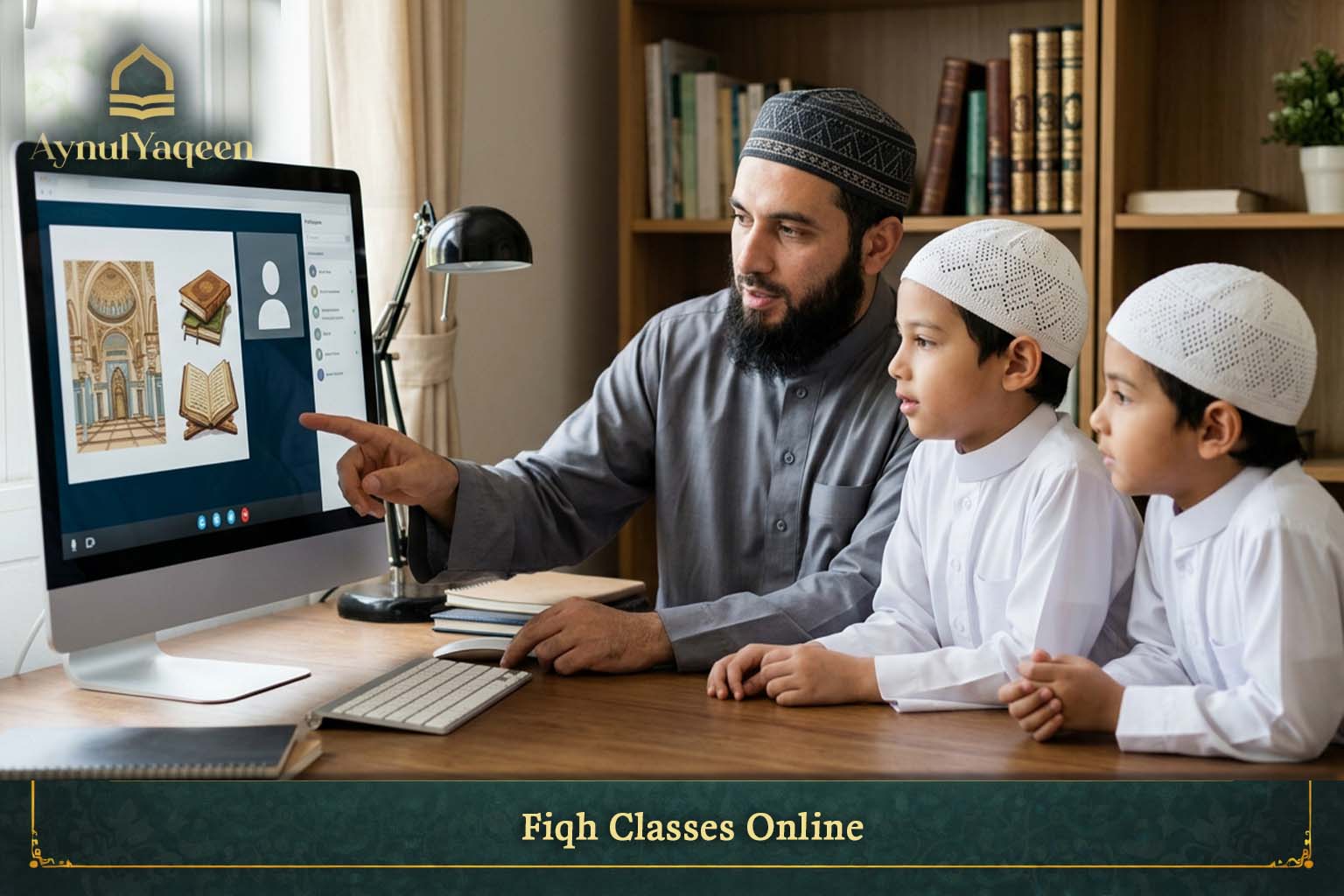
Fiqh classes online have become an accessible and effective way for Muslims to study Islamic jurisprudence in a flexible and structured environment. With today’s fast-paced lifestyle, many learners prefer online education to gain authentic knowledge directly from qualified instructors without geographical limits. Islamic Fiqh is a complete system that governs all aspects of a Muslim’s life, including worship, financial dealings, family matters, and social ethics. It provides clarity and balance, making it essential for the proper practice of Islam. Online Islamic education has grown significantly, and platforms like Aynulyaqeen Quran academy offer simplified, structured learning for students of all ages. The Importance of Learning Islamic Fiqh in Daily Life Understanding Fiqh is essential because it is directly connected to how a Muslim lives and practices their faith. Unlike subjects that are purely academic, Fiqh is practical and applied in everyday life situations. A Muslim needs Fiqh to understand: How to perform acts of worship correctly The rules of purification and prayer The obligations of fasting and zakat The principles of halal and haram in financial transactions Family rulings such as marriage, divorce, and inheritance Ethical behavior in social interactions Without proper knowledge, a person may unknowingly make mistakes in worship or daily dealings. This is why scholars emphasize the importance of learning from reliable sources rather than relying on random information found online. In today’s world, where new financial systems, digital transactions, and modern lifestyles are constantly emerging, understanding Islamic rulings has become even more important. Muslims need clear guidance that connects traditional Islamic knowledge with contemporary life challenges. Online Quran Academy An Online Quran Academy offers a flexible and effective way for Muslims to learn the Holy Quran from anywhere in the world. It provides structured lessons in recitation, Tajweed, and pronunciation under qualified instructors without the need to attend physical classes. This method is ideal for learners with busy schedules or limited access to Islamic centers. Aynulyaqeen Quran Academy is one of the trusted platforms that provides simplified and organized online Quran programs suitable for all ages and levels, helping students learn with confidence and consistency. Why Structured Online Learning Has Become Essential Modern life is busy, and many people struggle to attend traditional study circles regularly. This is where online learning becomes extremely valuable. It allows students to learn at their own pace without compromising their responsibilities. One of the main advantages of structured online Islamic learning is accessibility. Students can connect with qualified teachers regardless of where they live. Whether someone is in a non-Muslim country or a remote area, access to authentic Islamic knowledge is now easier than ever. Another important advantage is flexibility. Learners can choose study times that fit their schedule, making it ideal for students, employees, and parents alike. In this context, Aynulyaqeen Quran academy plays an important role by offering organized learning programs designed to meet different levels, from beginners to advanced students. Their approach focuses on clarity, simplicity, and gradual learning, which helps students understand complex topics in an easy way. Challenges Faced by Learners and How to Overcome Them Despite the ease of online learning, students may face several challenges, such as weak self-discipline or difficulty maintaining a consistent study schedule. These issues can affect progress and reduce learning efficiency if not properly managed. However, these challenges can be overcome by creating a clear study plan and sticking to fixed learning times. Establishing a structured routine helps build discipline and ensures steady progress over time. Choosing a quiet and suitable learning environment also plays a key role in improving focus and productivity. In addition, continuous interaction with the teacher and actively asking questions can help students overcome difficulties and better understand the lessons. This ongoing support makes the learning process smoother and more effective. Read also: how to get an ijazah Why are Fiqh classes online becoming the Preferred Choice There are many reasons why students now prefer learning Fiqh through online platforms instead of traditional methods. One of the biggest reasons is convenience. Learners no longer need to travel or adjust their lives around fixed schedules. Another key factor is access to qualified instructors. Many students do not have local access to scholars who specialize in Fiqh. Online platforms bridge this gap by connecting students with experienced teachers from different parts of the world. Additionally, online learning often includes recorded sessions, written materials, and interactive assessments, which help students review and retain information more effectively. The learning environment is also more comfortable for many students. Some learners prefer to ask questions privately without feeling shy, which online systems allow. All these advantages make fiqh classes online a practical and effective solution for modern learners seeking authentic Islamic knowledge. What You Learn in Online Fiqh Studies Studying Fiqh online covers a wide range of topics that are essential for understanding Islamic law and practice. 1. Foundations of Islamic Jurisprudence Students begin by learning the basic principles of Fiqh, including its definition, sources, and methodology. This helps build a strong foundation for more advanced topics. 2. Acts of Worship This includes detailed rulings related to prayer, fasting, zakat, and pilgrimage. Students learn not only the “how” but also the “why” behind each act of worship. 3. Financial Transactions Modern Fiqh also addresses contemporary issues such as banking, trade, contracts, and digital transactions. This is especially important in today’s global economy. 4. Family and Social Laws Topics such as marriage, divorce, rights of spouses, and inheritance are explained in detail to help Muslims maintain healthy family structures. 5. Ethical Conduct Islamic ethics play a major role in Fiqh. Students learn how to behave in society, treat others fairly, and maintain honesty in all dealings. Through platforms like Aynulyaqeen Quran academy, these topics are presented in a simplified and structured way, making them easy to understand for learners at all levels. Read also: What is Ihram Who Can Benefit from Learning Fiqh Online? Online Fiqh education is suitable for a wide range of learners: Beginners who want to start learning Islam