

Performing Istikhara prayer is one of the most meaningful acts of worship for Muslims who feel uncertain about an important decision, whether the matter involves marriage, accepting a new job, starting a business, choosing a university, travelling, relocating, or selecting between several permissible opportunities.
At Aynulyaqeen Quran Academy, students not only learn how to recite the Quran correctly but also gain a deeper understanding of important Islamic acts of worship, including Salat al-Istikhara and its role in seeking Allah’s guidance in everyday life.
Through Salat al-Istikhara, a Muslim asks Allah to guide the decision, facilitate what is beneficial, remove what is harmful, and grant contentment with the final outcome, which turns uncertainty into an opportunity for worship, trust, reflection, and responsible decision-making.
Many Muslims know the Istikhara dua but remain unsure about when to pray it, how to perform it correctly, whether a dream is required, and what practical steps should follow the prayer. This guide explains the meaning, purpose, correct method, authentic supplication, common misconceptions, and the proper response after completing Istikhara.
What Is Performing Istikhara Prayer?

Istikhara means asking Allah to choose what is best, so instead of depending entirely on emotions, personal expectations, limited information, or the opinions of other people, the believer seeks guidance from Allah, whose knowledge includes the past, present, future, visible consequences, and hidden outcomes.
Salat al-Istikhara consists of two voluntary rak’ahs followed by the supplication taught by Prophet Muhammad ﷺ, in which the Muslim asks Allah to facilitate the matter if it is beneficial to their religion, livelihood, and future, or to remove it if it is harmful.
Jabir ibn Abdullah رضي الله عنه reported that the Messenger of Allah ﷺ taught the Companions Istikhara in various matters, just as he taught them a Surah from the Quran. This narration is recorded in Sahih al-Bukhari and can be reviewed through trusted hadith resources such as Sunnah.com.
Performing Istikhara prayer combines several acts of worship, including trust in Allah, humility, recognition of human limitations, belief in Allah’s complete knowledge, sincere dua, and contentment with His decree.
Learn Online with Aynulyaqeen Quran Academy
Choosing the right online Quran academy can make a significant difference in your learning journey. Aynulyaqeen Quran Academy provides structured Quran courses for beginners and advanced learners, focusing on accurate Quran reading, Tajweed, memorisation, and Islamic studies.
With qualified teachers, flexible class schedules, and personalised one-on-one lessons, students of all ages can learn at their own pace while building confidence in reciting and understanding the Holy Quran from anywhere in the world.

Why Was Istikhara Prescribed?
Istikhara was prescribed because human beings can examine the visible details of a decision but cannot know its complete future consequences, as an opportunity that appears attractive may contain hidden difficulties, while a path that initially seems challenging may lead to lasting benefit.
A person may make a decision based on salary, appearance, location, reputation, convenience, or emotion, but Allah knows how that decision will influence faith, family, health, character, responsibilities, and long-term well-being.
Istikhara does not mean that Muslims should stop thinking or researching; rather, it teaches them to use the available means while recognising that the final outcome remains within Allah’s knowledge and control.
The prayer also protects the heart from excessive attachment to a particular result, because the believer does not simply ask Allah to approve a personal preference, but asks Him to choose whatever is truly best.
Why is performing Istikhara Prayer Is Important?
Life regularly presents decisions that can shape a person’s future, and although careful planning, research, and consultation are encouraged in Islam, human understanding always remains incomplete.
Allah alone knows which opportunity will strengthen a person’s religion, which decision contains unseen harm, which delay leads to protection, which difficulty eventually produces goodness, and which closed door prevents a greater problem.
Performing Istikhara prayer brings emotional stability because the believer knows that the matter was entrusted to Allah after sincere worship, thoughtful consideration, and responsible effort.
Istikhara may not remove uncertainty immediately, but it teaches the Muslim to move forward without becoming controlled by fear, regret, overthinking, or the constant search for supernatural signs.
When Should You Perform Istikhara Prayer?

Istikhara is recommended when a Muslim faces a permissible decision and remains uncertain about which option is best, whether the matter is major or relatively simple. Common examples include:
- Considering a marriage proposal.
- Accepting or rejecting a job offer.
- Choosing a university or area of study.
- Starting a new business or investment.
- Purchasing a home or important property.
- Relocating to another city or country.
- Deciding whether to travel.
- Selecting between two lawful opportunities.
- Entering a professional partnership.
- Making an important family decision.
Istikhara is especially beneficial when several options appear acceptable, when available information does not provide a clear answer, or when a person fears that strong emotions may influence their judgment.
Decisions Suitable for Istikhara
| Appropriate for Istikhara | Not Appropriate for Istikhara |
|---|---|
| Choosing between marriage proposals | Whether to perform obligatory prayers |
| Accepting a lawful job opportunity | Whether to fast during Ramadan |
| Starting a permissible business | Whether to avoid prohibited income |
| Choosing a university or course | Whether to abandon an Islamic obligation |
| Deciding whether to travel | Whether to commit a prohibited action |
| Purchasing a home | Whether to fulfil a clear religious duty |
Islam has already clarified obligatory, recommended, prohibited, and clearly harmful actions, so Istikhara is primarily used for permissible choices where the best personal outcome remains uncertain.
When Is Istikhara Not Prescribed?
Istikhara is not performed to decide whether a Muslim should fulfil an obligation that Allah has already commanded, such as performing the five daily prayers, fasting Ramadan, paying an established debt, or maintaining other clear responsibilities.
It is also not performed to seek approval for a prohibited action, such as entering an unlawful financial arrangement, earning through forbidden means, harming another person, or maintaining a relationship that clearly violates Islamic teachings.
A person should not pray Istikhara to ask whether something forbidden might become acceptable for them, because the ruling has already been established and the correct response is obedience and repentance rather than uncertainty.
Istikhara is also unnecessary when there is no actual decision to make, as the prayer is connected to a real permissible matter that requires consideration and action.
Istikhara and Consultation
Istikhara and consultation are complementary practices rather than competing alternatives, as Istikhara involves asking Allah for guidance while consultation involves benefiting from the knowledge and experience Allah has given to other people.
The Quran encourages consultation in Surah Aal Imran 3:159, where believers are instructed to consult regarding their affairs, and the verse can be reviewed through trusted Quran resources such as Quran.com.
A person considering marriage may consult family members and trustworthy people who know the potential spouse, while someone evaluating a business opportunity may speak with financial, legal, or industry professionals.
Difference Between Istikhara and Consultation
| Istikhara | Consultation |
|---|---|
| A personal act of worship | A practical means of gathering advice |
| Seeks guidance directly from Allah | Seeks experience and knowledge from people |
| Includes prayer and supplication | Includes discussion, research, and evaluation |
| Strengthens reliance upon Allah | Helps identify visible benefits and risks |
| Can be performed privately | Usually involves trusted individuals |
| Does not replace investigation | Does not replace prayer and reliance |
The strongest approach combines Istikhara, consultation, research, careful evaluation, and trust in Allah, rather than relying on only one of these elements. Readers seeking broader principles for making responsible decisions can also explore the academy’s Islamic Guidance resources.
Best Time for Performing Istikhara Prayer
There is no single required time for performing Istikhara prayer, so it may be offered whenever voluntary prayers are generally permitted. A Muslim should avoid the recognised prohibited times for voluntary prayer, including the period after Fajr until the sun has risen, the short period when the sun reaches its highest point before Dhuhr, and the period after Asr until sunset.
Many Muslims prefer the last third of the night because it is a blessed time for prayer and supplication, but praying during this period is recommended rather than required.
A person who must make a decision soon does not need to delay Istikhara until nighttime, as sincerity, humility, and trust in Allah are more important than selecting a specific hour. Those interested in developing a consistent night worship routine may benefit from studying the Tahajjud Prayer and its spiritual importance.
Preparing for Istikhara Prayer
Proper preparation helps the believer approach the prayer with concentration, sincerity, and openness to Allah’s guidance. Before beginning:
- Perform Wudu correctly.
- Choose a clean and quiet place.
- Face the Qiblah.
- Identify the specific decision being considered.
- Remove unnecessary distractions.
- Renew the intention to seek Allah’s guidance.
- Prepare to accept an outcome that may differ from personal expectations.
The person should not enter the prayer while demanding a specific result, because genuine Istikhara means asking Allah to choose what is best rather than asking Him to confirm a decision that has already been emotionally finalised. Anyone who needs help reviewing the basic structure of prayer can first read the academy’s guide on How to Pray Salah.
How to Perform Istikhara Prayer Step by Step?
Performing Istikhara prayer follows the general structure of any two-rak’ah voluntary prayer, followed by the supplication taught by Prophet Muhammad ﷺ.
- Step 1: Make the Intention: The intention is made within the heart and does not require a special statement to be spoken aloud. Simply intend to pray two voluntary rak’ahs and ask Allah for guidance concerning the specific permissible matter being considered.
- Step 2: Pray Two Voluntary Rak’ahs: Begin the prayer normally by saying Allahu Akbar, reciting Surah Al-Fatihah, reciting another Surah or Quranic verses, completing the first rak’ah, and then performing the second rak’ah in the same manner. There is no authentic narration requiring particular Surahs to be recited during Istikhara, so the Muslim may choose any suitable verses or chapters from the Quran.
- Step 3: Complete the Prayer: Complete the second rak’ah and finish the prayer with Tasleem in the normal manner. After completing the prayer, prepare to recite the Istikhara supplication with attention to its meaning.
- Step 4: Recite the Istikhara Dua: The supplication should be recited sincerely while thinking about the specific matter for which guidance is being requested. When reaching the words that refer to “this matter,” the person may mention or mentally identify the decision being considered.
- Step 5: Continue With Trust: After completing the dua, continue using lawful and practical means, gather information, consult trustworthy people, evaluate the available options, and move forward without becoming obsessed with dreams or immediate signs.
Authentic Istikhara Dua
The following supplication was taught by Prophet Muhammad ﷺ.
Istikhara Dua in Arabic
اللَّهُمَّ إِنِّي أَسْتَخِيرُكَ بِعِلْمِكَ، وَأَسْتَقْدِرُكَ بِقُدْرَتِكَ، وَأَسْأَلُكَ مِنْ فَضْلِكَ الْعَظِيمِ، فَإِنَّكَ تَقْدِرُ وَلَا أَقْدِرُ، وَتَعْلَمُ وَلَا أَعْلَمُ، وَأَنْتَ عَلَّامُ الْغُيُوبِ، اللَّهُمَّ إِنْ كُنْتَ تَعْلَمُ أَنَّ هَذَا الْأَمْرَ خَيْرٌ لِي فِي دِينِي وَمَعَاشِي وَعَاقِبَةِ أَمْرِي فَاقْدُرْهُ لِي وَيَسِّرْهُ لِي ثُمَّ بَارِكْ لِي فِيهِ، وَإِنْ كُنْتَ تَعْلَمُ أَنَّ هَذَا الْأَمْرَ شَرٌّ لِي فِي دِينِي وَمَعَاشِي وَعَاقِبَةِ أَمْرِي فَاصْرِفْهُ عَنِّي وَاصْرِفْنِي عَنْهُ، وَاقْدُرْ لِيَ الْخَيْرَ حَيْثُ كَانَ ثُمَّ أَرْضِنِي بِهِ.
Istikhara Dua Transliteration
The dua recited after performing istikhara prayer is one of the most important supplications in Islam because it reflects complete trust in Allah’s wisdom and knowledge before making an important decision. The authentic transliteration is:
Allahumma inni astakhiruka bi ilmika, wa astaqdiruka bi qudratika, wa asaluka min fadlikal azeem, fa innaka taqdiru wa la aqdir, wa talamu wa la alam, wa anta allamul ghuyub, Allahumma in kunta talamu anna hadhal amra khayrun li fi dini wa maashi wa aqibati amri faqdurhu li wa yassirhu li thumma barik li fih, wa in kunta talamu anna hadhal amra sharrun li fi dini wa maashi wa aqibati amri fasrifhu anni wasrifni anhu, waqdur liyal khayra haythu kana thumma ardini bih.
Meaning of the Istikhara Dua
After performing istikhara prayer, the believer asks Allah, through His perfect knowledge and unlimited power, to decree and make the chosen matter easy if it is beneficial for their religion, livelihood, and future. At the same time, the believer asks Allah to turn the matter away if it contains harm and to remove any attachment to it from the heart.
The final part of the dua carries a profound meaning because, after performing istikhara prayer, the Muslim asks not only for what is best but also for the ability to feel satisfied and content with Allah’s decision, whatever the outcome may be.
This teaches complete reliance upon Allah while encouraging patience and trust throughout the decision-making process. Anyone performing istikhara prayer should understand that the purpose of this supplication is to seek divine guidance rather than immediate signs or personal desires.
Readers who want to understand the importance of supplication in everyday worship may also explore the academy’s guide on the Importance of Dua. Learning the meanings of authentic supplications can strengthen faith and help every Muslim benefit more from performing istikhara prayer in daily life.
Should the Dua Be Recited Before or After Tasleem?
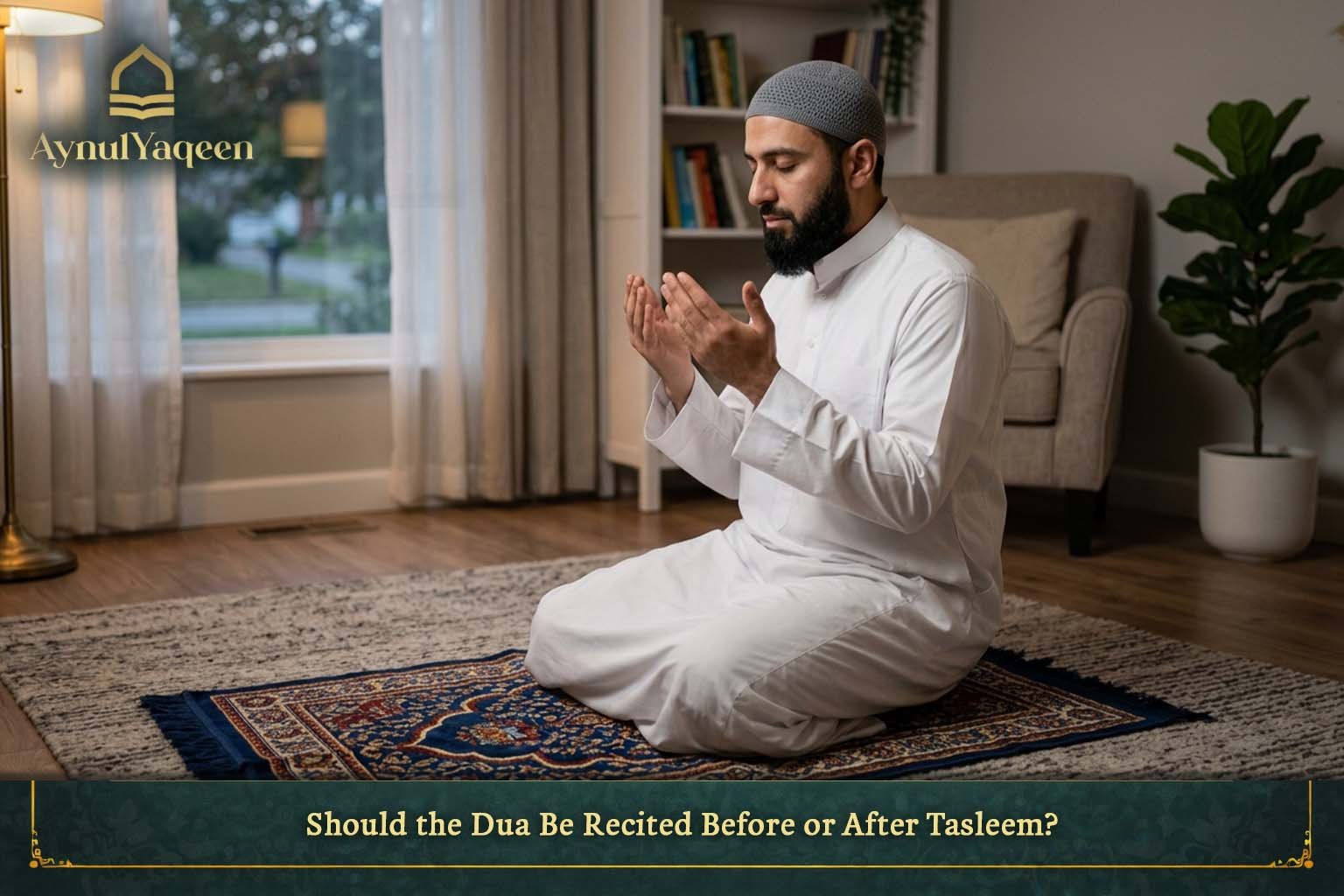
The wording of the authentic hadith indicates that the supplication is made after completing the two voluntary rak’ahs, which is why many scholars prefer reciting it after Tasleem.
Some respected scholars have also permitted making the supplication before Tasleem, so this issue should not become a cause of argument or criticism between Muslims. A person who wishes to follow the apparent sequence of the hadith may complete the prayer and then recite the dua.
What to Do After Performing Istikhara Prayer?
Completing the prayer does not remove the need for responsible action, so the Muslim should continue researching, consulting, evaluating risks, and taking lawful, practical steps. After Istikhara:
- Trust Allah’s knowledge and wisdom.
- Continue gathering reliable information.
- Consult trustworthy and experienced people.
- Evaluate the religious and practical consequences.
- Observe whether the path becomes reasonably accessible.
- Avoid becoming obsessed with hidden signs.
- Make a decision when sufficient information is available.
- Accept the final result with patience and contentment.
Guidance may appear through new information, changing circumstances, repeated obstacles, unexpected support, clearer priorities, or the appearance of a more suitable opportunity.
A Practical Decision Process After Istikhara
A Muslim can use the following process after performing Istikhara to avoid confusion and unnecessary hesitation.
- Review the Available Facts: Examine the information that can be verified, including responsibilities, financial consequences, personal suitability, family needs, legal requirements, religious concerns, and long-term effects.
- Consult Qualified People: Ask people who are trustworthy and genuinely knowledgeable about the specific matter, rather than relying only on friends who may share the same limited information or emotional preference.
- Compare Benefits and Risks: Consider both immediate and future consequences, because an option that provides quick comfort may create long-term difficulty, while a demanding opportunity may offer greater stability and benefit.
- Make a Responsible Decision: When the available evidence supports a reasonable option, decide while trusting Allah rather than waiting indefinitely for a dream or extraordinary event.
- Accept What Follows: If the path succeeds, thank Allah and use the opportunity responsibly, and if it closes despite sincere effort, accept that the outcome may contain protection or guidance that is not yet visible.
Do You Need to See a Dream After Istikhara?
Seeing a dream is not a requirement for Istikhara, as neither the Quran nor the authentic Sunnah states that every person who performs Istikhara must receive an answer through a dream. Some people may experience a meaningful dream, while many sincere Muslims do not see anything connected to their decision, and both situations are normal.
Dreams should not become the primary basis for major decisions, especially when the dream is unclear, influenced by repeated thinking, or interpreted by people without reliable knowledge. The central purpose of Istikhara is to entrust the matter to Allah, continue using lawful means, and accept the way events unfold.
How may Allah answer Istikhara?
Allah’s guidance may appear in different ways, and there is no single sign that must follow every Istikhara. Sometimes the matter becomes easier, important obstacles are removed, trusted advice provides greater clarity, or circumstances change in a way that helps the believer make a wiser decision.
In other situations, an opportunity may close despite sincere effort, indicating that Allah has chosen something better. Ease alone is not proof that a choice is correct, just as difficulty does not always mean it is harmful.
Muslims who seek beneficial Islamic knowledge through resources, such as how to learn the Quran, often develop a stronger understanding of trusting Allah while using the lawful means available.
Can You Repeat Istikhara Prayer?
A Muslim may repeat Istikhara whenever genuine uncertainty remains, as there is nothing wrong with returning to Allah in prayer and supplication. It may be repeated before making the final decision or when new circumstances significantly change the available options.
However, repetition should not become endless hesitation or an attempt to receive a preferred emotional answer. Instead, the believer should combine sincere dua with wise action, just as consistency is important when studying how to memorise the noble quran easily, where patience and steady effort produce the best long-term results.
Performing Istikhara Prayer for Marriage
Marriage is one of the most common reasons Muslims perform Istikhara because choosing a spouse affects faith, family life, responsibilities, and future generations. Before accepting or declining a proposal, learn about the person’s religious commitment, ask trustworthy people about their character, discuss expectations, consider compatibility, consult experienced family members, perform Istikhara sincerely, and avoid relying only on emotions.
Building a strong Islamic family also includes teaching children authentic values through resources such as interpretation of the quran for kids, helping future generations understand the guidance of the Quran from an early age.
Performing Istikhara Before Accepting a Job
Career decisions can influence income, religious practice, family responsibilities, and long-term stability. Before accepting a job offer, review the duties, confirm that the work is halal, compare salaries and benefits, evaluate commuting or relocation needs, research the employer, seek professional advice when necessary, and perform Istikhara before making the final decision.
Developing Islamic knowledge alongside practical skills, including how to read the quran for beginners, helps Muslims balance worldly opportunities with their religious responsibilities.
Performing Istikhara Before Travelling or Moving
Moving to another city or country often involves financial, educational, legal, professional, and family considerations. Before making the decision, gather accurate information, review visa requirements, estimate living expenses, consider access to Islamic communities and places of worship, evaluate work or study opportunities, discuss the move with family members, seek advice from experienced people, and perform Istikhara with sincerity.
Preparation and reliance upon Allah should always go hand in hand. Many Muslims also choose to strengthen their Islamic identity before relocating by enrolling in programs such as learning Arabic for beginners with Egyptian teachers, allowing them to understand the Quran and Islamic teachings more deeply wherever they live.
Common Myths About Istikhara
| Common Myth | Correct Understanding |
|---|---|
| You must see a dream | Dreams are not required for Istikhara |
| Green means yes, and red means no | There is no authentic colour system for interpreting Istikhara |
| Someone else should pray it for you | The person making the decision should perform it whenever possible |
| Istikhara replaces research | Research and consultation remain necessary |
| You must feel immediate peace | Guidance may become clear gradually |
| Any obstacle means the answer is no | Obstacles must be evaluated within the full context |
| Istikhara guarantees an easy outcome | The best outcome may still involve effort or temporary difficulty |
| You can perform it for forbidden actions | Istikhara is for permissible decisions only |
Understanding these points protects Muslims from superstition, emotional confusion, and practices that have no clear foundation in the Quran or authentic Sunnah.
Common Mistakes When Performing Istikhara
Many people misunderstand performing istikhara prayer by expecting immediate dreams or clear signs, while neglecting proper research, consultation, and responsible decision-making. Istikhara should strengthen trust in Allah after using the appropriate lawful means, not replace them.
- Expecting a Dream: Many people delay important decisions because they believe a dream must provide the answer, although authentic Islamic sources do not establish this requirement.
- Seeking Approval for a Personal Preference: Some people enter Istikhara while already determined to choose one option, then become disappointed when circumstances do not support the result they wanted.
- Ignoring Consultation: Istikhara does not remove the need to ask knowledgeable people, investigate risks, verify information, and consider the consequences.
- Depending Only on Feelings: Emotions may change due to stress, fear, excitement, family pressure, or personal attachment, so feelings should be considered alongside evidence and responsible judgment.
- Interpreting Every Event as a Sign: A delayed message, minor inconvenience, random dream, or temporary mood should not automatically be treated as a divine sign concerning the decision.
- Repeating Istikhara Indefinitely: Repeated prayer is permissible, but using repetition to avoid making any decision can create unnecessary anxiety and hesitation.
- Refusing to Accept the Outcome: True reliance upon Allah includes accepting that the best result may differ from personal expectations, even when the wisdom behind it is not immediately understood.
Building Confidence Through Islamic Learning

Developing confidence in Islamic worship becomes easier through performing istikhara prayer alongside structured learning from qualified teachers and authentic Islamic sources. This approach helps Muslims understand not only what to do but also the wisdom, evidence, conditions, and common mistakes related to every act of worship.
Studying the rules of prayer, the meanings of supplications, Quranic guidance, and Prophetic teachings gives believers a stronger foundation for performing istikhara prayer and making important life decisions with knowledge instead of relying on cultural assumptions or unreliable online information.
Aynulyaqeen Quran Academy provides organised online Quran and Islamic studies programs that help students improve Quran recitation, strengthen their understanding of Islam, and build confidence in performing istikhara prayer as part of their daily worship. Students can also benefit from courses on how to learn the Quran, making it easier to connect practical worship with authentic Islamic knowledge.
Those who wish to deepen their relationship with the Quran can explore the academy’s structured Quran learning programs. A solid Islamic education supports lifelong growth in worship and enables every Muslim to approach performing istikhara prayer with certainty, sincerity, and trust in Allah’s guidance. Through continuous learning, believers become more confident in performing istikhara prayer whenever they seek Allah’s direction in important matters.
Frequently Asked Questions
Many Muslims have practical questions about performing istikhara prayer, especially when facing important life decisions. The answers below clarify some of the most common situations and help believers understand the correct way of performing istikhara prayer according to authentic Islamic teachings.
Can I perform Istikhara prayer for someone else?
Performing istikhara prayer is primarily a personal act of worship. The person making the decision should perform it whenever possible, while family members and friends may still make general dua asking Allah to guide, protect, and bless that individual.
Is there a specific Surah for Istikhara prayer?
No authentic hadith specifies particular Surahs for performing istikhara prayer. After reciting Surah Al-Fatihah in each rak’ah, a Muslim may recite any Surah or verses from the Quran before completing the prayer.
Can a woman perform Istikhara during menstruation?
A woman who cannot offer Salah because of menstruation may continue seeking Allah’s guidance through sincere dua. She can complete performing the istikhara prayer in its full Sunnah form once she can pray again.
Can I perform Istikhara without memorising the dua?
Yes. A person who has not memorised the supplication may read it from a phone, book, or written page after performing istikhara prayer. At the same time, it is recommended to gradually memorise the dua and understand its meaning. If you still have questions about getting started, feel free to contact us and our team will help. For more on this, see our guide on online Arabic classes for adults.
Can I perform Istikhara for more than one decision?
It is generally better to focus on performing istikhara prayer on one specific decision, especially when the matters are unrelated. This approach helps the believer seek Allah’s guidance with greater clarity while placing full trust in His wisdom and decree.
Can I delay my decision after performing Istikhara?
Yes, when there is no urgent deadline, the person may continue gathering information, consulting trustworthy people, and evaluating the available choices before making a responsible decision.
In conclusion, performing Istikhara prayer is a Sunnah that teaches Muslims to combine sincere worship, careful research, consultation, responsible action, and complete reliance upon Allah.
By praying two voluntary rak’ahs, reciting the authentic supplication, evaluating the available information, consulting trustworthy people, and accepting Allah’s decree, the believer can approach marriage, employment, education, travel, business, and other permissible decisions with greater confidence.
Istikhara does not require a dream, an immediate feeling, or an extraordinary sign; rather, it requires sincerity, responsible effort, patience, trust, and willingness to accept that Allah may guide the decision in a way that differs from personal expectations.
Aynulyaqeen Quran Academy helps students strengthen their understanding of the Quran, authentic supplications, prayer, and essential Islamic practices through supportive online learning, allowing them to apply their knowledge with confidence in worship and everyday life.
For more on this, see our guide on Quran Tajweed online classes.
For more on this, see our guide on an online Arabic academy for adults.
For more on this, see our guide on the best Quranic Arabic course.
For more on this, see our guide on Best Quran tutor for kids.
For more on this, see our guide on Best Quran teacher near me.
For more on this, see our guide on Arabic speaking classes.
For more on this, see our guide on What is Ihram.
For more on this, see our guide on What is Hajj in Islam.
For more on this, see our guide on Learn Quran for beginners.
For more on this, see our guide on Islamic classes for kids.
For more on this, see our guide on Learn Islam online.
For more on this, see our guide on Quran tutor online.
For more on this, see our guide on Islamic online Quran academy.
For more on this, see our guide on Online Quran Hifz classes.
For more on this, see our guide on Best online Tajweed course.
For more on this, see our guide on Arabic letters for kids.
For more on this, see our guide on Islamic studies for kids.
For more on this, see our guide on Hijrah of prophet Muhammad.
For more on this, see our guide on Aqidah course online.
For more on this, see our guide on Online Arabic academy for beginners.
For more on this, see our guide on Study Quran online.
For more on this, see our guide on Online tafseer classes.
For more on this, see our guide on Basic Tajweed rules.
For more on this, see our guide on Arabic alphabet for beginners.
For more on this, see our guide on Online Hifz classes with teacher.
For more on this, see our guide on Quran tafsir course online.
For more on this, see our guide on Quran recitation with Tajweed.
For more on this, see our guide on Online Arabic academy.
For more on this, see our guide on Online Hifz program sydney.
Looking for something age-appropriate for a child? Take a look at our Quran classes for kids in the UK.
