January 25, 2026


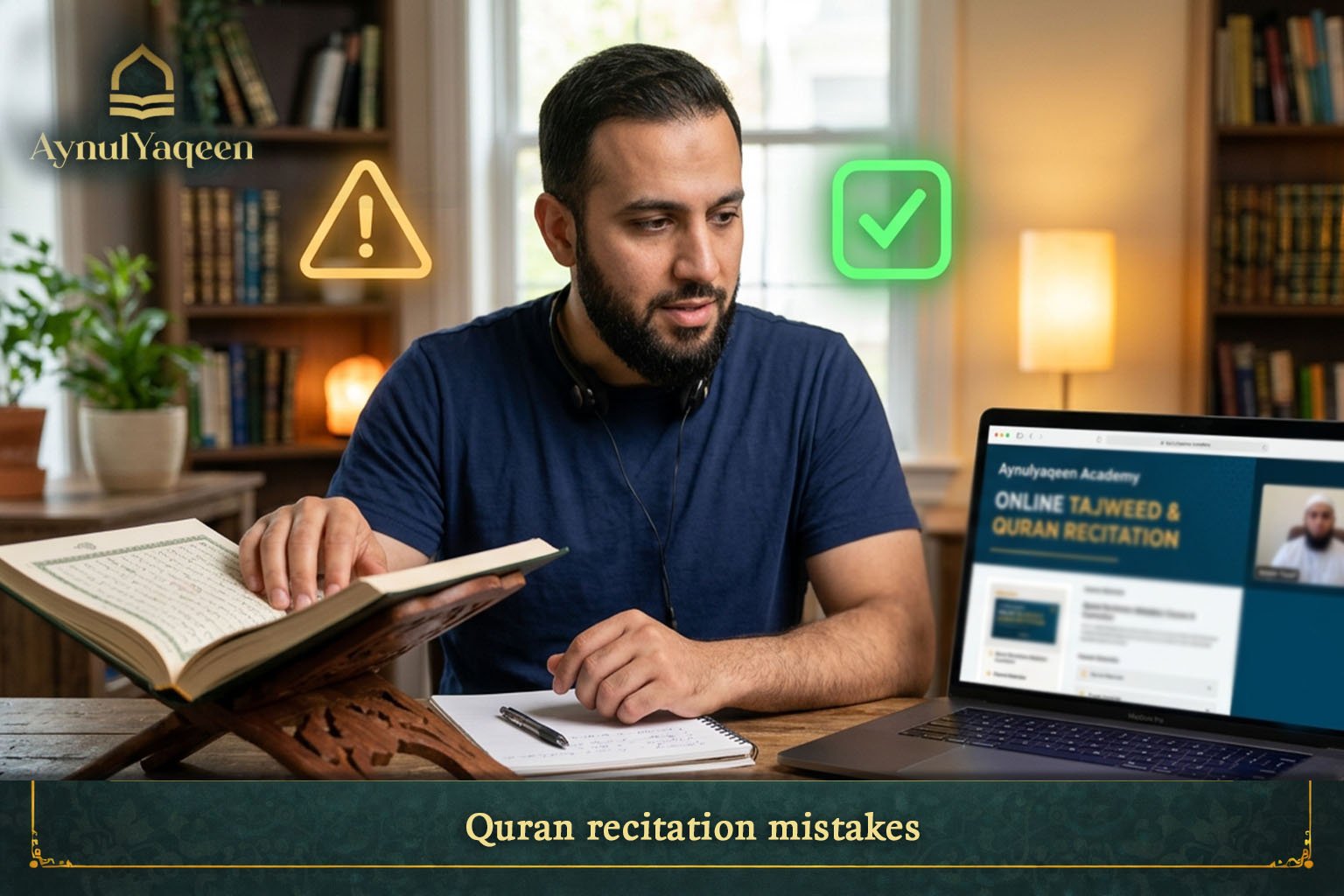
Quran recitation mistakes are among the most common challenges faced by many Muslims who want to recite the Quran correctly and beautifully. Although millions of people read the Quran every day with sincerity and love, some pronunciation and Tajweed errors can remain unnoticed for years without proper correction. Reciting the Quran is not only about reading the words from the Mushaf; it is about preserving the exact pronunciation, rhythm, and rules that were transmitted through generations. A person may have excellent memorization skills and still make repeated mistakes in articulation, elongation, stopping points, or pronunciation of specific Arabic letters. Many readers are surprised when they discover that small habits developed during childhood can affect the accuracy of their recitation. These mistakes are usually not caused by a lack of respect for the Quran, but because many learners did not receive continuous guidance from a qualified teacher who could identify and correct subtle issues. At Aynulyaqeen Quran Academy, students receive structured Quran lessons and expert guidance to identify and correct Quran recitation mistakes. Through personalized feedback, proper Tajweed training, and continuous practice, learners can improve their pronunciation and develop a more accurate and confident recitation style. Understanding these errors is the first step toward improving recitation. When a reader recognizes the areas that need attention, practicing becomes more focused and effective. Why Is Correcting Quran Recitation Mistakes Important? Why Is Correcting Quran Recitation Mistakes Important? The Quran was revealed in the precise Arabic language, and every letter has its own characteristics, pronunciation point, and sound quality. Changing a letter or ignoring a Tajweed rule can sometimes affect the meaning of the words being recited. Islamic scholars have traditionally divided recitation errors into two main categories: Major Errors (Al-Lahn Al-Jali) These are clear mistakes that may change the meaning of a word. They usually happen when a person replaces one Arabic letter with another, changes a vowel, or makes a pronunciation mistake that transforms the original word. For example, Arabic letters such as س (Seen) and ص (Saad) may look similar to non-Arabic speakers, but they are completely different letters with different sounds. Pronouncing one instead of the other can lead to a different meaning. These types of mistakes require immediate attention because they directly affect the accuracy of Quranic words. Minor Errors (Al-Lahn Al-Khafi) These mistakes do not usually change the meaning but affect the beauty and correctness of recitation. Examples include incorrect nasal sounds, inconsistent elongation, or weak application of Tajweed rules. Although they are less severe, correcting them helps a Muslim achieve a more accurate and confident recitation. A balanced learning approach focuses first on correcting major pronunciation issues before moving toward improving advanced Tajweed skills. Learn Online with Aynulyaqeen Quran Academy Choosing the right online Quran academy can make a significant difference in your learning journey. Aynulyaqeen Quran Academy provides structured Quran courses for beginners and advanced learners, focusing on accurate Quran reading, Tajweed, memorisation, and Islamic studies. With qualified teachers, flexible class schedules, and personalised one-on-one lessons, students of all ages can learn at their own pace while building confidence in reciting and understanding the Holy Quran from anywhere in the world. Quran Recitation Mistakes Quran Recitation Mistakes Related to Letter Pronunciation One of the biggest reasons behind incorrect Quran recitation is misunderstanding the correct pronunciation points of Arabic letters, known as Makharij Al-Huroof. Arabic contains sounds that do not exist in many other languages. Because of this, non-Arabic speakers often replace certain letters with sounds that are familiar to them. Confusing Similar Arabic Letters Some Arabic letters may seem similar in sound, but each letter has a unique pronunciation, articulation point, and quality. Learning these differences helps readers avoid mistakes and improve accurate Quran recitation. Mixing Between Seen (س) and Saad (ص) The letter Seen is a light letter with a clear and soft sound, while Saad is a heavy letter pronounced with elevation of the tongue. Many learners pronounce both letters the same way because their native language does not contain a distinction between light and heavy sounds. This mistake can affect words where changing the letter changes the meaning. Practicing these letters separately with attention to tongue position helps develop accuracy. Confusing Haa (ح) and Haa (ه) Arabic has two letters that are often represented by the same English letter “h,” but their pronunciation is completely different. ح (Haa) comes from the middle of the throat. ه (Haa) is a lighter sound produced closer to the mouth. Many beginners pronounce both letters similarly because they rely on transliteration instead of learning the original Arabic sounds. Difficulty With Ayn (ع) The letter Ayn is one of the most challenging Arabic letters for many learners because it has no direct equivalent in English and several other languages. It originates from the middle of the throat and requires specific muscle control. Some readers replace it with a simple vowel sound, which removes the unique identity of the letter. Consistent practice with a qualified instructor is usually the fastest way to improve this pronunciation. Common quran recitation mistakes in Makharij and Tajweed Application Correct pronunciation is not achieved only by memorizing the alphabet. A reader must understand where every sound begins and how the mouth, tongue, and throat work together. For anyone interested in how to learn quran, understanding Makharij and Tajweed is an essential step toward developing accurate and confident recitation. Mispronouncing Qaf (ق) The letter Qaf is produced from the deepest part of the tongue near the throat. Many learners pronounce it closer to Kaf (ك) because both sounds feel similar. However, they are different letters with different characteristics. A useful practice method is repeating the letter alone before reading words containing Qaf. This helps train the speech muscles and creates a stronger connection between the correct sound and its pronunciation point. This approach is especially helpful for students who want to understand how to read the quran for beginners and build correct habits from the start. Difficulty With Dhad (ض) Dhad is often described
Quran Memorization Plan for Kids is one of the most valuable steps parents can take to build a lifelong connection between their children and the words of Allah. Helping a child memorize the Quran is not only about completing a certain number of pages or chapters; it is about creating a positive relationship with the Holy Quran through patience, consistency, understanding, and love. At Aynulyaqeen Quran Academy, experienced Quran teachers help children follow a structured memorization plan that combines proper Tajweed, regular revision, and personalized guidance, making the learning journey both enjoyable and effective. Many parents search for an effective way to help their children memorize the Quran because they want a method that fits their child’s age, learning ability, and daily routine. Children have different learning styles, and a successful memorization journey requires a balanced approach that combines repetition, encouragement, proper guidance, and a supportive environment. Understanding the Importance of a Quran Memorization Plan for Kids A structured quran memorization plan for kids gives children a clear path and helps parents organize their efforts. Without a proper plan, families may struggle with consistency, revision, and maintaining the child’s motivation. The purpose of a Quran memorization plan is not simply to make children memorize quickly. The real goal is to help them memorize correctly, maintain what they have learned, improve their pronunciation, and understand the meaning of the verses.A well-designed plan provides several important benefits: It creates a consistent daily connection with the Quran. It helps children develop discipline and focus. It reduces the feeling that memorization is difficult. It allows parents to track progress effectively. It encourages children through achievable goals. Children usually respond better when they know what is expected from them. A simple schedule that includes specific memorization and revision times can make the process easier and more enjoyable. For example, a child may spend a short period every day learning new verses and another period reviewing previous memorization. This balance prevents forgetting and strengthens long-term retention. Learn Online with Aynulyaqeen Quran Academy Choosing the right online Quran academy can make a significant difference in your learning journey. Aynulyaqeen Quran Academy provides structured Quran courses for beginners and advanced learners, focusing on accurate Quran reading, Tajweed, memorisation, and Islamic studies. With qualified teachers, flexible class schedules, and personalised one-on-one lessons, students of all ages can learn at their own pace while building confidence in reciting and understanding the Holy Quran from anywhere in the world. Creating the Right Environment for Quran Memorization The environment around a child has a significant impact on learning. A peaceful and organized place helps children concentrate and associate Quran time with calmness and importance. Parents can create a special Quran corner at home where the child keeps their Mushaf, notebook, and learning materials. This small step can make the child feel that online Quran memorization classes are a special and respected activity. During memorization sessions, distractions should be minimized. Turning off unnecessary devices, reducing noise, and choosing a comfortable place can improve the child’s ability to focus. However, creating the right environment is not only about the physical space. Emotional support is equally important. Children need encouragement, kindness, and patience from the people around them. A child who feels supported will usually be more willing to repeat verses, correct mistakes, and continue learning even when some parts become challenging. Choosing the Best Time for Quran Memorization Timing is one of the important factors that can affect a child’s ability to memorize. Every child has different energy levels, but many children perform well during quiet times when their minds are fresh. Early morning after Fajr prayer is often considered a productive time because the environment is usually peaceful and the mind is less distracted. Some families may also prefer evening sessions after school activities are finished. The most important thing is consistency. A short daily session is usually more effective than occasional long sessions. Parents should avoid scheduling memorization when the child is tired, hungry, or overwhelmed. Learning becomes much easier when the child feels comfortable and ready. A practical daily routine may include: Reviewing previously memorized verses. Learning a small number of new verses. Listening to correct recitation. Practicing pronunciation. Ending the session with positive encouragement. This approach helps children build confidence and prevents Quran learning from becoming a stressful experience. Quran memorization plan for kids based on Repetition and Listening Repetition is one of the strongest tools for helping children remember Quran verses. Young learners often memorize better when they hear the same verses multiple times before attempting to recite them independently. Listening allows children to become familiar with the pronunciation, rhythm, and structure of the verses. Parents can encourage children to listen to a clear recitation regularly.A useful method is the listen-read-repeat approach: Listen: The child listens carefully to the verse several times from a skilled reciter. This helps them recognize the correct pronunciation and rhythm. Read: The child follows the verse from the Mushaf while listening. This connects visual memory with sound memory. Repeat: The child repeats the verse aloud several times until they can recite it confidently. Repeating verses aloud is especially helpful because children use both hearing and speaking skills during the learning process. Parents can also encourage passive listening during daily activities. Playing Quran recitation while traveling, relaxing, or before sleeping can help children become familiar with the verses naturally. Starting with Short Surahs and Achievable Goals Beginning with short surahs is one of the best ways to encourage young children. Short chapters allow children to experience success quickly, which increases their confidence and motivation. When a child completes a short surah, they feel proud of their achievement and become excited to memorize more. Parents should avoid comparing their child’s progress to that of other children. Every child has a unique learning speed, and the most important factor is steady improvement. Small goals can make the journey easier. Instead of focusing on memorizing a large portion of the Quran, parents can create smaller targets such as: Memorizing a few verses each week. Completing one short surah. Improving one aspect of Tajweed. Increasing
How to read the quran for beginners is a meaningful journey that helps Muslims build a stronger connection with the words of Allah. Whether you are a child, an adult, or a non-Arabic speaker, learning to read the Quran becomes much easier when you follow a clear and structured approach. The process begins with recognizing Arabic letters, understanding their pronunciation, and gradually learning basic Quran reading rules. As students progress, they can study Noorani Qaida, apply simple Tajweed rules, and practice short Surahs with confidence. Consistent daily practice and guidance from qualified teachers are essential for steady improvement. Aynulyaqeen Quran Academy provides structured online Quran classes that support beginners through every stage of learning. This guide explains the essential steps of how to read the quran for beginners, helping learners build confidence and read the Quran correctly. Why Learning the Quran Matters for Every Beginner? The Quran is the final revelation from Allah and serves as guidance for every aspect of life. Reading it correctly is not simply an educational goal; it is an act of worship that strengthens faith and deepens one’s relationship with the Creator. Many beginners believe that learning Quranic Arabic is difficult, but every fluent reader once started by recognizing individual letters. Progress comes through patience rather than speed. Even learning a few verses correctly each day is more valuable than rushing through many pages without proper pronunciation. Reading the Quran regularly also nurtures discipline, inner peace, and spiritual awareness. As learners become more familiar with the language of the Quran, they gradually develop greater confidence in both recitation and understanding. Learn Online with Aynulyaqeen Quran Academy Choosing the right online Quran academy can make a significant difference in your learning journey. Aynulyaqeen Quran Academy provides structured Quran courses for beginners and advanced learners, focusing on accurate Quran reading, Tajweed, memorization, and Islamic studies. With qualified teachers, flexible class schedules, and personalized one-on-one lessons, students of all ages can learn at their own pace while building confidence in reciting and understanding the Holy Quran from anywhere in the world. How to Read the Quran for Beginners: Step by Step? Anyone can learn the Quran successfully when following a gradual learning method. Instead of trying to master everything at once, beginners should focus on one stage before moving to the next. The journey usually begins with recognizing the Arabic alphabet and understanding the unique sound of every letter. Once students become comfortable identifying letters, they move to vowel marks, letter connections, and simple words. After mastering these basics, learners study Noorani Qaida, one of the most trusted methods for developing Quran reading skills. This stage teaches students how letters combine, how words are formed, and how verses should be read naturally. Finally, students begin reading short Surahs while applying simple Tajweed rules before gradually progressing to longer chapters. This step-by-step approach makes how to read the quran for beginners practical and achievable for learners of every age. Building a Strong Foundation with Arabic Letters Before reading complete Quranic verses, beginners must become comfortable with the Arabic alphabet. The first step in how to read the quran for beginners is understanding Arabic letters, their sounds, and the way they appear in different positions within words. Unlike many other languages, Arabic letters change their shape depending on their position within a word. Understanding these forms is an essential part of Quran reading and helps students recognize words more easily during recitation. Every Arabic letter also has its own articulation point. Some letters are pronounced from the throat, while others depend on the tongue, lips, or nasal passage. Learning these differences from the beginning prevents pronunciation mistakes later and makes learning how to read the quran for beginners more effective. Students should practice reading letters individually before combining them into syllables and complete words. Listening carefully to qualified reciters while repeating after them helps reinforce accurate pronunciation. Daily repetition is far more effective than studying for long hours once a week. Even fifteen minutes of focused practice can produce steady improvement and support progress in how to read the quran for beginners. Understanding Noorani Qaida Before Reading the Quran One of the most effective resources for beginners is Noorani Qaida. It has been used for generations to teach students how to read Quranic Arabic through carefully organized lessons. For students following how to read the quran for beginners, Noorani Qaida provides a gradual learning system that starts with simple concepts and prepares learners for Quran recitation. Rather than presenting difficult material immediately, Noorani Qaida introduces reading gradually. Students first learn letters, then vowel signs, followed by connected letters, short words, and eventually complete Quranic verses. This gradual progression reduces confusion and allows learners to build confidence with every lesson. It also makes the process of how to read the quran for beginners easier by creating a clear learning path. Skipping Noorani Qaida often causes reading difficulties later because students may struggle with pronunciation, fluency, or recognizing connected letters. Completing it properly creates a strong foundation that makes Quran reading much smoother. Many qualified teachers recommend spending enough time mastering Noorani Qaida before moving into regular Quran recitation because it is an important stage in learning how to read the quran for beginners. Why is Tajweed Essential from the Beginning? Many beginners think Tajweed should be learned only after becoming fluent in reading, but introducing basic Tajweed rules early helps students avoid developing incorrect habits during how to read the quran for beginners. Tajweed teaches readers how every letter should be pronounced, when sounds should be lengthened, and how different letters interact during recitation. These rules preserve the original pronunciation of the Quran exactly as it was transmitted. Learning Tajweed gradually also makes recitation more beautiful and meaningful. Instead of reading mechanically, students develop a natural rhythm while maintaining accuracy. For anyone starting to learn how to read the quran for beginners, learning Tajweed step by step provides the confidence needed to read verses correctly and improve recitation quality

Interpretation of the quran for kids helps young learners understand the meanings of Allah’s words in a simple, engaging, and age-appropriate way. Rather than focusing solely on reading or memorization, children discover the lessons, values, and guidance in the Quran and learn to apply them in their daily lives. At Aynulyaqeen Quran Academy, interactive lessons help children build faith, strengthen good character, and develop a lifelong love for the Quran through meaningful understanding. Why Do Children Need to Understand the Quran’s Meaning? Childhood is an important stage for developing beliefs, values, and personal character. Introducing children to the meanings of the Quran helps them build a strong foundation of faith from an early age. While memorizing the Quran is a great achievement, understanding its message makes the learning experience much more meaningful. Through proper Quranic explanation, children can learn essential values such as: The importance of honesty and trustworthiness. Respecting parents, teachers, and others. Developing patience during difficult situations. Showing kindness and compassion. Understanding Allah’s mercy, wisdom, and guidance. A child who understands the Quran does not see it as just a religious lesson. Instead, they begin to recognize it as a guide that helps them make better choices at home, school, and in their relationships. Learn Online with Aynulyaqeen Quran Academy Choosing the right online Quran academy can make a significant difference in your learning journey. Aynulyaqeen Quran Academy provides structured Quran courses for beginners and advanced learners, focusing on accurate Quran reading, Tajweed, memorization, and Islamic studies. With qualified teachers, flexible class schedules, and personalized one-on-one lessons, students of all ages can learn at their own pace while building confidence in reciting and understanding the Holy Quran from anywhere in the world. Interpretation of the quran for Kids | Making Quran Learning Easy and Engaging Explaining the Quran to children requires a special teaching approach. Young learners need simple language, relatable examples, and engaging stories that help them understand the main message of each verse. At Aynulyaqeen Quran Academy, we believe that the best way to foster a child’s love for the Quran is through meaningful, interactive learning. The focus is not only on explaining verses but also on helping children connect Quranic teachings with real-life situations. For example, when teaching children about patience, the goal is not only to explain the definition of patience. Instead, children learn how they can practice patience when they face challenges, wait for something they want, deal with difficulties at school, or handle disagreements with friends. This approach allows children to feel that the Quran speaks directly to them and provides guidance that they can use every day. What Does Quran Interpretation Mean for Children? Quran interpretation is the process of explaining the meanings of Quranic verses, understanding their context, and discovering the lessons and guidance they contain. For children, interpretation should be presented in a simple and age-appropriate way without overwhelming them with complex details. The purpose of teaching Quran meanings to children is to help them answer important questions such as: What is this verse teaching us? Why did Allah mention this lesson? How can I apply this guidance in my life? What can I learn from the stories of the prophets? When children receive clear answers to these questions, Quran learning becomes an enjoyable experience that encourages reflection and curiosity. The Difference Between Quran Translation and Understanding Reading a translation of the Quran can help children know the general meaning of words, but translation alone may not explain the deeper messages behind the verses. There is a difference between knowing the meaning of words and understanding the purpose, wisdom, and lessons within the Quran. Interpretation helps children discover: The background and context of certain verses. The moral lessons found in Quranic stories. The connection between Quranic guidance and daily life. The wisdom behind Islamic teachings. This deeper understanding allows children to develop a balanced and meaningful relationship with the Quran. Benefits of Learning Quran Interpretation at a Young Age Teaching children Quran interpretation from an early age provides many benefits. It does not only improve their religious knowledge but also supports their emotional, moral, and spiritual growth. Building a Strong Relationship with Allah When children understand the verses they read, they begin to feel closer to Allah. They learn that the Quran is not only a book to memorize but a message filled with mercy, wisdom, and guidance. Understanding Allah’s words helps children develop love and trust in their Creator while learning that Islam provides support and direction in different situations. Developing Good Character The Quran contains many teachings that encourage excellent manners and positive behavior. Through child-friendly explanations, children learn the importance of being respectful, truthful, caring, and responsible. These lessons help transform Quranic teachings into daily actions, allowing children to practice Islamic values naturally. Improving Quran Memorization Understanding the meaning behind verses can make memorization easier and more effective. When children know the story, message, or lesson connected to a verse, they are more likely to remember it and develop a stronger connection with what they memorize. Encouraging Questions and Reflection Children are naturally curious and love discovering new ideas. A learning environment that encourages questions helps them think deeply and understand the wisdom behind Quranic guidance. Through discussion and reflection, children become active learners instead of simply receiving information. How does Quran interpretation support a Child’s Islamic Identity? Children today grow up surrounded by different ideas, cultures, and influences. Interpretation of the quran for kids helps children understand the Quran with confidence while strengthening their Islamic identity. Through interpretation of the quran for kids, they develop a clear sense of faith and understand the values that guide Muslims. When children learn the meanings behind Islamic teachings through interpretation of the quran for kids, they can explain their beliefs with confidence and understand why Muslims follow certain values and practices. The goal of interpretation of the quran for kids is not only to provide information but also to nurture children who feel connected to their faith and appreciate

How to memorize the Noble Quran easily is a meaningful journey that brings spiritual peace, strengthens faith, and helps Muslims build a closer relationship with Allah. Although many people believe that memorizing the Quran is difficult, it can become much easier with the right methods, consistency, sincere intention, and proper guidance. At Aynulyaqeen Quran Academy, learners receive personalized support and structured memorization programs that make this blessed journey more organized and effective. Every person has the ability to memorize the Quran, regardless of age, if they follow a clear plan and remain patient throughout the process. Effective memorization is not only about repeating verses many times but also about understanding their meanings, reviewing them regularly, practicing proper Tajweed, and creating a daily routine that fits one’s lifestyle. With the expert guidance of Aynulyaqeen Quran Academy, students can develop strong memorization habits, improve long-term retention, and confidently progress toward memorizing the Noble Quran. Easy Ways to Memorize the Noble Quran If you are searching for how to memorize the Noble Quran easily, success begins with consistency, sincere intention, and the right guidance. At Aynulyaqeen Quran Academy, students follow effective memorization methods that make learning the Quran easier and more organized. To simplify your memorization journey: Begin with a sincere intention. Set a realistic daily memorization goal. Memorize small portions consistently. Repeat and review verses every day. Understand the meanings of the verses. Listen to skilled Quran reciters. Apply Tajweed while memorizing. Track your progress and stay patient. Learning how to memorize the Noble Quran easily is not about exceptional memory but about regular practice, continuous revision, and perseverance. With expert guidance from Aynulyaqeen Quran Academy, students can build lasting memorization habits and strengthen their connection with the Quran. Learn Online with Aynulyaqeen Quran Academy Choosing the right online Quran academy can make a significant difference in your learning journey. Aynulyaqeen Quran Academy provides structured Quran courses for beginners and advanced learners, focusing on accurate Quran reading, Tajweed, memorization, and Islamic studies. With qualified teachers, flexible class schedules, and personalized one-on-one lessons, students of all ages can learn at their own pace while building confidence in reciting and understanding the Holy Quran from anywhere in the world. The Importance of a Structured Memorization Method A well-organized memorization method helps improve long-term retention and makes learning the Quran more effective. The combination of regular repetition and continuous revision strengthens memory and reduces the likelihood of forgetting previously memorized verses. Although there are many successful memorization techniques, each learner should discover the approach that best matches their learning style, schedule, and abilities. The ultimate goal is to establish a consistent routine that keeps the Quran firmly rooted in the heart. Step-by-Step Quran Memorization Technique One of the most effective answers to how to memorize the Noble Quran easily is to follow a structured memorization technique based on repetition and gradual progress. This method strengthens memory, improves accuracy, and makes long-term retention much easier. At Aynulyaqeen Quran Academy, students are encouraged to follow this proven step-by-step approach under the guidance of qualified Quran teachers, helping them memorize with confidence and consistency. Follow these simple steps: Select a small group of verses instead of trying to memorize a large section at once. Start with the first verse and recite it 20 times until you can repeat it confidently without looking. Move to the second verse and repeat it 20 times, then continue the same process with the third and fourth verses. After memorizing the first four verses individually, recite all four verses together 20 times to strengthen the connection between them. Continue with the next group of verses by memorizing the fifth, sixth, seventh, and eighth verses using the same repetition method. Once these verses are memorized, recite verses five through eight together 20 times to improve fluency. Finally, recite verses one through eight continuously 20 times to reinforce the entire passage and ensure a smooth transition between the verses. Do not move to the next section until you can recite the current verses confidently and without hesitation. This step-by-step approach is an excellent strategy for anyone looking for how to memorize the Noble Quran because it combines repetition, consistency, and gradual learning. By practicing this technique every day and receiving structured guidance from Aynulyaqeen Quran Academy, learners can strengthen their memorization, improve long-term retention, and build lasting confidence throughout their Quran memorization journey. Reviewing Before Memorizing a New Page A consistent review routine is one of the most effective strategies for anyone searching for how to memorize the Noble Quran easily. Revising previously memorized verses before starting a new page strengthens long-term retention and reduces the chances of forgetting. Follow these simple review steps: Before memorizing a new page, review the page you memorized the previous day at home. Recite the entire page from beginning to end 20 times to reinforce your memory and improve fluency. Focus on correcting any mistakes during the review before moving to new verses. Once you can recite the previous page confidently, begin memorizing the new page using the same repetition-based method. Memorize the new verses gradually, giving each verse enough repetition before connecting it with the next. Continue reviewing older pages regularly to keep all memorized portions strong and accurate. Follow the same daily routine without skipping revision, as consistency is the key to lasting memorization. Learning how to memorize quran at home, the Noble Quran is not only about memorizing new verses but also about protecting what has already been memorized. By combining daily revision, repetition, patience, and a structured memorization plan, learners can strengthen their memory, improve accuracy, and make steady progress toward completing the Noble Quran while preserving its verses for a lifetime. Create a Structured Quran Memorization Plan A well-structured memorization plan makes learning the Noble Quran easier and more organized. Instead of memorizing randomly, learners can follow a clear schedule that balances new memorization with regular revision, helping them stay consistent and retain what they have learned. A successful Quran memorization plan should
How to learn Quran is a journey that begins with sincere intention, consistent practice, and the right guidance. Whether you are a complete beginner or returning to Quran study after many years, following a structured learning path makes the process easier and more rewarding. From mastering the Arabic alphabet to applying Tajweed rules and building confidence in recitation, every step brings you closer to understanding the words of Allah. With the support of qualified teachers and well-designed courses at Aynulyaqeen Quran Academy, learners of all ages can develop accurate Quran reading skills at their own pace while strengthening their spiritual connection with the Holy Quran. How to Learn the Quran for Beginners? Learning the Quran is one of the most meaningful journeys a Muslim can begin. It is not simply about reading Arabic words correctly; it is about building a lifelong relationship with the words of Allah through understanding, consistency, and sincere effort. Many people, whether children, teenagers, or adults, wonder where to start and how to make steady progress without feeling overwhelmed. The good news is that learning the Quran has become easier than ever before. Modern teaching methods, qualified instructors, and online learning opportunities have made Quran education accessible to students from every part of the world. With the right plan, regular practice, and guidance from experienced teachers, anyone can develop the confidence to read, recite, memorize, and understand the Quran step by step. This guide explains everything beginners need to know, from preparing for the first lesson to developing daily habits that lead to lasting improvement. Whether your goal is correct recitation, memorization, or strengthening your connection with the Quran, every step you take brings you closer to achieving it. Learn Online with Aynulyaqeen Quran Academy Choosing the right online Quran academy can make a significant difference in your learning journey. Aynulyaqeen Quran Academy provides structured Quran courses for beginners and advanced learners, focusing on accurate Quran reading, Tajweed, memorization, and Islamic studies. With qualified teachers, flexible class schedules, and personalized one-on-one lessons, students of all ages can learn at their own pace while building confidence in reciting and understanding the Holy Quran from anywhere in the world. Every Muslim benefits from learning the Quran regardless of age or background. While many people begin during childhood, countless adults successfully start later in life and make remarkable progress. What matters most is consistency rather than speed. The Quran offers guidance in every aspect of life. Regular recitation strengthens faith, increases inner peace, and encourages good character. Beyond the spiritual rewards, studying the Quran also improves concentration, discipline, and patience. Beginners often worry about making mistakes. However, every learner starts from the same point. Small improvements made every day eventually become lasting skills. Instead of comparing yourself with experienced reciters, focus on your own progress and celebrate each new lesson you master. Preparing Before You Start Learning A successful learning journey begins with proper preparation. Setting realistic expectations helps maintain motivation throughout the process. Choose a quiet environment where you can study without distractions. Keep your Mushaf, notebook, and any learning materials nearby so that each study session remains organized. Having a regular schedule is equally important because learning becomes much easier when it turns into a daily habit. Most beginners find that studying for twenty to thirty minutes every day produces better results than studying for several hours once a week. Frequent revision allows information to remain fresh while gradually improving pronunciation and fluency. Equally important is making a sincere intention. Learning the Quran is an act of worship, and beginning with the intention of seeking Allah’s pleasure gives every lesson greater meaning. Understanding the Arabic Alphabet Before reading complete verses, learners should become familiar with the Arabic alphabet. Every letter has its own sound, shape, and pronunciation point. Unlike many languages, Arabic letters change their appearance depending on their position within a word. At first this may seem challenging, but repeated exposure quickly makes these patterns familiar. Students should focus on recognizing each letter individually before learning how letters connect. Once recognition becomes automatic, reading simple words becomes much easier. Listening carefully to qualified teachers while repeating each letter helps establish correct pronunciation from the beginning, reducing mistakes that become difficult to correct later. Learning the Correct Pronunciation One of the most important foundations of Quran recitation is learning how each Arabic letter is pronounced correctly. Some Arabic sounds do not exist in English or other languages. Because of this, learners should pay close attention to the articulation points of every letter instead of relying on similar sounds from their native language. Practicing slowly allows students to distinguish between letters that appear similar but are pronounced differently. Recording your own recitation and comparing it with your teacher’s recitation is another effective way to identify areas that need improvement. Developing accurate pronunciation early creates a strong foundation for advanced Quran study Build Strong Quran Reading Skills Developing strong reading skills is an essential step in how to learn quran effectively. After recognizing Arabic letters and mastering their sounds, learners begin combining them into words, phrases, and complete verses. This gradual process builds confidence and lays the foundation for accurate Quran recitation. To improve reading skills successfully, focus on the following practices: Read slowly and carefully instead of rushing through verses. Accuracy is always more important than speed, especially for beginners. Revise previous lessons regularly before moving on to new material. Frequent review helps transform newly learned skills into long-term habits. Practice reading aloud every day. This strengthens pronunciation, improves fluency, and helps you recognize pauses and the natural rhythm of Quran recitation. Listen to qualified Quran reciters and compare your recitation with theirs to identify areas for improvement. Set realistic daily goals and remain consistent. Small, regular study sessions produce better long-term results than occasional lengthy lessons. Anyone wondering how to learn the Quran for beginners should remember that fluency develops with patience and consistent practice. Every correctly pronounced word increases confidence and prepares learners for more

How to get an ijazah is a common question among Muslims who want to master Quran recitation, improve their Tajweed, or become qualified to teach the Quran with confidence. An Ijazah is a respected authorization that confirms a student has completed their studies under a qualified teacher with an authentic chain of transmission (Sanad). Achieving this milestone requires sincere intention, consistent practice, and regular guidance from experienced instructors. Aynulyaqeen Quran Academy supports students through structured one-on-one online classes that focus on accurate recitation, Tajweed mastery, and thorough preparation for the final assessment. In this guide, you will learn quran online with Tajweed while exploring the essential steps, key requirements, and practical tips to help you earn an authentic Quran Ijazah successfully. What Is an Ijazah? An Ijazah is an official authorization granted by a qualified Islamic teacher to a student who has successfully mastered a specific area of Islamic knowledge. The word “Ijazah” literally means permission or authorization. Unlike ordinary certificates that confirm course completion, an Ijazah verifies that the student has reached a level of proficiency that allows them to accurately transmit the knowledge they have learned. It also confirms that the teacher personally assessed the student’s abilities before granting permission to teach or recite publicly. For centuries, this system has preserved the authenticity of Islamic sciences by ensuring that every generation learns directly from qualified scholars with an established chain of transmission (Sanad). Although Ijazahs can be awarded in various Islamic disciplines, they are most commonly granted in: Quran memorization (Hifz) Quran recitation Tajweed Qira’at Hadith Selected Islamic sciences Learn Online with Aynulyaqeen Quran Academy Pursuing an Ijazah has become more accessible than ever through online learning. Aynulyaqeen Quran Academy offers live one-on-one online Quran classes by qualified instructors who provide personalized guidance in Quran recitation, Tajweed, and memorization. Students receive regular feedback, structured learning plans, and continuous assessments to help them progress with confidence toward earning an authentic Ijazah. With flexible scheduling and interactive online lessons, Aynulyaqeen Quran Academy enables learners of all ages and levels to study from anywhere while maintaining the high standards of traditional Quran education. Why Is an Ijazah Important? Many students wonder whether obtaining an Ijazah is necessary. While it is not obligatory for every Muslim, it carries significant value for anyone wishing to teach or preserve authentic Quranic recitation. Some of the most important benefits include: Preserving Authentic Quran Recitation Every Ijazah connects the student to an unbroken chain of qualified teachers. This system has protected the correct recitation of the Quran for more than fourteen centuries. Building Confidence Students who complete the assessment process gain confidence in their recitation because their teacher has carefully reviewed every detail of their pronunciation and Tajweed. Permission to Teach One of the primary purposes of an Ijazah is granting permission to transmit knowledge responsibly. Teachers who hold authentic Ijazahs provide reassurance that they learned according to recognized scholarly standards. Continuous Spiritual Growth Preparing for an Ijazah is not simply an academic achievement. The journey strengthens patience, discipline, sincerity, and a lifelong relationship with the Quran. Types of Ijazah Before beginning your studies, it’s helpful to understand that there are different categories of Ijazah. Each serves a different educational purpose. Quran Memorization Ijazah This certification is awarded to students who memorize the entire Quran at home while maintaining accurate recitation and strong retention. During the assessment, students recite different portions chosen by the teacher to demonstrate consistency. Quran Recitation Ijazah Some students do not pursue full memorization but instead focus on perfect recitation while reading directly from the Mushaf. This type of Ijazah emphasizes pronunciation, fluency, and proper application of Tajweed. Tajweed Ijazah A Tajweed Ijazah confirms mastery of the rules governing Quranic pronunciation. Students must demonstrate both theoretical understanding and practical application throughout their recitation. Qira’at Ijazah Advanced students may continue their studies by learning one or more of the recognized methods of Quranic recitation. These programs require extensive preparation and are usually completed after obtaining a standard Quran Ijazah. Hadith Ijazah An Ijazah may also be granted in Hadith studies after students complete specialized learning under qualified scholars and demonstrate competence in the science of Hadith transmission. Who Can Apply for an Ijazah? Many people mistakenly believe that only scholars or full-time students can earn an Ijazah. In reality, students from different backgrounds may pursue this goal if they are willing to dedicate the necessary time and effort.An Ijazah program may be suitable for: Adults seeking more in-depth Quranic knowledge. Huffaz who wish to verify their memorization. Imams and Quran teachers. University students. Muslim parents who want to teach their children correctly. Sisters studying with qualified female instructors. International students learning through online programs. Age alone is not the determining factor. Commitment, consistency, and sincere effort matter far more than when someone begins their journey. Choosing the Right Teacher Perhaps the most important decision you will make is selecting the teacher who will supervise your studies.A qualified teacher should: Hold an authentic Ijazah with a recognized Sanad. Have experience teaching students from different levels. Provide regular correction and constructive feedback. Assess students carefully before granting certification. Encourage both academic excellence and good Islamic character. Learning under a qualified teacher ensures that mistakes are corrected early and that students build a strong foundation before moving to advanced levels. Students should also look for structured learning environments that combine personalized instruction with consistent progress tracking. This approach helps maintain motivation throughout the often lengthy process of preparing for an Ijazah. How to Get an Ijazah in the Quran For many students, understanding how to get an ijazah begins with learning the Quran correctly under the supervision of an authorized teacher. While every teacher may have slightly different expectations, the overall process follows a well-established tradition that has preserved Quranic recitation for generations. The journey requires patience, consistency, and sincere intention. Rather than rushing toward certification, students should focus on elevating their relationship with the Quran every day. 1. Find a Qualified Teacher The first and

A female Quran teacher plays a vital role in helping Muslim women, sisters, and children learn the Quran in a comfortable, respectful, and supportive environment. Whether your goal is to improve Quran recitation, master Tajweed, or begin your memorization journey, learning from a qualified female instructor provides personalized guidance that matches your pace and learning needs. At Aynulyaqeen Quran Academy, students benefit from experienced female teachers, flexible one-on-one online classes, and a structured curriculum designed to make Quran learning accessible from anywhere in the world. In this guide, you’ll discover the benefits of studying with a female Quran teacher, how to choose the right instructor, and what to expect from professional online Quran classes. Why do women prefer female teachers? Every learner has different needs, especially when it comes to religious education. Many women feel more relaxed discussing their learning challenges, asking questions, and practicing Quran recitation in front of another woman. This level of comfort often creates a more productive learning experience. Studying with a qualified female instructor also allows students to focus entirely on their lessons without unnecessary distractions. The learning environment becomes respectful, welcoming, and aligned with Islamic values. Some of the main reasons women choose female instructors include: A comfortable and private learning atmosphere. Greater confidence when asking questions. Individual attention throughout each lesson. Teaching that respects Islamic etiquette. Flexible lesson schedules that fit family and work responsibilities. These advantages help students remain consistent, which is one of the most important factors in successful Quran learning. Online Quran Academy Aynulyaqeen Online Quran Academy Aynulyaqeen is dedicated to providing high-quality online Quran education for students of all ages and levels. Through personalized one-on-one classes, experienced Quran teachers, and flexible scheduling, the academy helps learners improve Quran recitation, master Tajweed, memorize the Quran, and strengthen their understanding of Islamic teachings. With an interactive learning environment and a structured curriculum, Aynulyaqeen Quran Academy enables students worldwide to study the Holy Quran confidently from the comfort of their homes while progressing at a pace that suits their individual goals. Female Quran Teacher at Aynulyaqeen Quran Academy Online Quran education has transformed the way students access Islamic knowledge. Instead of traveling to a local center, learners can attend classes from anywhere while maintaining the same level of interaction with their instructor. Modern online classrooms include live video sessions, screen sharing, digital whiteboards, lesson notes, and regular assessments. These tools make lessons engaging and effective for beginners as well as advanced students. Some of the most important benefits include: Flexible Scheduling Students can select lesson times that fit their daily routines. This flexibility is especially valuable for working women, university students, and mothers with family responsibilities. Learning from Home Studying in a familiar environment helps learners stay comfortable, build confidence, improve concentration, reduce distractions, and enjoy more productive Quran lessons. Individual Learning Pace Every student progresses differently. Online classes allow instructors to adjust lesson speed according to each learner’s abilities instead of following a fixed classroom pace. Global Access Students living in countries where qualified Quran teachers are difficult to find can easily connect with experienced instructors through online platforms. What Makes a Qualified Quran Teacher? Choosing the right instructor has a significant impact on your progress. A good teacher does much more than correct pronunciation; they help students develop confidence, consistency, and a deeper appreciation for the Quran.An excellent Quran teacher should possess: Strong Islamic Education Teachers should have formal Quranic education, sound knowledge of Tajweed, and a solid understanding of Quran recitation rules. Teaching Experience Experience enables teachers to explain difficult concepts in simple ways while adapting lessons for children, adults, and beginners. Patience Learning the Quran requires repetition and continuous practice. Patient instructors encourage students without making them feel discouraged by mistakes. Effective Communication Clear explanations, personalized guidance, and constructive feedback help students understand lessons more effectively, correct mistakes confidently, improve Quran recitation, and enjoy a rewarding learning experience. Organized Lesson Planning Structured lessons help students achieve measurable progress instead of studying randomly. When these qualities come together, students remain motivated and continue improving steadily. Personalized Learning Produces Better Results No two learners have identical goals. Some students want to master Quran reading, while others hope to memorize the Quran or improve Tajweed. A personalized learning plan helps students focus on exactly what they need without wasting time on unnecessary material. A typical customized study plan may include: Arabic alphabet review. Correct pronunciation of every letter. Daily Tajweed exercises. quran recitation with tajweed practice. Memorization targets. Revision sessions. Progress evaluations. Learning becomes more efficient because every lesson builds upon previous achievements. Students also receive continuous feedback, allowing them to correct mistakes before they become long-term habits. Quran Recitation with Proper Tajweed Reading the Quran correctly is one of the primary goals for every Muslim. Tajweed protects the pronunciation of Quranic words and preserves the beauty of Allah’s revelation. A skilled female quran teacher helps students recognize common pronunciation mistakes while teaching the proper articulation points of Arabic letters. Lessons generally begin with individual sounds before progressing toward words, verses, and complete Surahs. As students improve, they also learn: Rules of Noon Sakinah. Rules of Meem Sakinah. Ghunnah. Madd. Qalqalah. Stopping and starting correctly during recitation. Quran Memorization Step by Step Memorizing the Quran is a beautiful goal that requires commitment, organization, and regular revision. Successful memorization programs focus on quality rather than speed. Students usually memorize small portions before reviewing them repeatedly to strengthen retention. A balanced memorization routine often includes: New memorization. Daily revision. Weekly revision. Listening exercises. Pronunciation correction. Recitation from memory. This gradual approach helps students build long-term confidence while maintaining accuracy. Many learners discover that consistent daily practice—even for a short period—is more effective than occasional long study sessions. Online Quran Classes for Beginners Starting your Quran journey can feel overwhelming, especially if you have little or no background in reading Arabic. A well-structured beginner program removes that uncertainty by introducing each concept gradually. Students first become familiar with the Arabic alphabet, then learn

Egyptian Quran teacher at Aynulyaqeen Quran Academy provides a structured, effective way to learn Quran recitation, improve pronunciation, and understand Tajweed rules from the very beginning, in a simple, guided manner. Learning with a qualified teacher helps students build confidence step by step, starting from basic reading skills and gradually progressing to fluent and accurate recitation. The academy focuses on personalized learning, where each student receives attention based on their level and goals. With consistent practice, clear instruction, and continuous correction, students develop strong reading habits and a deeper connection with the Quran, making the learning journey more effective and meaningful over time. What Makes Egyptian Quran Teachers Unique? The high demand for Egyptian teachers is not only about language—it’s mainly about their teaching approach. A skilled Egyptian teacher typically combines: Precise pronunciation of Arabic letters Step-by-step explanation of Tajweed rules Ability to simplify complex concepts Experience teaching different age groups This structured approach makes learning more stable and less overwhelming, especially for students who feel that learning the Quran is difficult or time-consuming. Online Quran Academy Aynulyaqeen Online Quran learning has become a flexible and effective way for students to study the Holy Quran from anywhere in the world. Through Aynulyaqeen Quran Academy, learners can connect with qualified teachers who guide them in Quran recitation, Tajweed, and basic memorization in a simple and structured way. The academy provides personalized lessons that match each student’s level, helping them progress step by step with confidence. With regular practice and continuous support, students improve their reading skills and develop a strong and lasting connection with the Quran in a comfortable online learning environment. Is an Egyptian Quran Teacher Suitable for Beginners? Yes—this is actually one of the Best Quran tutors for kids options for beginners. A professional teacher starts with you from the very basics without assuming prior knowledge. The learning process usually includes: Guided repetition Immediate correction Continuous pronunciation practice Over time, you gradually move from basic recognition of Arabic letters and sounds to confident, fluent, and independent Quran recitation with accuracy, clarity, and a strong understanding of Tajweed rules. How to Choose the Right egyptian quran teacher? Choosing the right Quran tutor for beginners is very important because it directly affects your learning progress and overall understanding, so taking time to select carefully based on clear and practical criteria is essential for success. 1. Teaching Style The teacher should explain lessons in a simple, clear, and structured way, while also repeating important points when needed, especially for beginners who require patience and gradual step-by-step understanding to build strong learning foundations effectively. 2. Interaction During the Lesson A good teacher actively listens to the student, corrects mistakes immediately during recitation, encourages participation, and ensures that learning is interactive rather than passive, which greatly improves pronunciation accuracy and builds confidence in reading. 3. Learning Plan There must be a clear and organized learning roadmap that defines weekly goals, outlines what the student will study next, and tracks progress step by step, helping learners stay focused and motivated throughout their journey. 4. Flexibility A flexible schedule is essential because consistency in learning matters more than long or intense sessions, and when students can adjust their timing easily, they maintain continuity, which leads to steady improvement and long-term success. How Aynulyaqeen Quran Academy Simplifies the Process? Instead of searching randomly, Aynulyaqeen Quran Academy offers a structured system that connects you with a teacher who matches your level and goals. What makes Aynulyaqeen Quran Academy effective is not just the availability of teachers, but how the learning process is managed: Accurate level assessment before starting Personalized learning plan Continuous progress tracking Easy option to change teachers if needed This removes confusion and allows you to focus fully on learning, stay consistent with your lessons, follow a clear, structured path, and achieve steady progress in Quran recitation with confidence. Learning Tajweed Practically, Not Just Theoretically One of the biggest challenges students face when studying Quran recitation is learning Tajweed as a set of rules only, without applying it in real reading situations. This often leads to confusion, because the student may memorize the rules but still struggle when reciting the Quran fluently. A qualified teacher focuses on practical training rather than theoretical explanation alone. The goal is to help the student apply Tajweed naturally while reading, until it becomes part of their recitation style. Pronouncing Arabic letters correctly from their proper articulation points Applying Tajweed rules directly while reading verses Receiving instant correction to fix mistakes immediately Repeating verses until pronunciation becomes accurate and stable Building fluency through continuous guided practice With consistent repetition, correction, and practice under the supervision of an egyptian quran teacher, Tajweed gradually transforms from memorized rules into a natural skill that flows effortlessly during recitation. Can You Memorize the Quran (Hifz) Online? Yes, memorizing the Quran online is absolutely possible, and many students achieve strong and consistent results when they follow a structured program and stay committed to their learning schedule. The key factor is not the method itself, but the level of consistency and guidance the student receives throughout the journey. Online Hifz programs are designed in a way that makes Online hifz classes with teacher easier and more organized. Instead of learning large portions at once, the Quran is divided into small, manageable sections that allow the student to focus deeply on accuracy and retention. This gradual approach reduces pressure and helps build long-term memory. Breaking lessons into small, manageable portions Regular revision of previously memorized sections Continuous testing to ensure strong retention Step-by-step progression based on student ability Consistent correction and feedback from the teacher With direct supervision from a Quran teacher, memorization becomes more stable, structured, and less prone to forgetting. The best Quran teacher near me not only guides the student in memorization but also ensures correct pronunciation and understanding, which strengthens both accuracy and confidence over time. Is Teaching Kids Quran Online Effective? Yes, teaching children the Quran online can be highly effective when

Best Quran tutor for kids is often what parents search for when they want a safe, structured, and effective way for their children to learn the Holy Quran from home, and a trusted option in this journey is Aynulyaqeen Quran Academy. Finding the right teacher is not just about convenience; it is about shaping a child’s relationship with the Quran from an early age. Many families now prefer online learning because it offers flexibility, comfort, and access to qualified instructors without geographical limits. However, the real challenge is choosing a tutor who combines knowledge, patience, and an engaging teaching style. Aynulyaqeen Quran Academy provides structured programs and experienced tutors designed specifically for children. Choosing the right guidance helps ensure correct recitation, steady progress, and a strong lifelong connection with the Quran. Why Children Need a Qualified Quran Tutor? best quran tutor for kids Children learn quickly, especially in their early years. This makes childhood the ideal stage to introduce Quran reading, Tajweed, and memorization. However, without proper guidance, children may develop incorrect pronunciation habits that become difficult to correct later. A qualified tutor understands how to work with young minds. Unlike general teaching methods, Quran education for kids requires patience, repetition, encouragement, and interactive learning techniques. A skilled teacher focuses on memorization and builds love for the Quran. When children are taught correctly, they develop confidence in reading Arabic, understand basic Islamic values, and build a strong spiritual foundation that stays with them throughout life. This is why parents increasingly prefer specialized platforms such as Aynulyaqeen Quran Academy, where tutors are trained specifically to handle children with care and professionalism. Online Quran Academy Aynulyaqeen Online Quran learning has become an effective way for children to study the Holy Quran from home with flexibility and ease. It allows access to qualified tutors who teach recitation, Tajweed, and memorization in a structured and engaging manner. One of the trusted platforms in this field is Aynulyaqeen Quran Academy, which offers well-organized programs specifically designed for kids. Aynulyaqeen Quran Academy helps children build strong Quranic foundations step by step in a safe and supportive learning environment. best quran tutor for kids Benefits of Online Quran Learning for Kids Online quran tutor for beginners education has become one of the most practical solutions for families around the world. It offers several advantages that traditional learning environments often cannot provide. 1. Flexibility and Comfort Children can attend classes from home without the stress of commuting. Parents can also choose suitable timings that fit their daily schedule. This flexibility makes learning more consistent and less stressful. 2. Access to Qualified Teachers Online platforms allow access to experienced online quran tutor London from different regions, including native Arabic speakers. This ensures correct pronunciation and proper Tajweed from the beginning. 3. Personalized Learning Experience Every child learns at a different pace. Online classes allow tutors to adjust lessons based on the child’s understanding, ensuring no one feels left behind. 4. Safe Learning Environment Parents can supervise lessons and stay involved in their child’s progress, making the learning process more transparent and secure. 5. Interactive Tools Modern online classes use visual aids, screen sharing, and interactive exercises that make learning more engaging for kids. At Aynulyaqeen Quran Academy, these benefits are combined with structured programs designed specifically for young learners, making quran tutor online education both effective and enjoyable. How to Choose the Best Quran Tutor for Kids? Choosing the right tutor is one of the most important decisions a parent can make. The quality of the teacher directly affects how a child connects with the Quran. Look for Proper Qualification A good female Arabic tutor online should have strong knowledge of Tajweed, the Arabic language, and Islamic studies. Certification and experience in teaching children are essential. Experience with Children Teaching kids is different from teaching adults. A good tutor uses simple language, patience, and encouragement to keep children motivated. Teaching Style Matters Some children learn visually, others through repetition or listening. The egyptian quran tutor should be flexible enough to adapt their method to the child’s learning style. Trial Classes Are Important Before committing, parents should observe a trial session to see how the tutor interacts with the child, assess teaching style, engagement level, and patience, and ensure it matches the child’s learning needs effectively. Regular Feedback A professional tutor provides progress updates and communicates openly with parents about strengths and areas for improvement. Role of Aynulyaqeen Quran Academy in Online Learning Aynulyaqeen Quran Academy plays an important role in providing structured and reliable Quran education for children. The academy focuses on creating a balanced learning environment where children feel comfortable, motivated, and supported. The tutors at Aynulyaqeen Quran Academy are carefully selected based on their qualifications, teaching skills, and ability to interact with kids. They are trained to make lessons simple and engaging while maintaining accuracy in Tajweed and pronunciation. Parents choose Aynulyaqeen Quran Academy because it offers consistency, professionalism, and a child-friendly approach that builds long-term learning habits. The academy ensures that each child receives individual attention, which helps improve confidence and fluency over time. In addition, Aynulyaqeen Quran Academy provides structured lesson plans that guide children step by step from basic reading to advanced Quran memorization. This structured system helps parents track progress easily and ensures steady improvement. Teaching Methods Used for Kids Teaching the Quran to children effectively requires modern, engaging, and creative methods that make learning enjoyable while maintaining focus and discipline throughout the learning journey in an online environment. Gamified Learning Children are motivated through interactive reward systems, quizzes, points, and small challenges that turn learning into an enjoyable experience, helping them stay consistent and excited about their daily Quran lessons. Visual Learning Tools Color-coded Tajweed rules, illustrated Arabic letters, and simple visual aids are used to help children easily understand, recognize, and remember important concepts, which significantly improves long-term retention and comprehension. Story-Based Learning Short Islamic stories are included within lessons to teach moral values, strengthen understanding of Islamic teachings, and